Last updated: November 19, 2026
Key Takeaways
- Water, unsweetened tea, plain coffee in moderation, milk, and fortified soy milk are the main breakfast options here.
- A heart-friendly drink usually has a short label, plain ingredients, and an easy first sip.
- If caffeine leaves you jittery, unsettled, or awake at bedtime, tea and coffee are poor fits.
- A 2-minute routine is often easier to keep than a complicated plan.
Breakfast drinks for seniors with heart health goals should start with water, unsweetened tea, coffee with little or no sugar, or fortified milk or soy milk. The notes below sort out what helps, what to limit, and what to skip.
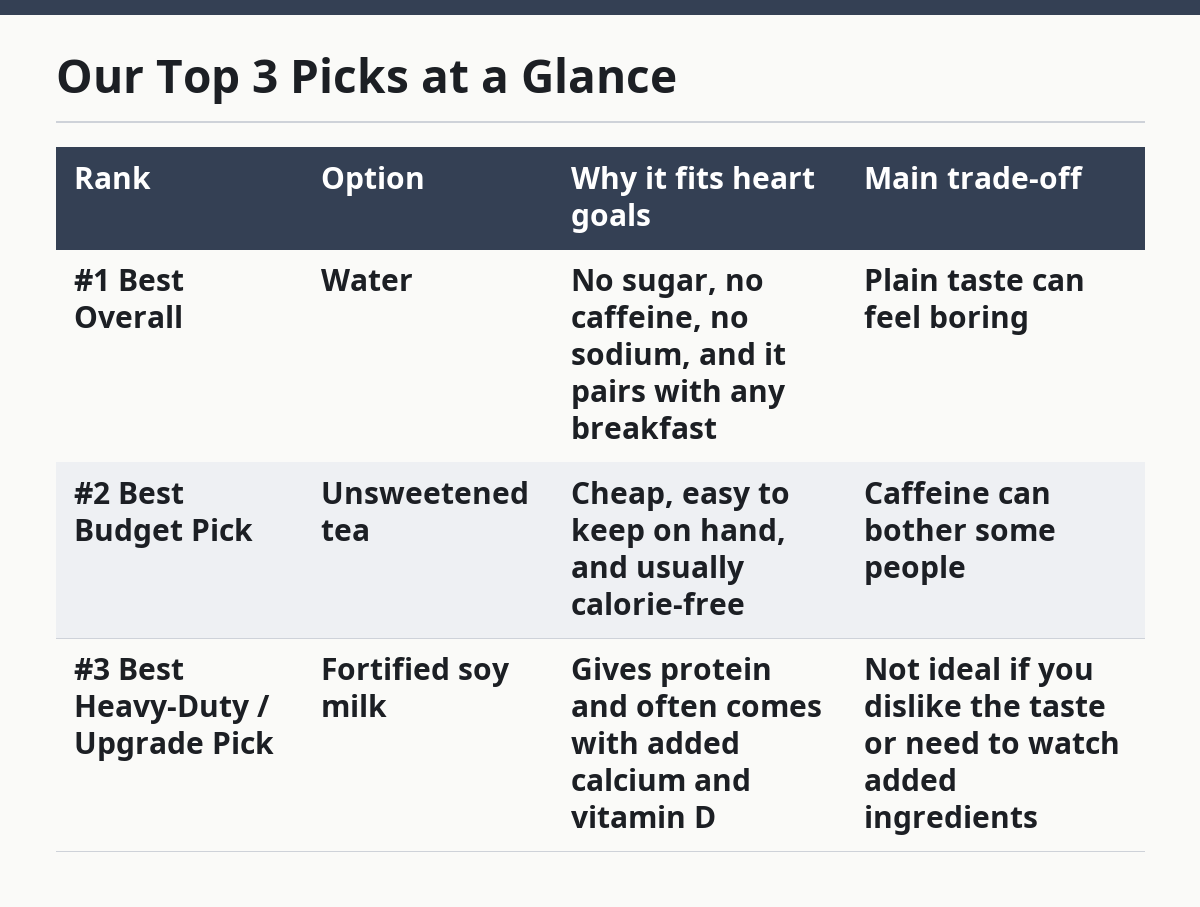
Our Top 3 Picks at a Glance

| Rank | Option | Why it fits heart goals | Main trade-off |
|---|---|---|---|
| #1 Best Overall | Water | No sugar, no caffeine, no sodium, and it pairs with any breakfast | Plain taste can feel boring |
| #2 Best Budget Pick | Unsweetened tea | Cheap, easy to keep on hand, and usually calorie-free | Caffeine can bother some people |
| #3 Best Heavy-Duty / Upgrade Pick | Fortified soy milk | Gives protein and often comes with added calcium and vitamin D | Not ideal if you dislike the taste or need to watch added ingredients |
The best breakfast drinks for heart goals
Picture this: you’re at the kitchen table, trying to keep breakfast simple but still support your heart. The best breakfast drinks for that job are water, unsweetened tea, plain coffee in moderation, milk, and fortified soy milk.
The truth is, the drink matters because it can add sugar, saturated fat, or extra sodium before you’ve taken the first bite. A plain drink keeps breakfast steady and leaves room for the food itself.
1) Water: the safest default
Water is a strong default for most seniors because it adds 0 sugar and no caffeine. It also helps if you take morning medicine with food and need something neutral beside toast, oatmeal, or eggs.
Water is not exciting, and that is the point. If plain water feels hard to drink, cold water with ice or a slice of lemon can make it easier without turning it into a sugar bomb.
2) Unsweetened tea: good if caffeine agrees with you
Unsweetened tea is a strong second choice because it stays low in calories and does not bring the sugar spike you get from sweet bottled drinks. Black, green, and herbal teas all fit differently; the caffeine in black and green tea may be fine for some people and too much for others.
Use tea that stays unsweetened in the cup, not bottled tea that looks healthy but carries added sugar. A mug is enough.
- Best for: people who want flavor without juice-level sugar.
- Watch for: jitters, stomach upset, or sleep trouble if tea hits too hard early in the day.
3) Coffee: useful, but keep the add-ins plain
Coffee can fit a heart-aware breakfast if you keep it simple. Plain coffee has no sugar or fat on its own, but creamers, flavored syrups, whipped toppings, and big spoonfuls of sugar change the picture fast.
Coffee is not a free pass. It works best when the cup stays small, the sugar stays low, and the add-ins do not turn it into dessert.
- Best for: seniors who already enjoy coffee and tolerate caffeine well.
- Watch for: palpitations, reflux, or a shaky feeling after a strong cup.
4) Milk: better when it’s plain and lower in saturated fat
Milk can work at breakfast because it brings protein and minerals, but the type matters. Plain low-fat or fat-free milk is a better heart fit than whole milk if saturated fat is a concern.
Milk is easy to overdo in flavored form. Chocolate milk, sweetened milk drinks, and café-style milk drinks can carry more sugar than many people expect.
5) Fortified soy milk: a strong plant option for many people
Fortified soy milk is the strongest plant-based pick because it can bring protein and, in many products, calcium and vitamin D. That makes it useful if someone wants a non-dairy breakfast drink that still feels substantial.
Some soy milks are plain and helpful; others are sweetened and act more like a dessert drink.
Who should skip this: someone who wants a very light drink or who dislikes soy flavor should look at water or unsweetened tea instead.
What to put in a cup, and what to leave out

Picture this: you’re standing at the fridge, and the label is crowded with claims. For heart goals, the real question is simple: does the drink stay low in added sugar, low in saturated fat, and easy on sodium?
That means the safest morning drinks are usually the plain ones. Juice, sweet coffee drinks, and flavored milks can crowd out better options fast.
A quick breakfast-drink rule set
- Pick a drink with no added sugar if possible.
- Keep cream, syrups, and sweeteners small or skip them.
- Choose low-fat dairy or fortified soy milk when you want protein.
- Use caffeine only if it agrees with your sleep, blood pressure plan, and stomach.
- Check labels on bottled drinks before you trust the front of the carton.
Drinks that often cause trouble
- Sweet tea and bottled tea drinks.
- Coffee drinks with flavored syrup, sweet foam, or heavy cream.
- Fruit punch and many “juice drinks.”
- Whole milk in large amounts if saturated fat is a concern.
- Hot cocoa mixes that read more like candy than breakfast.
Here’s the catch: a drink can look light and still carry a lot of sugar. The first ingredient list matters more than the marketing.
How to choose a breakfast drink at the store
Picture this: you’re in the aisle with ten labels in front of you and only one question that matters. The right breakfast drink for heart goals should make the label short, the ingredient list plain, and the first sip easy.
The heart-friendly choice is usually the one with the fewest surprises. Use the label, not the picture on the front, as the real guide.
A simple 3-check shopping process
- Start with the base. Look for water, tea, coffee, low-fat milk, or fortified soy milk. That keeps you in the right lane before you worry about flavor.
- Check added sugar. If the drink is sweetened, flavored, or dessert-like, set it back unless it has a very clear reason to stay in your cart.
- Check fat and sodium. Plain milk and soy milk are usually the useful picks here; bottled breakfast drinks with cream or salty add-ins are a weaker fit.
If you buy shelf-stable drinks, scan the front and back. “Light,” “natural,” and “made with real fruit” do not tell you whether the drink helps your heart goals.
What a good label usually looks like
- A short ingredient list
- No syrup base
- No long row of added sugars
- A plain flavor name, not a dessert name
This gets easier after a few trips. Once you know the few drinks that fit, the rest of the shelf starts looking obvious.
When coffee and tea are the wrong breakfast pick
Picture this: you want a morning drink that feels normal, but your body does not always cooperate. Coffee and tea are not the right choice when caffeine leaves you jittery, unsettled, or wide awake at bedtime.
That matters more with age, because sleep, reflux, and medication timing can make a once-normal cup feel different. The issue is not that coffee or tea are “bad”; it’s that the caffeine can be the wrong tool on the wrong morning.
Signs to switch to something gentler
- Your heart feels jumpy after coffee.
- Tea leaves you shaky or anxious.
- Caffeine makes reflux worse.
- A late caffeine habit pushes sleep later by even a few hours.
If that sounds familiar, move to water, decaf coffee, or herbal tea. Decaf coffee keeps the coffee habit without the same caffeine hit, while herbal tea can give you a warm cup without the buzz.
How to build a heart-aware breakfast drink routine
Picture this: you want breakfast to be easy, not another health project. A routine you can repeat in a 2-minute window without thinking too hard is often the one that sticks.
A routine beats a perfect drink. If the same plain choice shows up every morning, you are less likely to fall back on sugar-heavy convenience drinks.
A practical morning routine
- Keep a glass or bottle of water near the sink.
- Make tea or coffee plain first, then add only what you truly want.
- Buy unsweetened milk or soy milk for days when you want protein.
- Put flavored creamers and sweet syrups out of reach if they tempt you.
- Use a mug, not a giant cup, when caffeine bothers you.
This is also where the hub page on heart-healthy breakfast foundations for seniors fits in, because the drink works best when the rest of breakfast is steady too.
What most generic advice gets wrong
Picture this: a guide tells you to “stay hydrated” and leaves you with no actual breakfast plan. That misses the real job, which is to choose a drink that supports heart goals without loading breakfast with sugar or fat.
The biggest mistake is treating all liquids as equal. A plain cup of tea and a sweet bottled coffee drink do very different things.
Common errors and better swaps
-
Error: assuming juice counts as a heart-friendly morning drink.
Cost: sugar climbs fast.
Swap: water or unsweetened tea. -
Error: using flavored creamers as if they were harmless.
Cost: added sugar and saturated fat can stack up.
Swap: a small splash of plain milk. -
Error: choosing any plant milk without checking the label.
Cost: sweetened versions can be sugar-heavy.
Swap: fortified unsweetened soy milk. -
Error: thinking “healthy” on the label means low sugar.
Cost: you may drink something that works against your goal.
Swap: read the nutrition panel and ingredient list.
A plain drink is not boring when it does the job. It is efficient.
FAQ
What should seniors drink with breakfast?
Water is the safest default, and unsweetened tea, plain coffee, low-fat milk, or fortified soy milk can also fit a heart-aware breakfast. The best match depends on caffeine tolerance, taste, and whether the drink adds sugar or saturated fat.
Are smoothies the best breakfast drink?
No, smoothies are not automatically the best breakfast drink. They can be useful, but this page is about simpler drink choices like water, tea, coffee, milk, and fortified soy milk, especially when sugar control matters.
Which drinks are heart-healthy in the morning?
Water, unsweetened tea, plain coffee with minimal add-ins, low-fat milk, and fortified unsweetened soy milk are the most practical morning picks. The common thread is low added sugar and no heavy cream or syrup.
What is the safest drink if I want to keep breakfast simple?
Water is the simplest choice because it brings no sugar, no caffeine, and no extra fat. If you want more taste or protein, unsweetened tea or fortified milk and soy milk are the next places to look.
Drafted with AI; not yet reviewed by a person.