Last updated: November 19, 2026
Quick Answer: Seven practical low-sodium snack ideas for seniors with heart health goals are fruit, plain yogurt, unsalted nuts, whole-grain crackers, hummus, air-popped popcorn, and low-sodium cheese. In this article on Low-Sodium Snack Ideas for Seniors with Heart Health Goals, the goal is to keep snacks simple, filling, and easy to portion; for many older adults, that means a snack that stays low in salt without leaving them hungry an hour later.
Start with the snack, then build the plate
A good snack for heart health usually has 2 things: some protein or fiber, and very little sodium. That combination helps a snack feel more satisfying than a handful of crackers alone. For many older adults, a useful target is a snack you can finish in about 5 minutes without needing a stove or a lot of cleanup, and the Low-Sodium Snack Ideas for Seniors with Heart Health Goals here follow that pattern.
The simplest way to choose is to start with one base food, then add one supporting food:
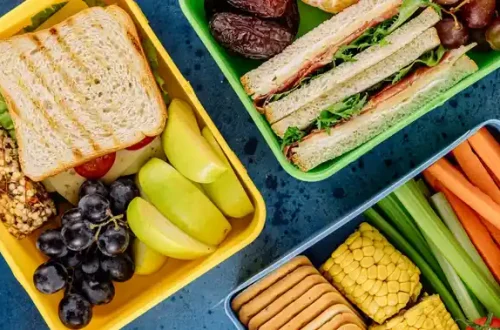
- Fruit + protein: apple slices with 1 tablespoon of unsalted nut butter
- Crackers + protein: 4 to 6 whole-grain crackers with low-sodium cheese
- Dairy + fiber: plain yogurt topped with berries and 1 tablespoon of oats
- Vegetable + dip: raw carrots with 2 tablespoons of hummus
That pattern matters because a snack built from only refined carbs often leaves the person hungry again quickly. A snack built from only nuts or cheese can turn into a calorie-heavy habit if the portion gets loose. The sweet spot is a small, planned serving, not a free-for-all from the bag.
This is also where sodium labels matter. “Low sodium” on a package means something specific on the label, but many foods that look plain still add up fast if the serving size is large. A snack plan works better when the serving is fixed before eating starts.
For a broader meal-and-snack framework, the hub page on Senior Heart-Healthy Lunch and Snack Ideas can sit alongside this one without repeating it. For general label guidance, the U.S. Food and Drug Administration’s page on understanding the nutrition facts label is useful, and the American Heart Association also provides heart-health food guidance.
What are good low-sodium snacks for seniors?
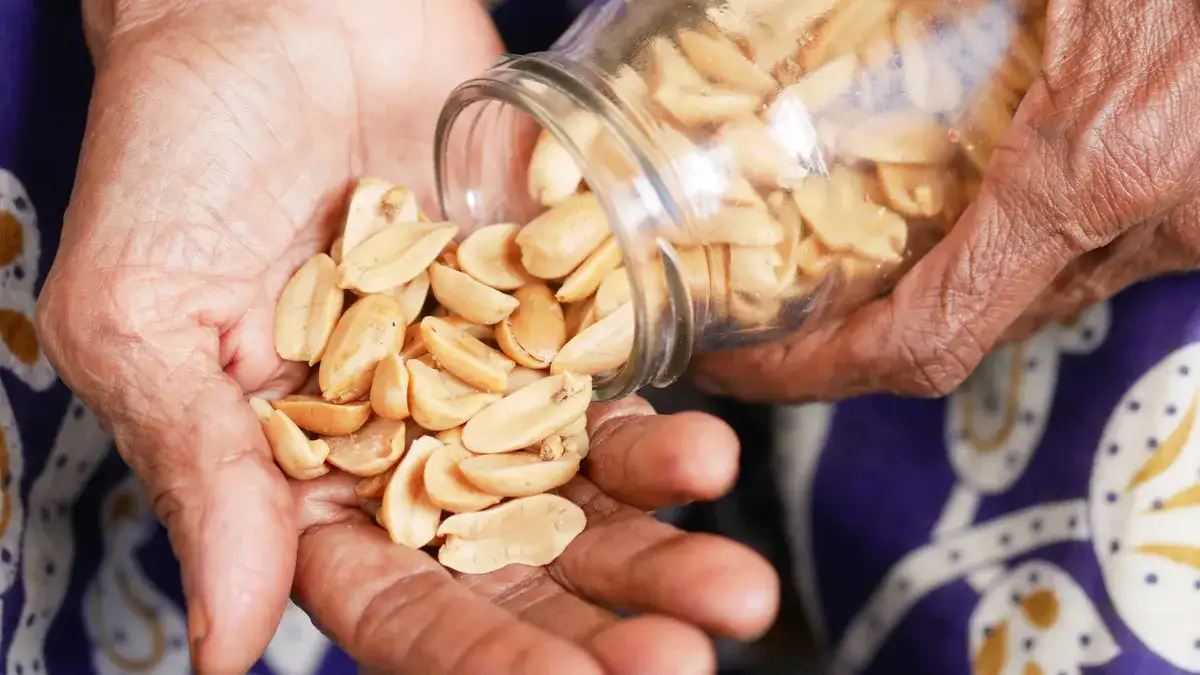
Good low-sodium snacks for seniors are foods that come naturally low in salt or can be bought in low-sodium versions, then portioned into 1 small serving. That includes fruit, plain yogurt, unsalted nuts, whole-grain crackers, hummus, air-popped popcorn, and low-sodium cheese.
Here are practical options that work well between meals:
-
Fruit with no added salt
Apples, pears, berries, grapes, oranges, and bananas need no prep beyond washing or peeling. A medium apple or 1 cup of berries makes a clean, low-effort snack. -
Plain yogurt
Choose plain, unsweetened yogurt and add fruit for flavor. A 5- to 6-ounce serving is usually enough for a snack, and it gives a softer option for seniors who want something easy to chew. -
Unsalted nuts
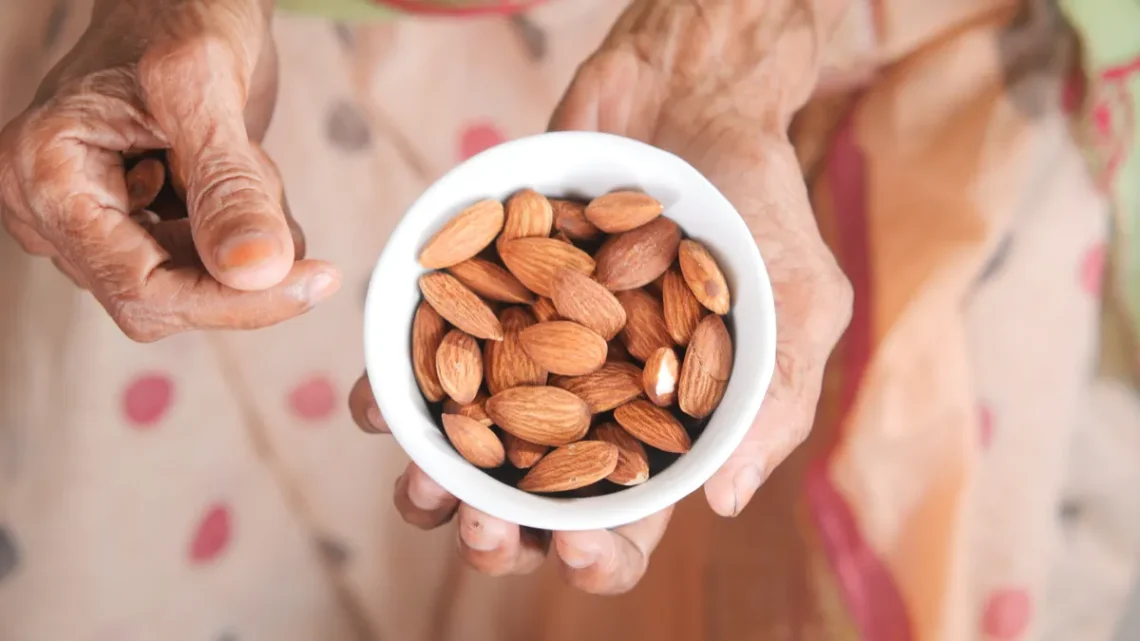
Almonds, walnuts, pistachios, and mixed nuts are useful because a small portion goes a long way. A 1-ounce handful is a common snack-sized amount. -
Whole-grain crackers with low-sodium cheese
A few crackers plus 1 to 2 thin slices of cheese can be more satisfying than either food alone. The crackers bring fiber; the cheese brings protein and flavor. -
Hummus with vegetables or crackers
Use 2 tablespoons of hummus with cucumber slices, celery, or carrots. Choose a reduced-sodium or low-sodium hummus when possible, because regular versions can be saltier than they look. -
Air-popped popcorn
Plain popcorn can be a smart, crunchy snack if it is not drenched in salt or butter. About 3 cups is a typical snack portion. -
Low-sodium cheese and fruit
Cheese and fruit give a familiar sweet-savory mix. A small slice of reduced-sodium cheese with pear or apple is easy to pack and easy to eat.
The main trade-off is obvious: the more processed the snack, the more likely sodium has crept in. A box or bag can still fit the plan, but it deserves a label check. The Dietary Guidelines for Americans and the National Institute on Aging both emphasize choosing nutrient-dense foods and watching sodium as part of a healthy pattern, which supports this approach.
Which snacks help keep seniors full between meals?
The snacks that keep seniors full between meals are the ones with protein, fiber, or both, especially when the portion is controlled. Fruit alone is refreshing, but it may not hold hunger as long as yogurt with fruit, nuts with fruit, or crackers with hummus.
The most filling low-sodium choices usually include one of these:
- Protein: plain yogurt, low-sodium cheese, unsalted nuts, hummus
- Fiber: fruit, whole-grain crackers, popcorn, raw vegetables
- Protein + fiber together: hummus with vegetables, yogurt with berries, nuts with fruit, crackers with cheese
A useful rule is to combine a fast-digesting food with a slower one. For example, grapes are easy to eat and hydrating, but they work better paired with nuts or cheese than eaten alone. A person who gets shaky or overly hungry before the next meal often needs a snack with staying power, not just a sweet bite.
Portion size matters here. A “healthy” snack can stop being helpful if it turns into 3 servings. One small bowl, one plate, or one sealed container keeps the amount clear. That is especially useful for seniors who snack often because food is nearby.
This is the section where a lot of generic advice gets sloppy. It says “choose protein” without saying how much. A useful snack does not need a scale, but it does need a limit: 1 ounce of nuts, 2 tablespoons of hummus, 5 to 6 ounces of yogurt, or a few crackers with a measured slice of cheese.
If a senior has trouble chewing, softer foods usually win. Yogurt, ripe fruit, hummus, and softened whole-grain toast can be easier than raw vegetables or hard nuts. That matters as much as the sodium number.
How do you choose a heart-healthy snack?

You choose a heart-healthy snack by checking the sodium, checking the portion, and making sure the snack has something that satisfies hunger for at least 2 to 3 hours. That usually means a simple ingredient list, a small serving, and one protein or fiber source.
Use this quick 4-step method:
- Pick one base food. Start with fruit, plain yogurt, unsalted nuts, whole-grain crackers, hummus, air-popped popcorn, or low-sodium cheese. One base food keeps the snack from turning into an entire meal.
- Check the serving size first. Read the package for the serving amount before looking at the rest of the label. A bag may look like one snack, but it can contain 2 to 4 servings.
- Look for sodium in the serving you will actually eat. If the label shows a high sodium number for one tiny serving, move on. A low-sodium choice should stay low when the portion is realistic, not just when it is tiny.
- Add a second food if needed. Pair fruit with nuts, crackers with hummus, or yogurt with berries so the snack feels complete and does not need a second round 30 minutes later.
This method works well in a kitchen, a car, or a retirement community common room because it does not depend on fancy prep. It also avoids the classic mistake of buying “health” snacks that are still salty, such as flavored crackers, seasoned nut mixes, or cheese snacks with a long ingredient list.
One honest limitation: not every low-sodium snack is a low-calorie snack. Nuts and cheese are useful, but they are dense foods. If weight control is part of the heart-health goal, the portion needs to stay small even when the food itself is a good choice.
For label reading, a heart-health educator or registered dietitian can help if there are other restrictions, like diabetes or kidney disease, because those can change the best snack choice. The National Institute on Aging also recommends checking with a health professional when nutrition needs are more complex.
Store-bought snack choices that save time
Store-bought snack choices can work very well if the label is short and the portion is clear. The best ones are the foods that do not need a lot of fixing: plain yogurt cups, unsalted nuts, whole-grain crackers, low-sodium cheese sticks or slices, plain popcorn, and single-serve hummus cups.
Here is what makes a store-bought snack worth buying:
- Single-serve packs: helpful for seniors who want less measuring and fewer leftovers
- Plain or lightly seasoned versions: easier to keep sodium low
- Resealable packaging: useful if the snack is eaten slowly over 10 to 15 minutes
- Short ingredient lists: often easier to compare than long, flavored products
What to watch out for:
- Trail mix with salted nuts, chocolate, and pretzels can turn into a sodium-and-sugar mix that looks healthier than it is.
- Crackers marketed as “multigrain” may still be salty enough to crowd out the rest of the day’s sodium budget.
- Yogurt with fruit at the bottom may bring extra sugar, which is not the same problem as sodium but can still make the snack less balanced.
- Cheese snacks in processed form often have more sodium than a simple slice of low-sodium cheese.
A good shortcut is to buy the plain version and add the flavor yourself. Plain yogurt with berries is usually easier to manage than a flavored cup. Plain popcorn is better than heavily seasoned popcorn. Unsalted nuts are easier to portion than savory snack mixes.
This is also where the term “snack” matters. If the package is big enough to hold 2 or 3 snack portions, it may be better to divide it into smaller containers at home right away.
Prep-ahead snack packs that make good habits easier
Prep-ahead snack packs make low-sodium eating easier because the decision is already made before hunger shows up. A few 5-minute containers can carry a senior through the week and prevent salty convenience foods from taking over.
A simple prep routine looks like this:
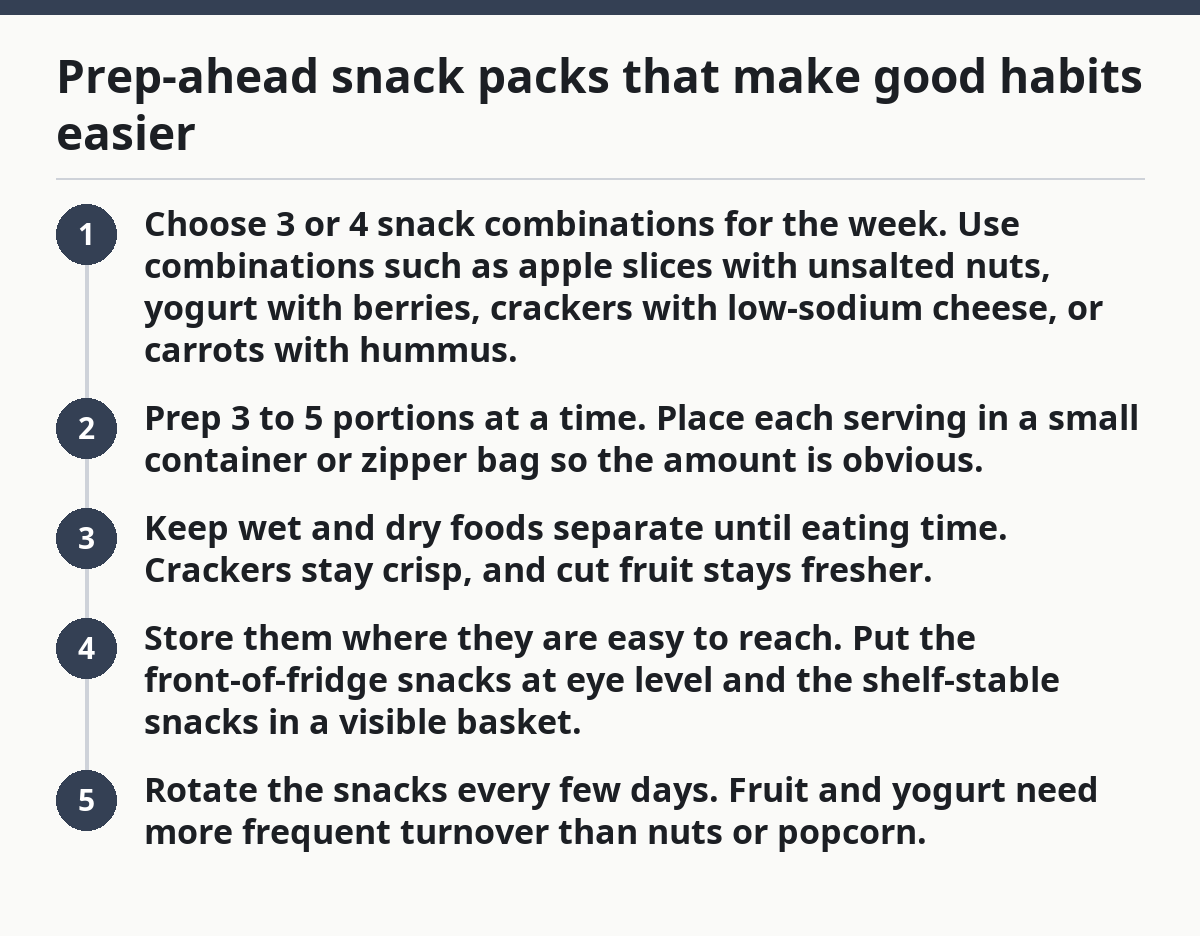
- Choose 3 or 4 snack combinations for the week. Use combinations such as apple slices with unsalted nuts, yogurt with berries, crackers with low-sodium cheese, or carrots with hummus.
- Prep 3 to 5 portions at a time. Place each serving in a small container or zipper bag so the amount is obvious.
- Keep wet and dry foods separate until eating time. Crackers stay crisp, and cut fruit stays fresher.
- Store them where they are easy to reach. Put the front-of-fridge snacks at eye level and the shelf-stable snacks in a visible basket.
- Rotate the snacks every few days. Fruit and yogurt need more frequent turnover than nuts or popcorn.
This approach works especially well for caregivers or seniors who get tired of deciding what to eat. It also reduces the chance that a person reaches for salty chips or crackers because they are the easiest thing nearby.
The drawback is that prep-ahead snacks can spoil if they sit too long. Cut fruit and yogurt usually need to be eaten within a few days, while nuts and dry crackers last longer. Labeling containers with the date can help, and it is also a good idea to check with a professional caregiver, registered dietitian, or food safety resource if there are questions about storage. The USDA’s FoodKeeper app is a practical source for storage timelines.
Low-sodium snacks that are not a good fit
Some snacks are not a good fit for heart health goals, even if they sound reasonable on paper. Salted nuts, flavored popcorn, cheese crackers, packaged pastries, instant soup cups, and processed snack meats are usually poor choices for a low-sodium snack plan.
The problem is not just that they contain sodium. It is that they make it easy to eat a lot without feeling satisfied. A handful of salted pretzels may disappear in a minute and leave the person wanting more. A small bowl of plain popcorn with fruit on the side will usually do a better job.
This does not mean every packaged snack is off-limits. It means the label has to earn its place. If the snack is heavily seasoned, comes in a large portion, or is built around refined flour and fat, it is probably better reserved for rare occasions rather than daily use.
A realistic heart-health snack plan should leave room for taste, but it should not rely on willpower alone. The easiest win is to keep 2 or 3 approved snacks visible and make the salty options harder to reach. Over time, that makes the low-sodium routine easier to keep up.
Key Takeaways
- Low-sodium snacks for seniors with heart health goals work best when they are simple foods that combine flavor, protein, and fiber without a long ingredient list.
- Small portions matter as much as low sodium; a healthy snack can turn unhelpful if the serving is too large.
- Fruit, plain yogurt, unsalted nuts, whole-grain crackers, hummus, air-popped popcorn, and low-sodium cheese are strong starting points.
- Store-bought snacks can fit the plan if the label is plain enough and the serving size is realistic.
- Prep-ahead containers help remove guesswork and make it easier to skip salty convenience foods.
What are good low-sodium snacks for seniors?
Good low-sodium snacks for seniors include fruit, plain yogurt, unsalted nuts, whole-grain crackers, hummus, air-popped popcorn, and low-sodium cheese. Choices that are easy to chew, easy to portion, and not heavily processed often fit well. A snack that combines protein and fiber usually keeps hunger away longer than a snack made from only one food.
How do you choose a heart-healthy snack?
Choose a heart-healthy snack by checking the serving size, then looking at sodium for that actual portion. Pick foods with a short ingredient list and add either protein or fiber so the snack is more filling. If the package needs a long explanation to sound healthy, it is usually not the best choice.
What snacks help keep seniors full between meals?
Snacks with protein and fiber help seniors stay full between meals. Plain yogurt with berries, nuts with fruit, hummus with vegetables, and whole-grain crackers with low-sodium cheese are good examples. These combinations tend to satisfy hunger better than fruit or crackers alone.
Drafted with AI; not yet reviewed by a person.