
Last updated: November 19, 2026
Key Takeaways
- Nut butter can make breakfast more filling for seniors, especially on soft foods like toast, oatmeal, and banana.
- Peanut butter is often the most familiar everyday option when you want a spreadable jar.
- Almond butter suits people who prefer a milder flavor and a lighter-tasting spread.
- Sunflower seed butter helps when peanut or tree-nut allergies shape breakfast choices.
At breakfast, one small jar can change the whole plate. For seniors following a heart-healthy routine, low-sodium, easy-spreading peanut, almond, or sunflower seed butter is the place to start. This guide to Best Heart-Healthy Breakfast Nut Butters for Seniors keeps its eye on salt, spreadability, and how each option works with soft foods like oatmeal, banana, and whole grain toast.
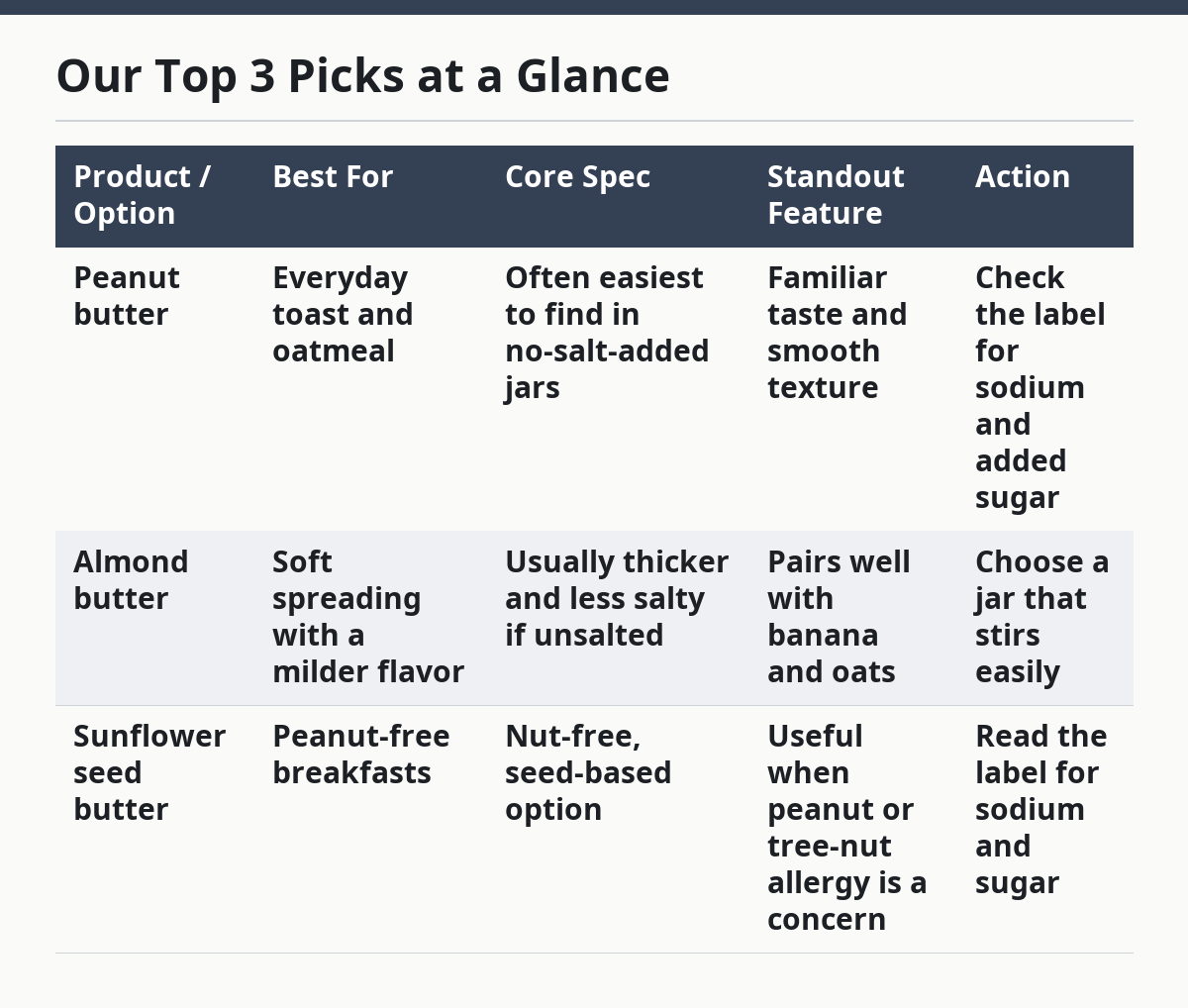
Our Top 3 Picks at a Glance
- #1 Best Overall: Unsalted or no-salt-added peanut butter
- #2 Best Budget Pick: Peanut butter
- #3 Best Heavy-Duty / Upgrade Pick: Almond butter
| Product / Option | Best For | Core Spec | Standout Feature | Action |
|---|---|---|---|---|
| Peanut butter | Everyday toast and oatmeal | Often easiest to find in no-salt-added jars | Familiar taste and smooth texture | Check the label for sodium and added sugar |
| Almond butter | Soft spreading with a milder flavor | Usually thicker and less salty if unsalted | Pairs well with banana and oats | Choose a jar that stirs easily |
| Sunflower seed butter | Peanut-free breakfasts | Nut-free, seed-based option | Useful when peanut or tree-nut allergy is a concern | Read the label for sodium and sugar |
Salt, softness, and the food beneath it decide the winner. That’s the real test. Not every jar fits every morning.
For a bigger pantry plan, the hub page on [Heart-Healthy Breakfast Foundations for Seniors] would sit well alongside this one.
Why nut butter belongs at the breakfast table
Nut butter earns its spot because it adds flavor, spreads onto soft bread, and turns plain oatmeal or banana into something that feels like breakfast. Still, the jar matters more than the spoonful. A lot more.
Look for a container that is low in sodium, easy to spread, and free of crunchy bits if chewing is already a hassle. A short ingredient list helps too. Cleaner labels make heart-conscious breakfast planning easier.
- Peanut butter is usually the easiest match for toast.
- Almond butter often tastes lighter and spreads well after stirring.
- Sunflower seed butter helps when peanut or tree-nut allergy changes the menu.
For label reading, look for:
- No salt added or unsalted
- No hydrogenated oils
- Lower added sugar
- A short list with peanuts, almonds, or sunflower seeds as the main ingredient
You do not need a fancy brand. Really, you don’t. A plain jar and a soft base usually do the job.
Peanut butter: the easiest everyday choice
Peanut butter is often the most practical pick for seniors who want a familiar taste and a jar that usually spreads without much drama. It wins because it is common, affordable in plain forms, and easy to pair with whole grain toast, oatmeal, or sliced banana.
Picture a warm slice of toast on the counter. You want something that spreads fast and doesn’t rip the bread apart. Smooth peanut butter usually handles that without fuss.
The catch is obvious: many peanut butters stop being heart-healthy once salt and sugar get added. Crunchy versions can also be a poor fit if dentures, dry mouth, or tired jaws make chewing feel harder.
Peanut butter strengths
- Easy to find in smooth and no-salt-added versions
- Soft enough for toast, oatmeal, and banana slices
- Usually the most familiar flavor, so it gets used instead of sitting in the pantry
Peanut butter weaknesses
- Some jars have added sodium and sugar
- Crunchy versions can be harder to chew
- The oil can separate, so stirring may be needed
Who Should Skip This: Anyone with a peanut allergy should move to sunflower seed butter instead. That swap solves the allergy problem without giving up a spreadable breakfast option.
Buy this if: you want a familiar spread for whole grain toast and oatmeal, and you can find a no-salt-added jar.
Skip this if: you need a peanut-free kitchen or a jar with no stirring because shoulder pain makes mixing hard.
Almond butter: the smoother-feeling upgrade
Almond butter makes sense when you want a milder taste and a spread that feels a bit more refined than standard peanut butter. It often works well on banana slices and soft toast because the flavor stays in the background instead of taking over the plate.
Picture a gentler breakfast. That’s the appeal here. On oats or toast, a thin layer of almond butter can feel calm and balanced rather than loud.
The best almond butter for seniors is usually the kind that spreads easily after stirring and does not rely on extra salt to taste good. That said, almond butter can be thicker than peanut butter, and a stiff jar can be annoying if hand strength is limited. Thick as glue, sometimes.
Almond butter strengths
- Mild flavor that pairs well with banana
- Works well in thin layers on toast
- Often fits a lower-salt breakfast pattern if you buy unsalted
Almond butter weaknesses
- Can be thick and hard to scoop from the jar
- Usually costs more than standard peanut butter
- Some versions still use added salt or sugar
Who Should Skip This: If you need the easiest spread for shaky hands or limited grip, smooth peanut butter is the simpler choice. Almond butter can ask for more stirring and more effort.
Buy this if: you want a mild spread for banana, oats, or toast, and you can manage a thicker jar.
Skip this if: your hands tire fast or you need the softest possible spread straight from the jar.
Sunflower seed butter: the smart allergy swap
Sunflower seed butter is the right answer when peanut or tree-nut allergy changes breakfast planning. It gives you a spreadable option without using peanuts or tree nuts, and it still fits the same breakfast foods: toast, banana, and oatmeal.
Picture a kitchen with allergy rules on the fridge. Peanut and almond jars stay out. Sunflower seed butter steps in cleanly.
The trade-off is flavor. Some people notice a stronger, earthier taste than peanut butter. The texture can also vary a lot by brand, so one jar may spread well while another feels stubborn and dense. Like mud in a cold spoon, honestly.
Sunflower seed butter strengths
- Good for peanut-free breakfasts
- Spreads onto toast and banana slices
- Fits soft oatmeal without needing hard chewing
Sunflower seed butter weaknesses
- Taste is less familiar for many people
- Some jars contain added sugar or salt
- Texture can be thick enough to fight a weak wrist or stiff fingers
Who Should Skip This: If there is no nut or peanut allergy in play and you want the most familiar breakfast taste, peanut butter is usually the easier daily pick. It tends to be the least surprising option.
Buy this if: you need a peanut-free spread that still works on soft breakfast foods.
Skip this if: you dislike seed flavor or you want the most familiar taste for a daily toast routine.
The honest side-by-side
Peanut butter wins for most seniors because it blends taste, availability, and spreadability better than the others. Almond butter wins when you want a milder jar and do not mind a thicker texture. Sunflower seed butter wins only when allergy rules matter or when the household needs a nut-free spread.
Picture three jars on the counter and one slice of whole grain toast in hand. The label, not the marketing, decides the winner.
| Criteria | Peanut Butter | Almond Butter | Winner for condition |
|---|---|---|---|
| Sodium control | Often available unsalted | Often available unsalted | Tie if you buy the right jar |
| Spreadability | Usually easiest | Often thicker | Peanut butter for weak grip |
| Flavor familiarity | Very familiar | Milder, less familiar | Peanut butter for picky eaters |
| Pairing with oatmeal | Strong match | Strong match | Tie |
| Pairing with banana | Strong match | Strong match | Almond butter for a softer flavor |
| Allergy fit | Not for peanut allergy | Not for tree-nut allergy | Sunflower seed butter for allergy needs |
| Label simplicity | Often short ingredient list | Often short ingredient list | Tie if unsweetened |
| Texture for dentures or sore jaw | Smooth versions work well | Smooth versions work well | Peanut butter for easier scooping |
| Need for stirring | Sometimes | Often more likely | Peanut butter for convenience |
Choose unsalted, smooth, and unsweetened when the jar offers those options. If the front sounds healthy but the back panel is packed with sodium or added sugar, put it back.
The real point is simple: the whole breakfast has to work, not just the jar. A thin layer on whole grain toast beats a heavy smear on white bread every time.
How to use nut butter without making breakfast hard to chew
Nut butter is easiest on seniors when it is spread thin on soft food instead of scooped thick from the jar. Thin layers keep the mouth work low and make the meal less sticky.
Picture breakfast without a wrestling match. A thin spread on warm toast, soft oatmeal, or banana slices changes the texture fast.
Best ways to use it:
- Spread a thin layer on whole grain toast instead of a thick mound
- Stir a spoonful into warm oatmeal so it loosens
- Smear it on banana slices for a softer bite
- Let toast cool just enough so it does not collapse under the spread
A practical ratio helps. On a slice of toast about 1/2 inch to 3/4 inch thick (about 1.3 cm to 1.9 cm), a thin coating is easier to manage than a heavy one. In oatmeal, a spoonful stirred well usually works better than a blob left on top.
For anyone with dentures, dry mouth, or jaw fatigue, crunchy nut butter and added nuts are a bad match. Smooth jars are the safer breakfast move.
How to read the label before you buy
The label is the real heart-healthy filter. If you only read the front of the jar, you can still end up with a salty or sugary spread that does not fit a senior breakfast plan.
Picture two jars in the aisle, both claiming to be natural. One is better, but only the back panel tells the truth.
Use this quick label check:
- Look for no salt added or unsalted.
- Check that the first ingredient is the nut or seed itself.
- Avoid jars that lean on added sugar or sweet syrups.
- Choose smooth over chunky if chewing is easier that way.
- If allergy is a concern, confirm that the jar is peanut-free or tree-nut-free as needed.
For a label that makes sense, aim for a short list and a simple texture. If the ingredient line reads like a dessert, it is the wrong breakfast jar.
Trusted label rules also line up with standard heart-health advice from groups such as the American Heart Association and the U.S. Food and Drug Administration. The names matter more than the hype.
The verdict: which nut butter to choose
Choose peanut butter if you want the easiest daily breakfast spread for toast, oatmeal, or banana and can find a no-salt-added jar. Choose almond butter if you want a milder taste and can handle a thicker texture. Neither works well if the jar is crunchy, heavily salted, or too stiff for your hands.
Picture one jar on the shelf and one answer at the table. The right pick depends on the kitchen job, not the label copy.
My call is plain. For most seniors, peanut butter is the most usable heart-healthy breakfast choice because it works in real life. Almond butter is the better “upgrade” when texture and taste matter more than convenience. Sunflower seed butter belongs in the kitchen when allergy rules push peanut and almond out.
Exception scenarios: when the answer changes
The overall pick flips in a few real-life cases. Those cases matter more than the usual rankings.
Picture a standard rule that doesn’t fit your kitchen. Happens all the time.
- If peanut allergy is present, sunflower seed butter becomes the default. Peanut butter is out, no matter how good the texture is.
- If hand strength is limited, the easiest-to-stir smooth peanut butter usually beats thicker almond butter.
- If you hate the taste of peanuts, almond butter can get used more often, and a jar that gets used is better than a “perfect” one that sits untouched.
- If the jar is being mixed into oatmeal, the differences shrink. A spoonful of any smooth, unsalted version can work well.
The best choice is the one that fits the person and gets eaten. Unused healthy food helps nobody.
Which nut butter is lowest in sodium for seniors?
The lowest-sodium choice is usually the jar labeled no salt added or unsalted, whether it is peanut butter, almond butter, or sunflower seed butter. The front label matters less than the ingredient panel, so the safer move is to check the sodium line on the Nutrition Facts and ignore the marketing copy.
How can seniors use nut butter at breakfast without making it hard to chew?
Seniors can keep breakfast easier to chew by using smooth nut butter in a thin layer on soft foods like warm whole grain toast, oatmeal, or banana slices. Crunchy versions, stiff jars, and thick scoops are harder to manage, especially with dentures, dry mouth, or tired jaw muscles.
Drafted with AI; not yet reviewed by a person.


