
Last updated: November 19, 2026
Key Takeaways
- Leftovers work best when the main food is already cooked plainly and you can build around it in 10 minutes or less.
- You can turn leftovers into a balanced lunch plate by combining 1 protein, 1 grain or bean, and 2 vegetables.
- A heart-healthy lunch from leftovers works best when each step stays small, simple, and repeatable.
- Portioning leftovers for a senior lunch means serving less food in more balanced parts, not simply eating a smaller dinner.
How to Make Leftovers into a Heart-Healthy Senior Lunch can be simple, quick, and satisfying when you start with plain foods, keep sodium in check, and build one balanced plate at a time. This guide shows how to turn roasted chicken, brown rice, beans, soup, salad greens, and cooked vegetables into a lunch that fits older appetites and easier chewing.
Start with leftovers that already work
Leftovers work best when the main food is already cooked plainly and you can build around it in 10 minutes or less. The smart move is to choose foods that hold up after reheating or mixing, then add fresh pieces for color, fiber, and flavor.
Because of that, a quick fridge check can save time at lunch. Picture this: you open the fridge and see roasted chicken, brown rice, and a container of cooked carrots. That is enough for lunch. You do not need a new recipe; you need a clean rebuild.
A good senior lunch starts with these leftovers:
- Roasted chicken without heavy breading or salty sauce
- Brown rice or another whole grain
- Cooked vegetables such as green beans, carrots, squash, or broccoli
- Beans that were cooked with modest salt
- Soup with broth that is not very salty
- Salad greens for a cold base
The catch is sodium. A leftover meal can look healthy and still carry a lot of salt from takeout, canned sauce, or seasoning blends. The American Heart Association has long advised limiting sodium for heart health; for a lunch built from leftovers, that means using the food you have with a lighter hand on salty add-ons. The AHA sodium page is worth a look if you want the reasoning behind that advice.
Now, you might be wondering what counts as “good enough” leftovers. If the food is plain enough that you can taste the main ingredient, not just the seasoning, it is usually a better base than something already buried in sauce.
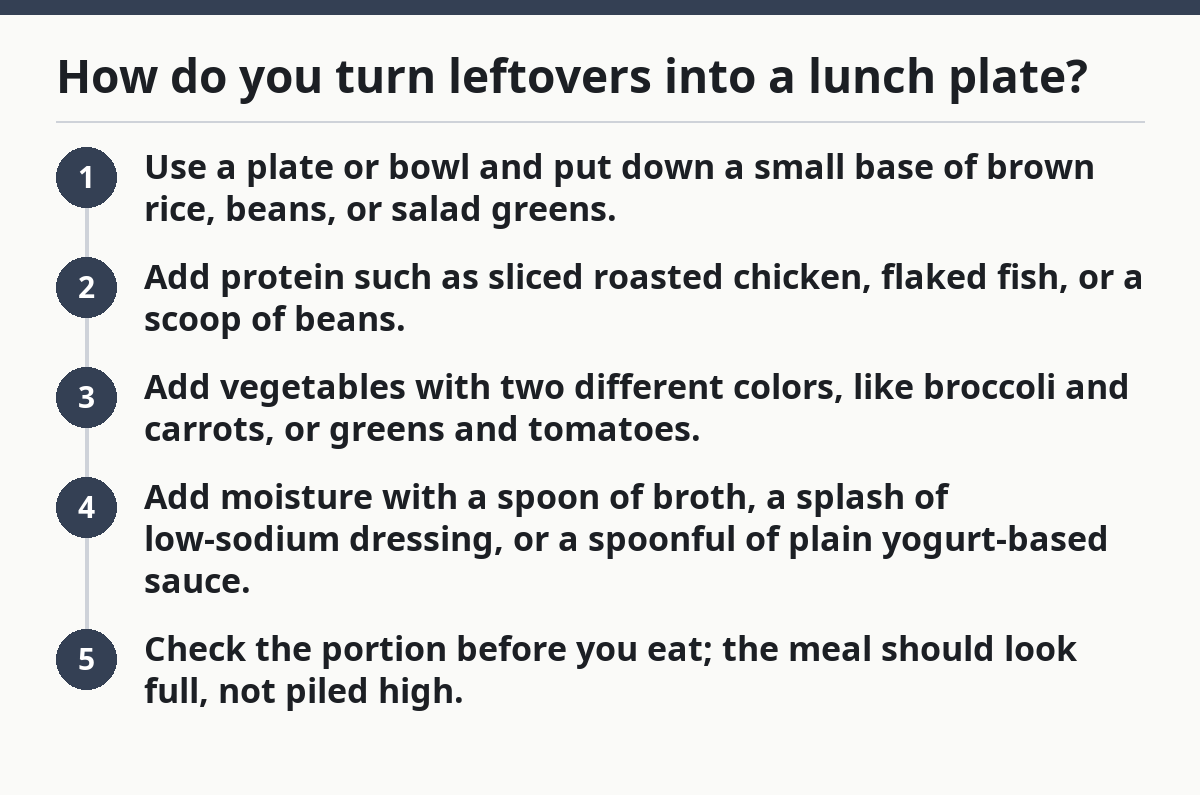
How do you turn leftovers into a lunch plate?
You turn leftovers into a lunch plate by pairing 1 protein, 1 grain or bean, and 2 vegetables on one plate or in one bowl. That keeps the meal steady without making it heavy, and it gives you room to control salt, texture, and portion size.
For example, a plate built from leftovers can be easier to chew and easier to finish than a big dinner-style serving. It also helps the meal feel complete without requiring much prep.
Use this simple assembly order:
- Use a plate or bowl and put down a small base of brown rice, beans, or salad greens.
- Add protein such as sliced roasted chicken, flaked fish, or a scoop of beans.
- Add vegetables with two different colors, like broccoli and carrots, or greens and tomatoes.
- Add moisture with a spoon of broth, a splash of low-sodium dressing, or a spoonful of plain yogurt-based sauce.
- Check the portion before you eat; the meal should look full, not piled high.
A standard dinner plate can invite oversized portions, so a 9-inch plate or a medium bowl often works better for lunch. That is not a magic size. It is simply easier to manage than a large platter, especially if hand strength, appetite, or fatigue make big meals feel like too much.
Leftovers can also solve the “what’s for lunch?” problem in one shot. A scoop of chicken, a half-cup of rice, and a cup of vegetables is often enough to feel like a real meal without drifting into a heavy afternoon slump.
On the flip side, a lunch built from only starch — say, rice and bread — misses the point. It fills the stomach fast and leaves out protein and vegetables, the two parts that make the plate more balanced.
Build a heart-healthy lunch from leftovers in 5 steps
You build a heart-healthy lunch from leftovers by keeping each step small, clean, and easy to repeat. The goal is not to cook again; it is to rearrange what you already have so the meal lands better for heart health and older adults.
Since the fridge often holds only a few containers, a short routine helps. Picture this: the fridge holds three containers and one half-empty salad box. You do not need a full meal plan. You need a short routine that tells you what to do first and what to skip.
- Inspect the container and use leftovers that look, smell, and feel normal; if something seems off, throw it out.
- Reheat the food until it is hot throughout, especially soups, rice, chicken, and beans.
- Drain or rinse salty extras like canned beans or saucy vegetables before they go on the plate.
- Combine the foods in a bowl or plate so vegetables take up about half the space.
- Taste before salting and use herbs, lemon juice, pepper, or vinegar first.
Food safety matters here. Leftovers stored properly in the fridge are generally meant to be eaten within a few days, and the USDA’s Food Safety and Inspection Service has clear guidance on refrigeration and reheating. If you want a source to keep open, the USDA leftovers and food safety page covers the basics in plain language.
The truth is, a lot of leftover lunches go wrong at step 5. People reach for the shaker before they taste the food. That makes a small salt problem into a bigger one. If the chicken already has seasoning, skip the extra sodium and lean on garlic, basil, dill, or black pepper instead.
Here’s the catch: reheated rice and soup need real heat, not a quick warm-up that leaves cold spots. A microwave-safe cover helps, and stirring once halfway through usually gives a better result than a single blast on high.
Portioning leftovers for smaller appetites
Portioning leftovers for a senior lunch means serving less food in more balanced parts, not simply eating a smaller dinner. That matters because appetite can change with age, and a lunch that looks too large often gets skipped.
Because smaller appetites are common, a better lunch needs to look inviting as well as reasonable. Picture this: you are staring at a container of baked chicken and rice, but the amount looks like dinner for two. A smaller, better-arranged lunch is easier to face and easier to finish.
A practical guide:
- Protein: about a palm-sized piece of chicken, fish, or tofu
- Grain or starch: a small scoop of brown rice, whole-wheat pasta, or potato
- Vegetables: fill most of the rest of the plate with cooked vegetables or salad greens
- Soup: use a mug-sized bowl plus a side of fruit or greens if the soup is light
A smaller plate can help the meal look complete without looking overloaded. That visual cue matters. Many older adults stop eating when the food seems endless, even if the actual amount is modest.
If chewing is hard, cut the protein into small strips and soften the plate with moist foods. A chicken-and-vegetable bowl with broth is often easier to manage than dry meat on a large plate.
Do not build lunch around one giant portion of anything, even if it is healthy. A mountain of brown rice is still mostly starch. A huge serving of soup can hide a lot of sodium. Better to split the meal across protein, grain, and vegetables.
A quick rule: if the container looks like it belongs on a dinner table, divide it in half before you serve it. That simple cut often gives you the right lunch amount without measuring cups.
Use soup, beans, and cooked vegetables without overdoing sodium
You use soup, beans, and cooked vegetables well by choosing the lower-salt parts and brightening them with fresh ingredients. That keeps the meal heart-conscious without turning lunch into a bland chore.
Since many leftovers are soups or stews, the sodium check matters even more. Picture this: you have a pot of leftover soup, a container of beans, and steamed broccoli from last night. Those foods can make a strong lunch if you treat the salty parts carefully and, when needed, check with a health professional about sodium limits that fit the person eating it.
Soup is the easiest place to overdo sodium. A broth-heavy bowl can taste light but still carry a lot of salt from the stock, canned ingredients, or seasoning packet. If the soup tastes sharp or makes you thirsty right after, it is probably not the best daily lunch base.
Beans are useful because they bring fiber and protein, but canned beans often need rinsing. A quick rinse under cool water can remove some surface salt. Then mix them with cooked vegetables, greens, or a little brown rice so the texture does not feel heavy.
Cooked vegetables are one of the easiest leftovers to reuse. Broccoli, carrots, cauliflower, green beans, spinach, and zucchini all fit into a lunch bowl or soup. If they were cooked soft the night before, they often reheat well and are easier to chew than raw vegetables.
Use this combination:
- Soup plus salad greens on the side
- Beans plus brown rice and cooked peppers
- Cooked vegetables plus roasted chicken and a lemony dressing
- Vegetables blended into soup to stretch the volume without adding salt
On the flip side, creamy sauces can cancel the benefit of the vegetables if they are rich, salty, or both. A spoon of plain yogurt, olive oil, or unsalted broth usually does the job with less sodium.
Rebuild leftovers for chewing, comfort, and safety
You rebuild leftovers for comfort by changing texture before you think about flavor. That means cutting food smaller, adding moisture, and avoiding anything dry, tough, or crumby if chewing is a problem.
Because texture can decide whether a lunch gets eaten, the goal is to make the food easy from the first bite. Picture this: the leftovers are fine, but the meal still feels hard to eat. That is often a texture problem, not a flavor problem.
For easier lunches:
- Slice chicken thin instead of serving a thick chunk
- Mash beans lightly with a fork for a softer spread
- Warm rice with broth so it does not dry out
- Toss greens with a little dressing so they are easier to chew
- Add cooked vegetables to soup or grain bowls for softness
A food thermometer is useful if you are unsure about reheating. The USDA says leftovers should be reheated thoroughly, and poultry especially needs to be heated all the way through. That does not mean overcooked. It means hot enough to be safe and pleasant to eat.
The hard truth: some leftovers are not a good lunch choice. Fried food, creamy casseroles, and heavily salted takeout often bring too much fat or sodium for the kind of lunch this page is aiming for. They can still be eaten, but they are a poor starting point for a heart-healthy rebuild.
This is also not the place for foods that have sat too long in the fridge or were cooled and stored badly. Safety comes before thrift. If a container has been forgotten, or if the smell is wrong, throw it out without trying to rescue it.
The hub on heart-healthy lunch recipes for seniors can help when you want fresh meal ideas instead of a leftover rebuild. This page stays focused on the leftover route, because that is where most people need the shortcut.
How can seniors turn dinner leftovers into lunch?
Seniors can turn dinner leftovers into lunch by choosing one protein, one grain or bean, and two vegetables, then reheating everything until hot. That creates a lighter meal that still feels complete. A bowl of chicken, brown rice, and cooked broccoli is a better lunch than a plate full of one leftover food.
What leftovers are safest and easiest for a heart-healthy lunch?
The safest and easiest leftovers are plain roasted chicken, brown rice, beans, cooked vegetables, salad greens, and soup that was stored well and reheated properly. Those foods are simple to portion and easy to pair without adding much sodium. Skip leftovers that are greasy, heavily sauced, or too old to trust.
Drafted with AI; not yet reviewed by a person.