
Last updated: November 19, 2026
Quick answer: for Soft Heart-Healthy Sandwich Breads for Seniors That Are Easy to Chew, the easiest options are usually a soft whole-wheat loaf, sandwich thins, pita bread, or tortillas, depending on how much chewing effort is needed. Soft heart-healthy sandwich breads for seniors are the ones that stay tender, slice cleanly, and don’t fight the jaw. This guide settles which breads chew easiest, how to keep them from drying out, and when a wrap works better than a loaf.
Key Takeaways
- Soft bread is only half the job; moisture and crust control matter just as much.
- Whole-wheat, sandwich thins, pita, and tortillas can all fit a heart-healthy plate if the texture is handled right.
- Light toasting can help structure, but too much heat turns bread brittle fast.
- Crust removal is not a sign of “baby food”; it is a practical fix for older jaws and dentures.
- The sandwich that works best is the one that stays soft from first bite to last.
What bread is easiest to chew for seniors?
Soft whole-wheat sandwich bread is usually the easiest loaf to chew if the crumb is fine and the crust is thin. A loaf sliced at about 1/2 inch stays easier to manage than a thick, airy artisan slice with a hard shell. The truth is, texture beats trendiness here.
For example, a sandwich built around one slice should not spring back, scrape the gums, or crumble into dry bits after two bites. That means choosing bread with a tight crumb, a soft crust, and enough moisture to bend under light pressure. It also means skipping crusty boule bread, seeded rolls with hard edges, and anything that flakes apart before the filling reaches the tongue.
For a heart-healthy sandwich, the bread itself should do three jobs: hold the filling, stay soft, and bring useful grain. Whole-wheat bread can do that when the label puts whole wheat first and the slice feels pliable, not stiff. Bread that feels dry in the bag will usually feel drier in the mouth.
Use this quick filter at the store:
- Good sign: slices bend without cracking.
- Good sign: the crust compresses with a gentle pinch.
- Poor sign: the slice tears into crumbs when folded.
- Poor sign: the crust sounds hard when tapped.
A plain soft loaf is not the only answer. Some seniors do better with sandwich thins, because the flatter shape makes each bite easier to manage. Others prefer tortillas because there is no top crust at all. That is not a downgrade. It is a texture strategy.
One honest limit: very soft bread can get gummy if it is overloaded with wet fillings. That is a bread problem, not a person problem. The fix is better moisture control, not a tougher loaf.
How do I make sandwich bread easier to chew?
Lightly toast the bread, remove the crust, and add moisture so the sandwich stays soft instead of stiff. That three-part move is the main fix for chewability, and it takes less than 5 minutes. Here’s the catch: each part has to stay gentle.
For seniors who want a sandwich that feels neat in the hand but doesn’t fight the mouth, a little heat can firm the bread enough to grip. Full toast makes thin bread brittle and more likely to crack. For many seniors, that dry snap is the problem.
Use this order for the best result:
- Start with soft bread. Pick a loaf, pita, sandwich thin, or tortilla that bends easily before you touch heat.
- Toast lightly, if needed. Use a toaster or pan over low heat for just long enough to warm the surface. Stop before the bread turns brown and rigid.
- Trim the crust. Remove hard edges from loaf bread, or cut the sandwich into smaller squares or triangles.
- Add moisture inside. Spread avocado, cottage cheese, or another soft filling in a thin layer so the bite does not dry out.
- Press and rest for 1 minute. Let the sandwich settle so the filling softens the bread a little more.
That last minute matters more than people think. Bread absorbs a bit of moisture from the filling, and the texture usually improves without any extra work.
A few plain rules help a lot:
- Toast only one side if the bread is already tender.
- Skip panini presses and heavy grilling.
- Spread filling to the corners so the dry crust line does not take over.
- If the bread is already dry, do not “save” it with more heat.
This method works for both loaf bread and wrap-style bread. It is a texture fix, not a recipe. If the bread still feels rough after the first bite, the slice was too dry to begin with.
Which bread styles work best for heart health and chewing?
Whole-wheat bread, sandwich thins, pita bread, and tortillas each solve a different texture problem, and the best one depends on how much chewing effort the eater can handle. Whole wheat gives the strongest grain profile. Sandwich thins and tortillas usually give the easiest bite. Pita sits in the middle.
For shoppers comparing bread in the aisle, the label means less than the feel of the bread and the way it breaks in the hand. That is why the same meal can feel easy in a tortilla and annoying in a thick loaf.
Whole-wheat bread works well when the loaf is soft and the slice is narrow enough to fit small bites. It is the most familiar sandwich choice and the easiest one to pair with the standard fillings people already keep at home. The downside is that whole-grain loaves can be drier than white bread, so they need more moisture support.
Sandwich thins are a smart middle ground. They are flat, portion-friendly, and easy to bite through. They also keep the sandwich from feeling bulky. The trade-off is that they offer less structure, so wet fillings can slide if you overstuff them.
Pita bread gives a soft pocket or a foldable round. It is helpful when you want a neat shape without a hard top crust. The catch is that pita can dry out fast if it sits open too long.
Tortillas are the easiest wrap-style option for many seniors. They bend, fold, and usually need less chewing than a thick slice. Their weakness is obvious: they can tear if the filling is too wet or too heavy.
A practical short list:
- Best chewability: tortillas
- Best loaf-style option: soft whole-wheat bread
- Best compromise: sandwich thins
- Best pocket option: pita bread
For heart health, the bread choice still needs to fit the rest of the plate. The bread itself won’t carry the meal. It just needs to make room for a lighter, softer sandwich that’s easy to manage.
How do I keep the bread from drying out?
Keep bread soft by storing it in a closed bag, warming it briefly, and pairing it with moist fillings like avocado or cottage cheese. Dry bread gets chewy in the wrong way—tough, not tender. That is the texture to avoid.
If you choose a soft loaf but the slices feel stale by lunchtime, the problem is often air, not age. Bread loses moisture fast on the counter, and toasting it twice makes that loss worse. The fix is simple, but it has to be done early.
A few storage habits help:
- Keep sliced bread sealed after opening.
- Use bread within the soft window on the package, not after it feels “almost okay.”
- Freeze extra slices if the loaf will not be used soon.
- Thaw at room temperature in the bag so the slice keeps some moisture.
Moist fillings do most of the work in the sandwich itself. Avocado adds softness and a smooth bite. Cottage cheese gives a creamy texture that can be spread or spooned onto bread without making it brittle. Both can help bread feel gentler in the mouth if they are used in a thin layer rather than piled high.
A few easy pairing ideas:
- Avocado on soft whole-wheat bread.
- Cottage cheese in pita with thin cucumber slices.
- Avocado in a tortilla with a soft scramble.
- Cottage cheese on a sandwich thin with very little crunch.
The mistake to avoid is stacking dry food on dry bread. Thin turkey, dry greens, and toasted bread can turn a soft lunch into a jaw workout. If the sandwich needs crunch, use a small amount and keep the rest moist.
For extra structure, spread a soft layer on both bread surfaces. That gives the bite some slip and protects the crumb from drying out too fast. It also helps hold the sandwich together, which matters when the bread is already tender.
What is the best way to choose bread at the store?
Choose bread that bends, compresses, and lists whole grain clearly if you want a soft, heart-healthy sandwich bread that is easy to chew. The label matters, but the hand test matters more. If the slice feels stiff in the bag, it won’t improve later.
For example, you may stand in front of 20 loaves and find that half of them look healthy enough to fool anyone. A “multigrain” label can sound great while the loaf still feels dry and crusty. That is why the texture check comes first.
Use this simple store check:
| What to check | What to look for | Why it helps |
|---|---|---|
| Slice feel | Bends without cracking | Easier chewing |
| Crust | Thin and soft | Less jaw effort |
| Grain label | Whole wheat or whole grain first | Better heart-healthy fit |
| Crumb | Fine and even | Less crumbling |
| Package feel | Soft, not brittle | Better first bite |
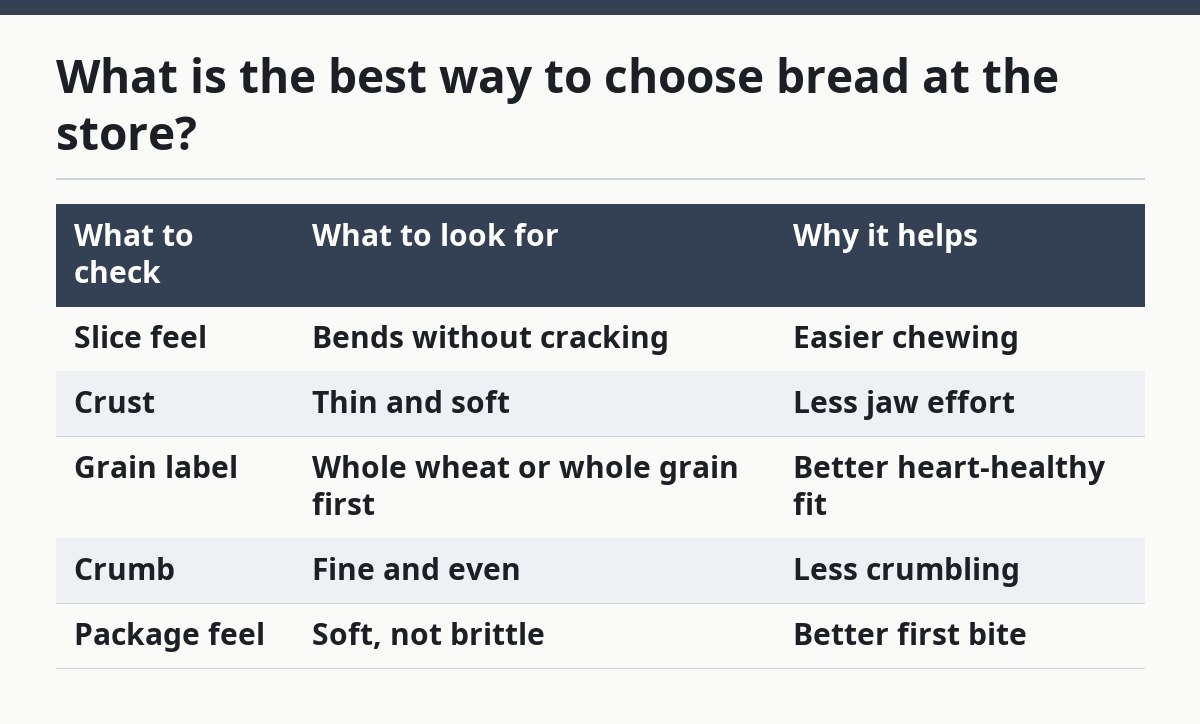
A sandwich bread for seniors does not need a long ingredient list to be useful, but it does need honest texture. Whole-wheat bread can still be too hard if it is packed with seeds or dried out on the shelf. On the flip side, a very soft white loaf may chew easily but may not fit the same heart-health goal as well as a whole-grain option.
Here’s a simple rule: if you can fold the slice gently without a crack line, you’re closer to the right bread. If the crust makes the slice spring back like cardboard, keep moving.
Brand names change and packaging changes, so I’d rather give the rule than pretend one loaf wins forever. The better choice is the one that stays soft in your hand, supports the filling, and doesn’t need a knife every few bites.
For more texture-safe meal ideas that fit the same eating style, the hub page on heart-healthy soft meals for seniors can fill in the wider meal plan.
For broader guidance on healthy eating patterns, see the Dietary Guidelines for Americans and the American Heart Association.
When should I use a wrap instead of a sandwich loaf?
Use a wrap when loaf bread is too bulky, too dry, or too hard to chew cleanly. A tortilla or soft pita often works better than sliced bread when the goal is fewer crumbs, less crust, and a flatter bite. That choice is practical, not fancy.
For seniors dealing with dentures or a tired jaw, a wrap can reduce the amount of chewing needed because it folds instead of stacking. It also helps if a sandwich keeps falling apart before the second bite.
Wrap-style breads fit several needs:
- They often have less crust than sliced bread.
- They fold into a thinner bundle.
- They can hold soft fillings without needing thick slices.
- They are easier to cut into small pieces for slower eating.
Tortillas are often the easiest wrap because they stay flexible at room temperature. Pita bread is useful when you want a pocket with less mess, but it can be drier than a tortilla. Sandwich thins are another middle option if the eater still wants the feel of a sandwich without the bulk of thick slices.
The downside of wraps is that they can become gummy if overfilled or soggy if the filling is too wet. A wrap that is stuffed past its limit is hard to hold and harder to chew. Use a modest amount of filling and keep sauces thin.
A wrap is not the answer for every senior. If the eater likes a standard sandwich shape, a soft loaf may feel more familiar and easier to enjoy. But when chewing gets tiring fast, wraps are often the cleanest workaround.
FAQ
What bread is easiest to chew for seniors?
The easiest bread to chew is usually a soft tortilla or a very soft whole-wheat sandwich bread. Tortillas bend with less force, while soft loaf bread gives a familiar sandwich shape without much crust. If the bread cracks when folded, it is too dry for easy chewing.
Should sandwich bread be toasted for easier eating?
Light toasting can help if the bread is too soft to hold, but heavy toasting usually makes it harder to chew. The goal is a slight set on the surface, not a crisp shell. If the bread turns brown and brittle, it has gone too far for a soft-texture meal.
What fillings keep soft sandwiches from falling apart?
Soft fillings like avocado and cottage cheese help bind the sandwich and add moisture. Thin, even layers work better than thick scoops, because they keep the bread from sliding or tearing. A dry filling on dry bread is the fastest way to make the sandwich fall apart.
Drafted with AI; not yet reviewed by a person.