Last updated: November 19, 2026
Key Takeaways
- A heart-healthy lunch for limited chewing should be soft, moist, and protein-rich, without hard crusts, dry crumbs, or chewy skins.
- Many of the best options are already soft, hold together, and taste good cold or gently warmed.
- Build lunch from one soft protein, one soft fiber food, and moisture so it stays easy to swallow.
- One-plate lunches can be simpler because they mean fewer pieces, fewer moving parts, and less cleanup.
Best Heart-Healthy Lunches for Seniors With Limited Chewing are usually soft, moist, and easy to fork through, and this guide gives 10 practical ideas plus a simple way to build them. If chewing is difficult, the goal is not a perfect plate; it is a lunch that is gentle, filling, and heart-conscious. The sections below explain what to choose, what to avoid, and how to keep texture manageable.
What makes a heart-healthy lunch soft enough to chew?
A heart-healthy lunch for limited chewing should be soft, moist, and protein-rich, with no hard crusts, dry crumbs, or chewy skins. Picture this: you’re hungry at noon, but one bite of dry toast or raw carrot is enough to make lunch feel like work. The fix is a meal that breaks apart with a fork and stays kind to your mouth.
The most workable lunch usually has three parts: a soft protein, a soft plant food, and a moist base. Think eggs, tuna, beans, avocado, yogurt, mashed vegetables, or cooked grains. That structure helps you avoid the trap of eating only soup or only fruit, which can leave lunch thin on protein and staying power.
Keep an eye on sodium and added fats. Many canned, deli, and packaged foods are salty, and that matters for a heart-healthy pattern. The American Heart Association’s guidance on sodium is a useful reference point, and the USDA’s MyPlate pattern gives a simple frame for balanced plates.
Useful references: American Heart Association and USDA MyPlate.
- Soft texture first
- Protein in every lunch
- Fiber from tender plants
- Moisture from yogurt, sauce, or avocado
A lunch can be soft and still feel like a real meal. It just needs the right texture.
Best heart-healthy lunch meals for seniors with limited chewing
The most useful lunches are the ones that already come out soft, hold together, and taste good cold or gently warmed. Picture this: you’re opening the fridge at 11:30, and you want something you can eat with a fork, not a workout for your jaw. That is where soft lunch meals shine.
The winners here are familiar foods prepared with a little care. Egg salad, tuna salad, and hummus with soft bread are strong starting points because they are already mashable and flexible. Avocado adds creaminess and helps replace dry spreads. Yogurt works as a side, a base for dressing, or part of a savory bowl if plain and unsweetened.
-
Egg salad on soft bread
Use chopped eggs mixed with a little plain yogurt or a small amount of mayonnaise. Choose soft bread with the crusts trimmed if needed, or serve it open-faced. The result should be moist enough that it doesn’t crumble into dry bits. -
Tuna salad with mashed avocado
Mix tuna with avocado and a spoonful of yogurt or soft mayo for a smoother bite. This gives you protein and healthy fat without the rough texture that dry tuna can have. Drain well, but not so much that it turns chalky. -
Hummus plate with very soft bread
Spread hummus on soft pita, soft sandwich bread, or a tender wrap if that format works for the person eating it. Add mashed cucumber, roasted red pepper, or very soft tomato if those sit well. Skip crisp crackers unless they dissolve easily. -
Yogurt bowl with soft fruit and oats
Plain yogurt can carry sliced banana, ripe peaches, or soft berries. Stir in softened oats or chia only if the texture is comfortable; some seniors dislike seeds. This lunch works best when sugar stays low and the fruit is fully ripe. -
Bean mash or lentil spread sandwich
Mashed white beans or lentils can be seasoned with lemon, herbs, and a little olive oil. Spread thinly so the texture stays smooth. If the beans are dry or grainy, add broth or yogurt and mash again.
- Gentle on teeth, gums, or dentures that tire fast
- Easier than dry, crunchy, or stringy lunches
- Simple to scale up without adding chew
These meals do not need a special menu or a blender.
How do you build a lunch that is easy to chew and still filling?
You build it by starting with one soft protein, adding one soft fiber food, then binding everything with moisture so the whole lunch stays easy to swallow. Picture this: you’re making lunch at the counter, and every ingredient has to work with a fork, not fight it. That is the whole job.
Here is the catch: many “healthy” lunch foods turn hard when they sit in the fridge too long. Dry chicken breast, raw cabbage, crusty bread, and thick crackers all create more chewing than a senior with limited chewing should have to do. The better move is to make the texture soft on purpose.
-
Pick the protein
Use egg salad, tuna salad, hummus, mashed beans, flaky fish, or plain yogurt-based spreads. Choose foods that hold together without needing repeated chewing. Soft scrambled eggs can also work if lunch needs to be warm. -
Add a tender fiber source
Use ripe avocado, cooked vegetables, soft fruit, or well-cooked oats. Fiber helps the meal feel complete, but it should not scratch or resist the bite. If it is crisp, raw, or stringy, it is probably the wrong texture for this lunch. -
Add moisture
Stir in yogurt, olive oil, mashed avocado, or a soft dressing. This keeps the meal from drying out on the plate. A dry lunch is harder to chew and usually less appealing after the first few bites. -
Use a soft carrier
Choose soft bread, tender pita, or a spoon-friendly bowl. If bread is used, trim crusts or toast very lightly only if that still leaves it soft. A hard crust can turn a good filling into a bad bite. -
Check the final texture
The food should break apart easily with a fork and not leave hard bits behind. If it takes a lot of jaw work, mash it more or add moisture. The result should feel effortless, not delicate.
- Soft protein
- Tender fiber
- Moist binder
- Easy carrier
This is the same pattern that works week after week.
Lunches that fit on one plate or in one bowl
One-plate lunches are easier to manage because there are fewer pieces to chew, fewer moving parts, and less cleanup. Picture this: you’re tired at midday, and a separate salad, sandwich, and snack plate feels like too much. A single bowl or plate keeps the meal calmer.
A bowl lunch also makes portion control simpler. You can see the soft texture, mix it in one place, and stop before the meal gets too dry or too bulky. That matters for seniors who eat slowly or get tired partway through lunch.
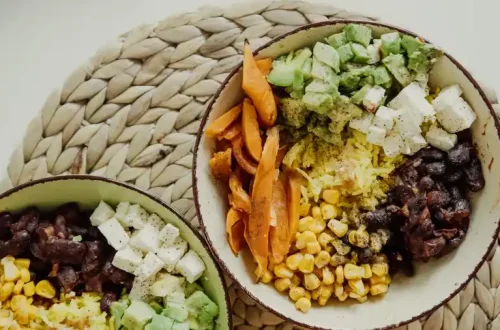
Good examples include a tuna-avocado bowl, a soft egg salad plate with peeled cucumber slices that have been seeded and very thinly sliced, or a yogurt bowl with soft fruit and a side of mashed beans on soft bread. The key is not the label; it is the texture. A bowl can be heart-healthy and still look plain if it works.
- Tuna-avocado bowl with chopped celery skipped if it is too stringy
- Egg salad plate with soft bread triangles
- Hummus bowl with mashed chickpeas and olive oil
- Yogurt bowl with banana and soft oats
- Bean mash plate with cooked carrots and tender greens
Use a small fork or spoon if that helps control each bite. A meal that is easy to pick up is not the point here; a meal that is easy to chew is.
What lunch mistakes make chewing harder?
The biggest mistake is choosing foods that are healthy on paper but rough in the mouth. Picture this: you’re trying to eat “better,” but every bite asks for more chewing than your jaw wants to give. That is where lunch starts to fail.
Dryness is the first problem. Crackly toast, dry chicken, and crumbly baked items fall apart in the wrong way and leave sharp bits behind. Large chunks are the second problem. Even soft foods become hard work when they are left in big cubes, especially for someone with dentures or tired jaw muscles.
Very acidic or very salty add-ins can also make lunch less comfortable. Pickles, heavily seasoned deli meats, and strong condiment layers may be unpleasant if the mouth is already sensitive. That does not mean flavor has to disappear. It means flavor should come from herbs, a little lemon, or a mild dressing instead of rough texture and salt.
Avoid these common traps:
- Hard bread crusts
- Dry crackers
- Raw carrot sticks
- Tough lettuce
- Chunky, unmoistened tuna
- Big apple pieces
- Chewy meat strips
The fix is simple: chop smaller, cook longer, or mash more. If a lunch feels like a task, it is the wrong lunch for that day.
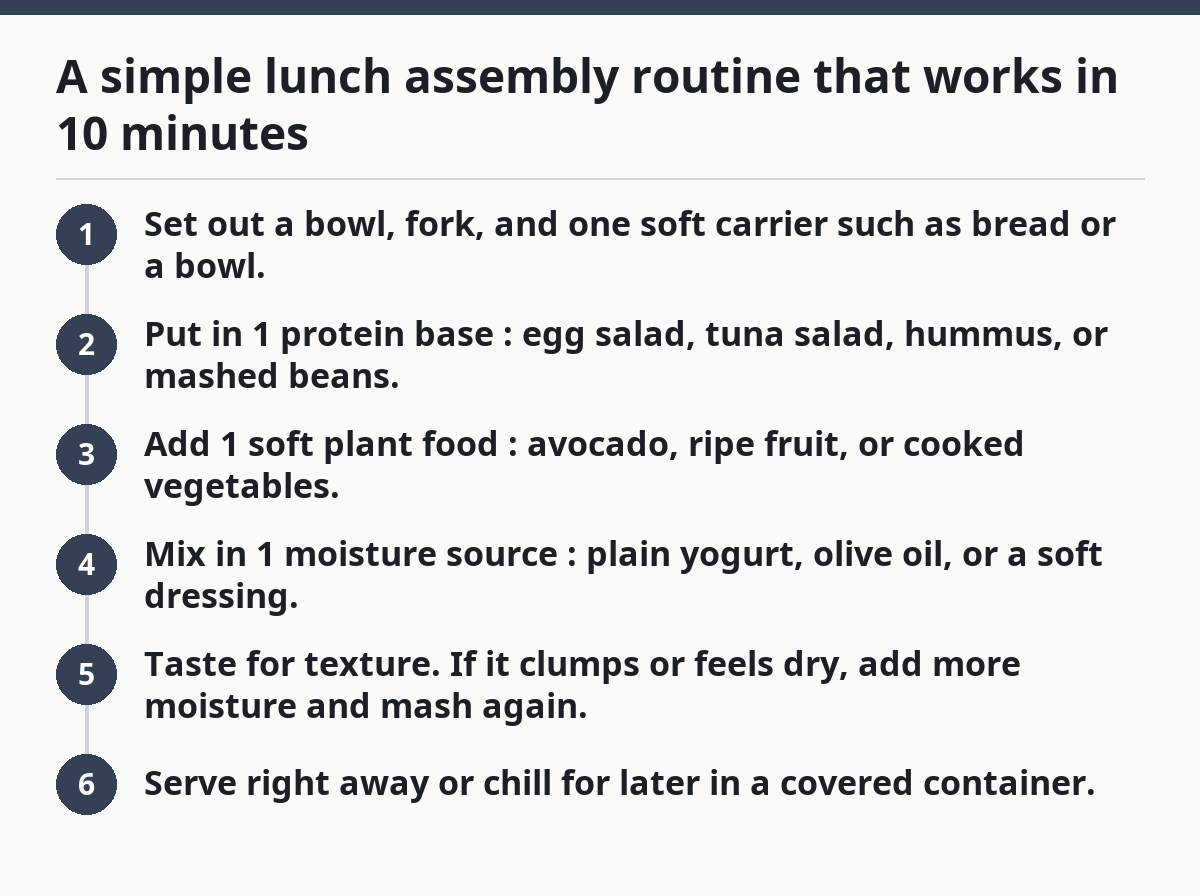
A simple lunch assembly routine that works in 10 minutes
A simple assembly routine keeps lunch soft, balanced, and realistic on busy days. Picture this: you’re standing in the kitchen and don’t want a full recipe, just a lunch that comes together fast and eats easily. This is where a routine beats improvisation.
Start with a protein, then add a soft side, then adjust texture. If the lunch is too thick, add yogurt, avocado, or a little olive oil. If it is too loose, fold in another spoonful of egg, tuna, or beans. The goal is a spoonable or fork-soft meal, not a picture-perfect plate.
- Set out a bowl, fork, and one soft carrier such as bread or a bowl.
- Put in 1 protein base: egg salad, tuna salad, hummus, or mashed beans.
- Add 1 soft plant food: avocado, ripe fruit, or cooked vegetables.
- Mix in 1 moisture source: plain yogurt, olive oil, or a soft dressing.
- Taste for texture. If it clumps or feels dry, add more moisture and mash again.
- Serve right away or chill for later in a covered container.
For food safety, chilled leftovers should go into the refrigerator promptly and be stored in clean, covered containers. That matters more with tuna, egg salad, and yogurt-based lunches because those foods do not sit well at room temperature for long.
The routine also makes grocery shopping easier because the same base foods can rotate through the week.
Best heart-healthy lunch meal ideas to keep on rotation
The best rotation uses a few repeatable meals so lunch does not become a daily decision. Picture this: you’re tired of thinking, but you still need something that tastes good and goes down easily. Repetition helps here, as long as the flavors change a little.
A useful rotation might look like this: egg salad one day, tuna salad the next, hummus and soft bread after that, then a yogurt bowl or mashed bean lunch. That mix gives you variety in protein and texture without forcing you into crunchy foods. It also keeps sodium in check if you build from plain ingredients and season lightly.
If you want a fuller plate, pair one of those main lunches with soft fruit or cooked vegetables. If you want a lighter lunch, keep it to one bowl and a side of yogurt. The right size depends on appetite, but the texture rule stays the same.
- Egg salad for a cold lunch that holds well
- Tuna salad for quick protein
- Hummus for a plant-based option
- Avocado for moisture and softness
- Yogurt for a gentle side or base
These are not fancy lunches. They are practical ones. That is exactly why they work.
What can seniors eat for lunch if chewing is hard?
Seniors can eat soft, moist lunches like egg salad, tuna salad, hummus, yogurt, mashed beans, avocado, and cooked vegetables. The most reliable choices are foods that break apart with a fork and do not need much bite force. Soft bread can work too, as long as the crust is not tough.
What lunches are soft but still heart-healthy?
Soft heart-healthy lunches include egg salad with plain yogurt, tuna mixed with avocado, hummus on soft bread, plain yogurt with soft fruit, and mashed bean spreads. These meals can stay lower in sodium and still give protein and fiber. The key is to keep textures smooth and avoid dry add-ins.
How do you make lunch easier to chew?
Make lunch easier to chew by chopping smaller, cooking longer, and adding moisture. Use yogurt, avocado, olive oil, or soft dressing to keep the food from drying out. Skip crunchy sides and hard crusts, and aim for foods that can be eaten with a fork or spoon without much jaw work.
Drafted with AI; not yet reviewed by a person.