Last updated: November 19, 2026
Quick Answer: A heart-healthy afternoon snack for seniors with low energy is usually 150 to 250 calories, with protein plus fiber and a small amount of healthy fat. An afternoon snack can steady low energy without turning into a second lunch, especially for seniors who want something heart-healthy. In this article on Heart-Healthy Afternoon Snack Ideas for Seniors With Low Energy, the goal is to keep the snack small enough to help energy come up gradually instead of spiking and crashing.
Key Takeaways
- Small, low-sodium snacks built around protein, fiber, and unsaturated fat can help keep energy steadier.
- Protein, fiber, and little added sugar usually support the most even afternoon energy when portions stay small.
- Many useful snack ideas take about 2 minutes to assemble from nuts, fruit, yogurt, whole grain crackers, and hummus.
- The main foods to avoid are large portions of refined starch, salty snack mixes, and sweets that digest quickly and leave a slump behind.
What makes an afternoon snack heart-healthy for seniors?

A heart-healthy afternoon snack for seniors is one that is small, low in sodium, and built around protein, fiber, and unsaturated fat. That combination helps the snack feel satisfying at around 150 to 250 calories, without the heavy, sleepy feeling a large meal can bring.
Low energy in the afternoon often leads people toward crackers, sweets, or chips because those foods are quick and easy. However, refined starch and added sugar can fade fast. A better pattern is simple: combine one protein food, one fiber-rich food, and, if needed, a small amount of healthy fat. Think Greek yogurt plus berries, or whole grain crackers plus hummus.
For seniors, the practical challenge is not only the nutrition label. Chewing can be harder, appetite may be lower, and some foods need to be softer or easier to portion. Therefore, texture matters as much as ingredients. A snack that is technically heart-friendly but too hard to chew, too dry, or too salty will sit in the cupboard untouched.
This is also the place to be honest about limits. A snack can support energy, but it should not be treated like a cure for fatigue that keeps happening every day. If low energy is sudden, severe, or paired with dizziness, chest discomfort, shortness of breath, or swelling, it deserves medical attention rather than a snack fix. For general heart guidance, the American Heart Association and the NHLBI both have practical food-pattern advice that can help shape snack choices, and a clinician or dietitian can help if fatigue keeps returning.
The easiest formula for a steady-energy snack
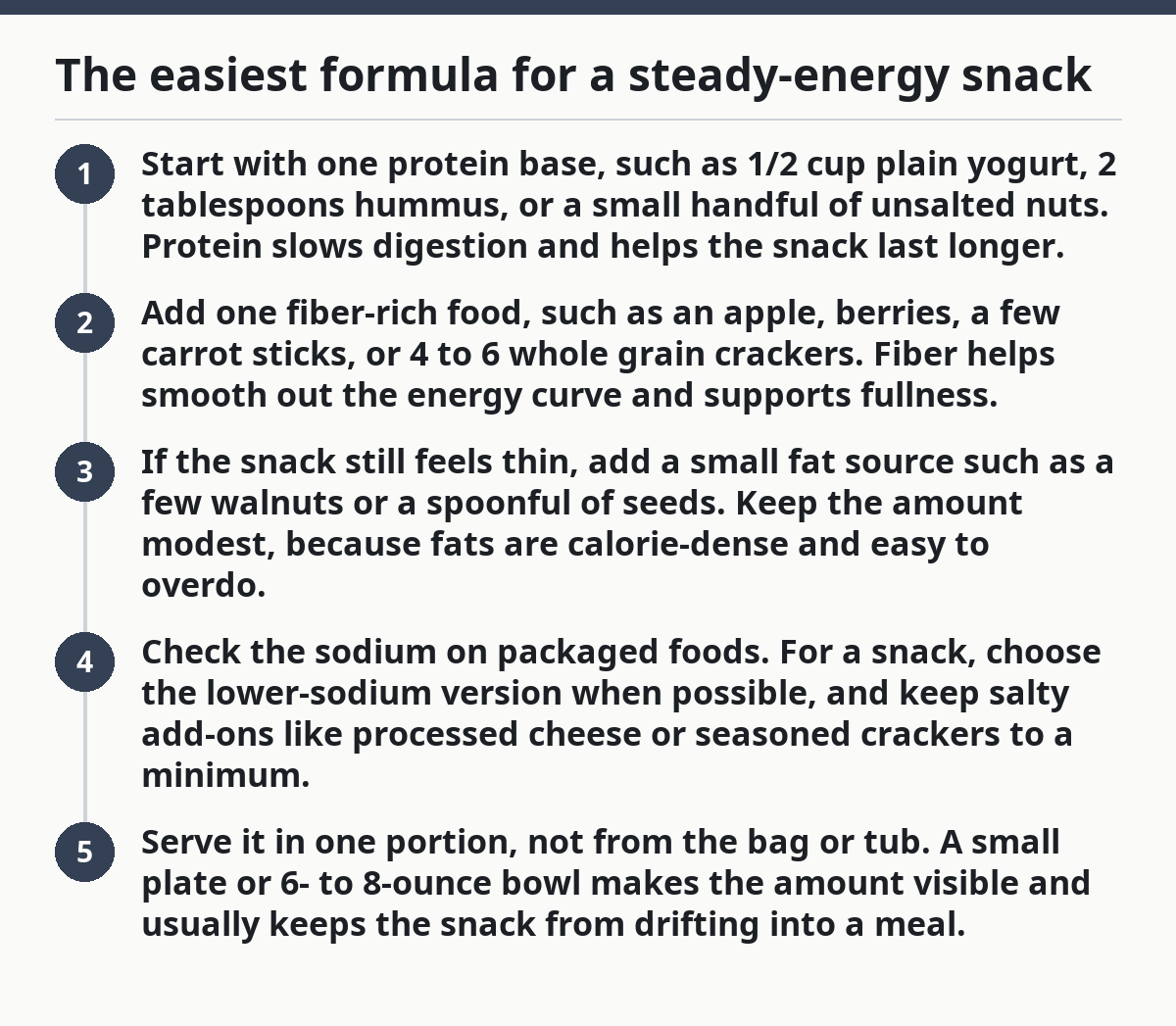
Because the goal is steady energy rather than a big meal, the easiest formula is: choose 1 protein food, 1 fiber-rich food, and keep the portion to 1 small bowl, cup, or handful. That gives a snack that is filling enough to help but not so large that it replaces dinner.
Use this 3-part method when building a snack at home or at a store:
- Start with one protein base, such as 1/2 cup plain yogurt, 2 tablespoons hummus, or a small handful of unsalted nuts. Protein slows digestion and helps the snack last longer.
- Add one fiber-rich food, such as an apple, berries, a few carrot sticks, or 4 to 6 whole grain crackers. Fiber helps smooth out the energy curve and supports fullness.
- If the snack still feels thin, add a small fat source such as a few walnuts or a spoonful of seeds. Keep the amount modest, because fats are calorie-dense and easy to overdo.
- Check the sodium on packaged foods. For a snack, choose the lower-sodium version when possible, and keep salty add-ons like processed cheese or seasoned crackers to a minimum.
- Serve it in one portion, not from the bag or tub. A small plate or 6- to 8-ounce bowl makes the amount visible and usually keeps the snack from drifting into a meal.
This formula works because it is simple enough to repeat. It is also flexible for days when chewing is a problem or appetite is low. Soft fruit, yogurt, and hummus are often easier than dry or crunchy foods. A senior who tires easily may do better with a snack that needs no knife, no stove, and no long prep time.
One helpful standard to keep in mind is the serving size on the package. Crackers, nuts, and yogurt can all become “healthy” in the abstract and still be too much in practice. A handful of nuts is not the same as a full bowl of them, and a few whole grain crackers can be a better fit than an entire sleeve.
Which snacks give steady energy without a sugar crash?

Snacks with protein, fiber, and little added sugar give the steadiest energy, especially when the portion stays small. The goal is not maximum calories; it is a smoother afternoon.
Here are practical options that fit that pattern:
- Plain Greek yogurt with berries: About 1/2 cup yogurt plus 1/4 to 1/2 cup berries gives protein and fiber in a soft, easy-to-eat bowl. Choose plain yogurt so sugar stays lower, then add fruit for flavor.
- Apple slices with peanut or almond butter: One small apple with 1 to 2 tablespoons nut butter gives crunch, fiber, and fat that slows digestion. This is a strong choice if the senior can chew comfortably.
- Whole grain crackers with hummus: Four to 6 crackers with 2 tablespoons hummus makes a light, savory snack. It is useful when someone wants something more substantial than fruit but less filling than a sandwich.
- A small handful of unsalted nuts with a clementine: Nuts bring lasting fullness; citrus adds flavor and fluid. A measured portion of unsalted or lightly salted nuts is usually the better fit than a large mix.
- Cottage cheese with sliced peach or tomato: Cottage cheese can be a good protein base, but sodium varies a lot by brand. Check the label and choose a lower-sodium option if available.
- Oatcakes or whole grain toast with avocado: A thin layer of avocado on a small piece of toast gives fiber and fat without much prep. This works best when the bread is truly whole grain, not just brown-colored.
The trade-off is that snacks very low in sugar are not always the easiest to eat, and snacks that are very easy to eat are not always the most sustaining. Fruit alone can still leave a person hungry again in an hour. A couple of whole grain crackers with yogurt, nuts, or hummus usually holds better.
Avoid turning a snack into dessert by adding sweet toppings, sweetened yogurt, or juice on the side. Those choices can make the snack feel lively in the moment but leave energy flatter later. If a senior likes sweeter flavors, fruit is the cleaner way to bring that taste without a quick spike.
Heart-healthy afternoon snack ideas with nuts, fruit, yogurt, crackers, and hummus
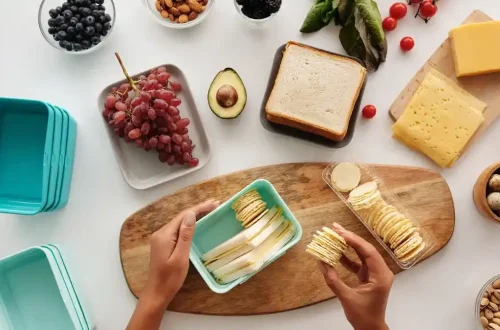
The most useful snack ideas are the ones that can be assembled in 2 minutes from five common foods: nuts, fruit, yogurt, whole grain crackers, and hummus. Those staples cover the main needs without requiring a recipe.
Try these combinations:
- Plain yogurt + blueberries + chopped walnuts: A soft snack with protein, fiber, and crunch.
- Whole grain crackers + hummus + cucumber slices: Savory, low-effort, and easy to portion on a small plate.
- Apple slices + almond butter + cinnamon: The apple brings fiber; the nut butter adds staying power.
- Cottage cheese + pineapple or melon: A cool snack that works well when appetite is low, though the sodium in cottage cheese should be checked.
- Unsalted pistachios + pear slices: Good for a senior who wants something simple and easy to pack.
- Hummus + roasted red pepper strips + crackers: This gives more flavor without needing a salty dip.
- Yogurt + sliced banana + chia seeds: Soft, filling, and useful when chewing is limited.
- Mixed nuts + an orange: A classic grab-and-go pairing that keeps prep time near zero.
These combinations work because each one keeps the snack small while still giving the body something useful. They also let the senior choose by appetite. On a warm afternoon, fruit and yogurt may feel best. On a day with more hunger, crackers and hummus may fit better.
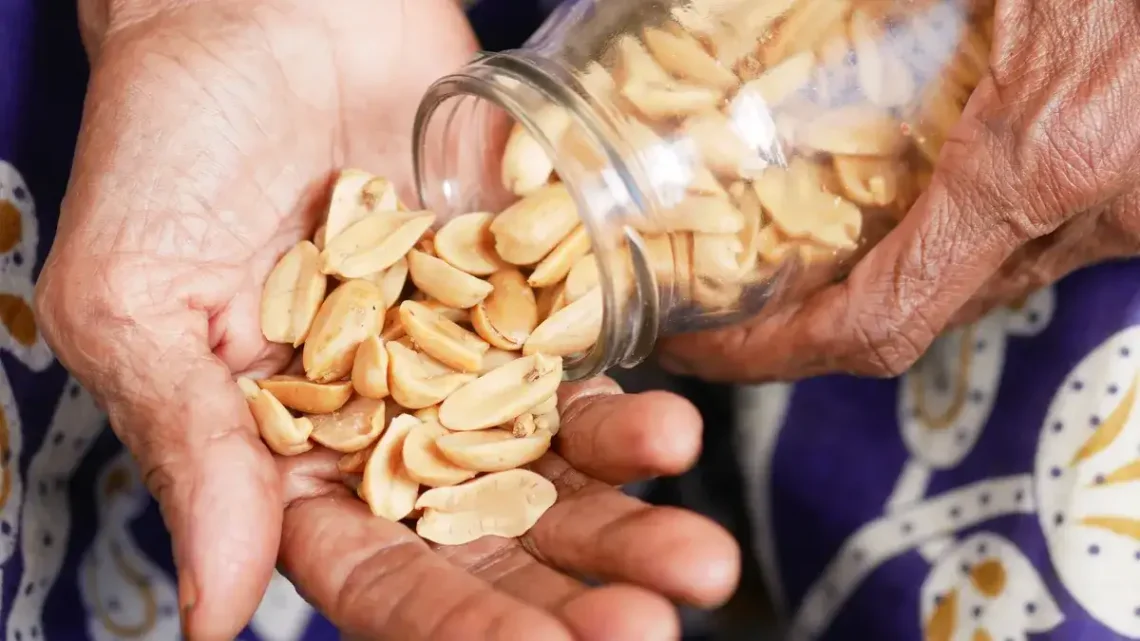
One caution: nuts are heart-friendly, but they are calorie-dense. A small handful is enough. The same is true for hummus and nut butter. A snack that is meant to support energy can become too heavy if the portions creep up.
For a broader framework on arranging lunch and snack patterns through the day, the senior heart-healthy lunch and snack planning hub can help connect this snack idea to the rest of the day, and the heart-healthy lunch planner can make the snack fit into the whole day more easily.
What to avoid when low energy is the main issue
The main foods to avoid are large portions of refined starch, salty snack mixes, and sweets that digest quickly and leave a slump behind. Those choices may feel convenient, but they often work against the very thing the senior needs.
Common mistakes show up in a few predictable ways:
- A full bowl of crackers or pretzels: This costs satiety. The snack may be easy to eat but too low in protein, so hunger returns fast. Use 4 to 6 whole grain crackers instead, and pair them with hummus or yogurt.
- Sweetened yogurt cups: This costs steadier energy. Many flavored cups are dessert-like. Plain yogurt with fruit gives the same convenience with less added sugar.
- Salt-heavy packaged snacks: This costs blood-pressure support. Chips, seasoned crackers, and many snack mixes can push sodium up quickly. Choose lower-sodium versions or switch to nuts and fruit.
- Fruit alone every time: This costs staying power. Fruit is healthy, but by itself it can be too light for someone with low energy. Add nuts, yogurt, or nut butter.
- Huge portions “because it’s healthy”: This costs comfort. Even heart-friendly foods can become too much if the portion is large. A snack should stay snack-sized.
- Dry, hard foods for someone with chewing trouble: This costs ease and appetite. Swap in softer foods such as yogurt, hummus, ripe banana, or soft fruit.
The honest limitation here is that no snack list can solve every cause of fatigue. If a senior is consistently exhausted, poorly hydrated, eating very little, or losing weight without trying, the next step is a conversation with a clinician or dietitian. A snack can support the day, but it should not be asked to cover for a bigger problem.
How to make snacks easy enough to actually eat every day
The easiest snack plan is the one that is already portioned, visible, and sitting at eye level. If a snack takes 10 minutes to assemble, it will be skipped more often than not.
A simple setup helps:
- Choose 3 to 5 snack pairs for the week. For example, yogurt and berries, crackers and hummus, or nuts and fruit.
- Pre-portion the dry items. Put nuts or crackers into small containers or zipper bags in 1 serving amounts.
- Keep soft foods within reach. Yogurt, applesauce cups, ripe fruit, and single-serve hummus containers should be placed at the front of the fridge.
- Match the snack to the time of day. A lighter snack may work at 2 p.m.; a more filling one may be better if lunch was early.
- Use a 5-minute reset before eating. Sit down, drink a few sips of water, and then eat the snack slowly. That often improves comfort and helps the body recognize fullness.
This system is useful because low energy often reduces the effort a person can spend on food. The more steps a snack requires, the less likely it is to happen. A snack plan should be friction-light, not perfect.
One figure matters here: if a snack regularly runs past 10 minutes to prepare, it is probably too complicated for the afternoon slump. The solution is not more discipline. It is simpler food, better portions, and fewer decisions.
What are good afternoon snacks for seniors?
Good afternoon snacks for seniors are small foods that bring protein, fiber, and enough flavor to feel satisfying. Plain yogurt with fruit, whole grain crackers with hummus, and a small handful of unsalted nuts are all strong choices. A practical snack is easy to chew, easy to portion, and not so salty or sweet that it causes a crash later.
Which snacks give steady energy without a sugar crash?
Snacks with protein and fiber give the most even energy. Greek yogurt with berries, apple slices with nut butter, or whole grain crackers with hummus are better than cookies, juice, or sweetened yogurt cups. The key is to keep the portion modest and avoid snacks built mostly on refined starch or added sugar.
How can a snack be heart-healthy and filling?
A snack can be heart-healthy and filling by combining a protein food, a fiber-rich food, and a small amount of unsaturated fat. That is why nuts with fruit, yogurt with berries, and crackers with hummus work so well. Keep sodium lower, watch the portion size, and choose softer textures when chewing is a concern.
Drafted with AI; not yet reviewed by a person.