Last updated: November 19, 2026
Quick Answer: A heart-healthy portable lunch for seniors works best when it uses 3 building blocks—fiber, lean protein, and a safe container—and stays cold for no more than 2 hours outside the fridge. This guide on Heart-Healthy Packable Lunch Ideas for Seniors shows what to pack, how to keep it cold, and which lunch styles travel best.
A heart-healthy portable lunch for seniors should be easy to carry, low in sodium, and built around fiber, lean protein, and foods that stay safe in a lunch container. Heart-Healthy Packable Lunch Ideas for Seniors work best when the meal is simple enough to repeat and practical enough to pack on a busy morning. This guide shows exactly what to pack, how to keep it cold, and which lunch styles travel best.
What makes a packed lunch heart-healthy and senior-friendly?
A packed lunch for seniors is heart-healthy and senior-friendly when it stays safe for 2 hours or less outside the fridge, gives steady energy, and does not lean on salty deli meat or creamy dressings. Plain foods are often the easiest to build into salads, sandwiches, grain bowls, fruit cups, and yogurt containers.
Picture this: you’re packing lunch for an appointment, a senior center outing, or a long drive, and you need food that won’t leak, spoil, or leave you thirsty by 2 p.m. The answer is a lunch that balances protein, fiber, and moisture without a heavy sodium load.
Key Takeaways
- Pack meals that hold up in a lunch container, not just on a plate.
- Choose foods that stay cold and taste fine after a few hours.
- Use whole grains, beans, fruit, plain yogurt, and lean protein as the base.
- Keep dressings, sauces, and toppings separate when you can.
- A rigid container with a tight lid does more for lunch quality than a fancy recipe.
This approach is simple enough to repeat, and repetition is what makes Heart-Healthy Packable Lunch Ideas for Seniors realistic week after week.
What lunches travel well for seniors?
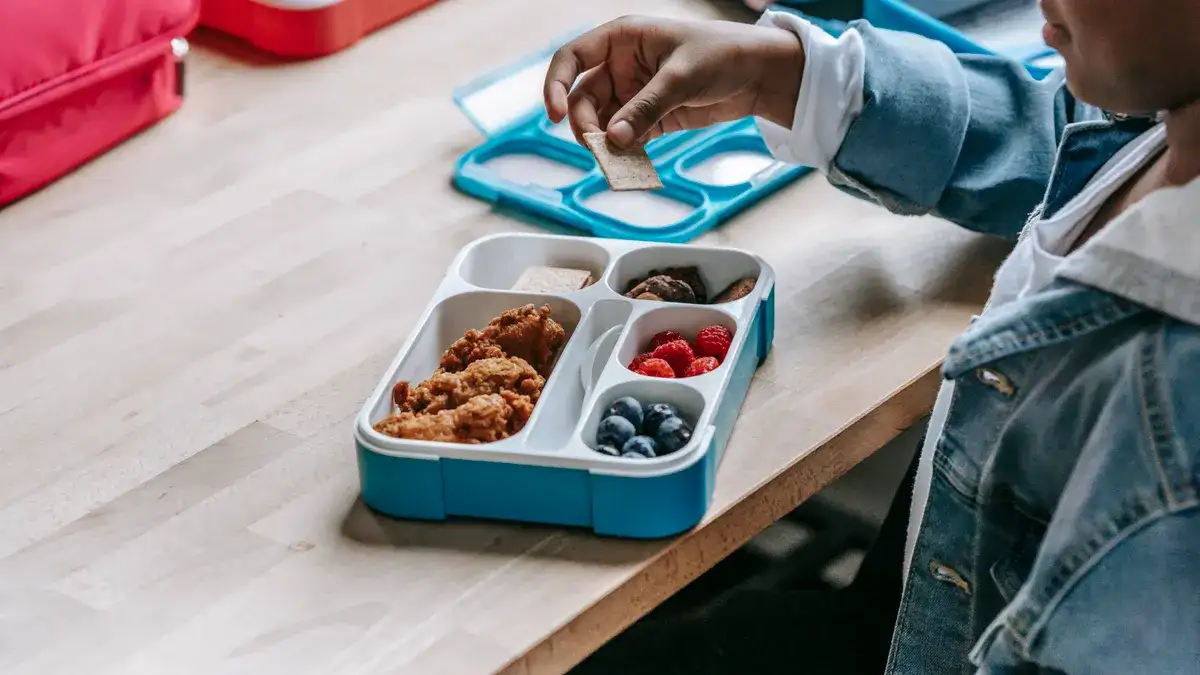
The lunches that travel well for seniors are the ones with firm ingredients, little sauce, and a shape that survives a bag, a car seat, or a waiting room table. Think grain bowls, chopped salads, cold sandwiches on sturdy bread, fruit, and plain yogurt packed in separate containers.
Here’s the catch: soft fillings and wet greens turn a lunch soggy fast. If you want the meal to still look and taste good 4 hours later, build it in layers and keep moisture under control.
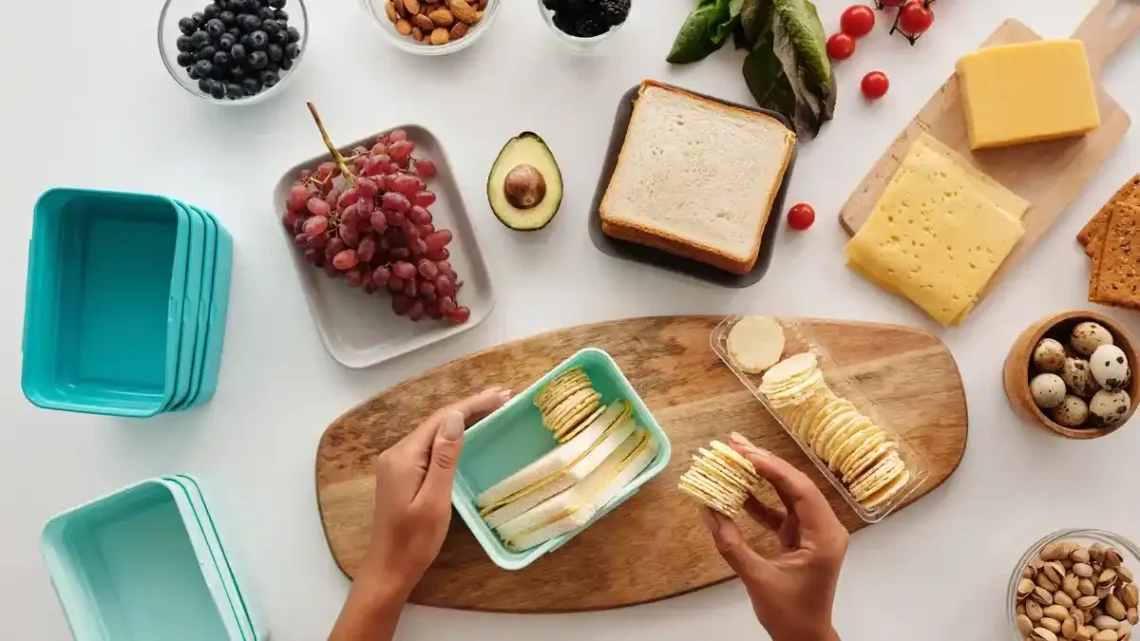
- Start with a sturdy base. Use brown rice, quinoa, whole-wheat pasta, chopped romaine, or whole-grain bread. These hold shape better than delicate lettuces or soft rolls.
- Add a lean protein. Cooked chicken breast, tuna packed in water, beans, lentils, tofu, or plain Greek yogurt keep the meal filling without leaning on processed meat.
- Bring in produce that behaves well. Cherry tomatoes, cucumber slices, bell pepper strips, apples, grapes, berries, and orange segments stay usable in a lunch box.
- Pack wet items separately. Dressing, salsa, and mustard should go in a small leakproof cup. That keeps bread from going limp and greens from collapsing.
- Choose one cold side. A fruit cup, a yogurt cup, or raw vegetables is enough for most lunches. Too many side dishes just add weight.
- Use a container with compartments. Divided lunch containers keep textures apart and make portioning easier when appetite is smaller.
- Add texture at the last minute. Nuts, seeds, and croutons belong in a small packet so they stay crisp until eating time.
Because those ingredients are the backbone of the meal, the simple rule is this: if a food gets better after sitting in liquid, it is usually the wrong food for a portable lunch.
Heart-healthy portable lunch ideas seniors can pack fast
A heart-healthy portable lunch for seniors can be built from the same few ingredients in different ways, so packing takes minutes instead of a full cooking project. That matters on days when arthritis, low energy, or a busy schedule makes complicated meal prep a bad bet.
Picture this: you have a clinic visit at 1 p.m., and lunch has to fit in a small cooler bag. You need a meal that is easy to lift, easy to open, and not full of hidden sodium.
- Salad with protein: Chopped greens, chickpeas, cucumbers, tomato, and grilled chicken in a rigid container; dressing in a 2-ounce cup.
- Sandwich with fruit: Whole-grain bread, sliced turkey breast with no-salt-added options, lettuce, tomato, and mustard; pair with an apple and plain yogurt.
- Grain bowl: Quinoa, black beans, roasted vegetables, and a spoonful of avocado or tahini in a leakproof bowl.
- Yogurt lunch: Plain Greek yogurt, berries, oats, and chopped walnuts in separate cups so the oats stay dry.
- Bean and veggie box: Hummus, whole-grain crackers, bell peppers, cucumber, grapes, and a hard-boiled egg if it fits your sodium goals.
- Tuna plate: Tuna mixed with plain yogurt, celery, and pepper, plus whole-grain crackers and orange slices.
- Egg salad wrap alternative: A bowl with egg, greens, tomato, and whole-grain toast on the side, if a wrap is not the right fit for the other page.
The truth is that the most useful lunch is the one you’ll actually pack twice a week. Fancy recipes do not beat a meal that is easy, safe, and satisfying.
How do you pack a heart-healthy lunch safely?
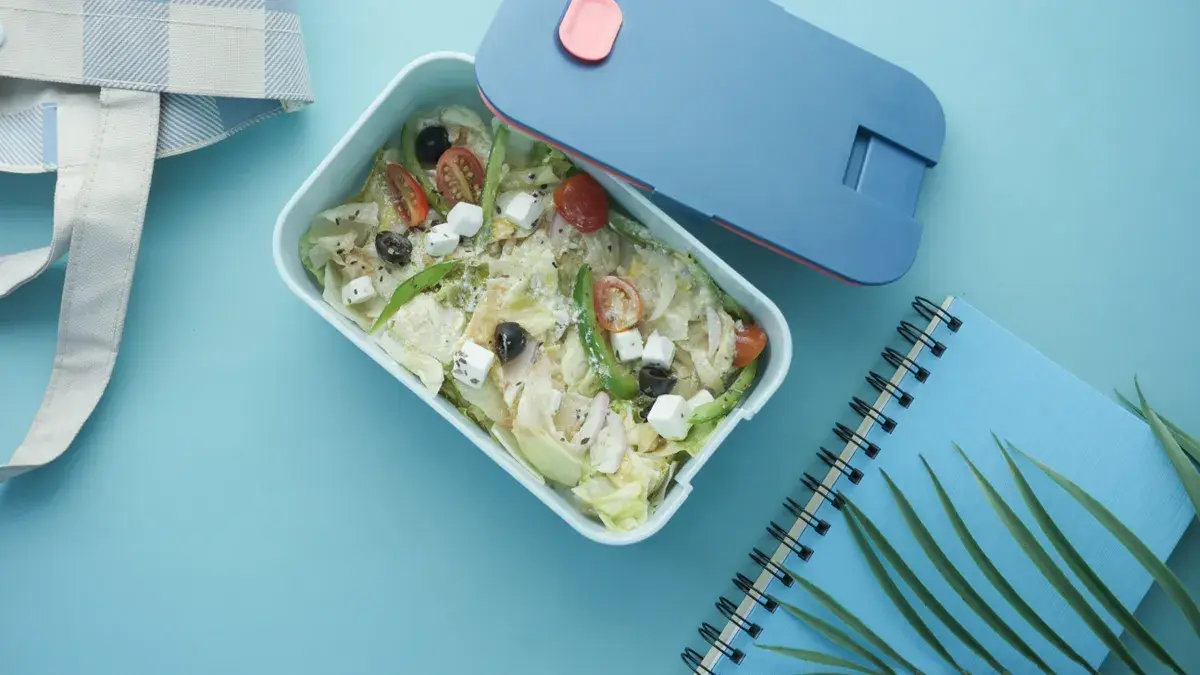
You pack a heart-healthy lunch safely by keeping cold foods cold, using clean containers, and separating wet from dry ingredients. For a lunch that may sit in a bag, use an insulated lunch tote and a cold pack, and keep the food cold until you eat it.
Picture this: you’re leaving home at 9 a.m. and won’t sit down to lunch until noon. The food needs to survive the trip without guessing games.
- Chill the container first. Put the lunch container in the fridge the night before if you can. A cold container slows warming once food goes inside.
- Use a tight-lid, rigid container. Plastic or glass containers with locking lids help prevent leaks and keep food from getting crushed.
- Pack cold foods cold. Take leftovers straight from the refrigerator into the lunch box. Don’t let them sit on the counter while you gather other items.
- Add a cold pack. Place one next to the food inside an insulated bag. For long outings, use two if the bag is large or the weather is warm.
- Keep sauces separate. A 2-ounce dressing cup or small screw-top jar helps protect texture and reduces mess.
- Label leftovers with the date. A piece of tape and a marker are enough. That simple step helps you avoid mystery food.
- Use a fork, napkin, and water bottle. Small tools make the meal easier to eat in a car, clinic waiting room, or park bench.
For food safety details, the USDA Food Safety and Inspection Service has plain guidance on keeping cold food cold, and the Academy of Nutrition and Dietetics also offers practical packing advice. If a person has swallowing trouble, kidney limits, or a heart condition that changes what counts as “healthy,” a registered dietitian should help shape the plan. According to the USDA, cold foods should not sit out more than 2 hours.
Which lunch containers work best for portable meals?
The lunch containers that work best for portable meals are leakproof, easy to open, and light enough to carry without strain. A container that seals well matters more than one that looks pretty, especially when the lunch includes fruit, yogurt, or dressing.
Here’s the catch: a poor container can ruin a good meal. A flimsy lid leaks in a tote, while a hard-to-open latch can be rough on hands with arthritis or reduced grip.
| Container type | Best for | Core spec | Standout feature | Action |
|---|---|---|---|---|
| Glass meal container with locking lid | Salads, grain bowls, leftovers | Rigid body, tight seal | Does not stain as easily as some plastic | Choose if the lunch stays in one piece and you can carry a bit of weight |
| Divided plastic bento box | Smaller portions, mixed snacks, fruit | Multiple compartments | Lets wet and dry foods travel apart | Choose if you want portion control and lighter weight |
| Insulated lunch tote with cold pack | Appointments, car trips, workdays | Soft-sided carry bag | Fits a drink, fruit, and a full meal together | Choose if food may sit outside the fridge for several hours |
| Small leakproof sauce cup | Dressing, mustard, salsa, hummus | 2-ounce-style container | Keeps bread and greens from getting soggy | Choose if you like crisp textures and separate condiments |
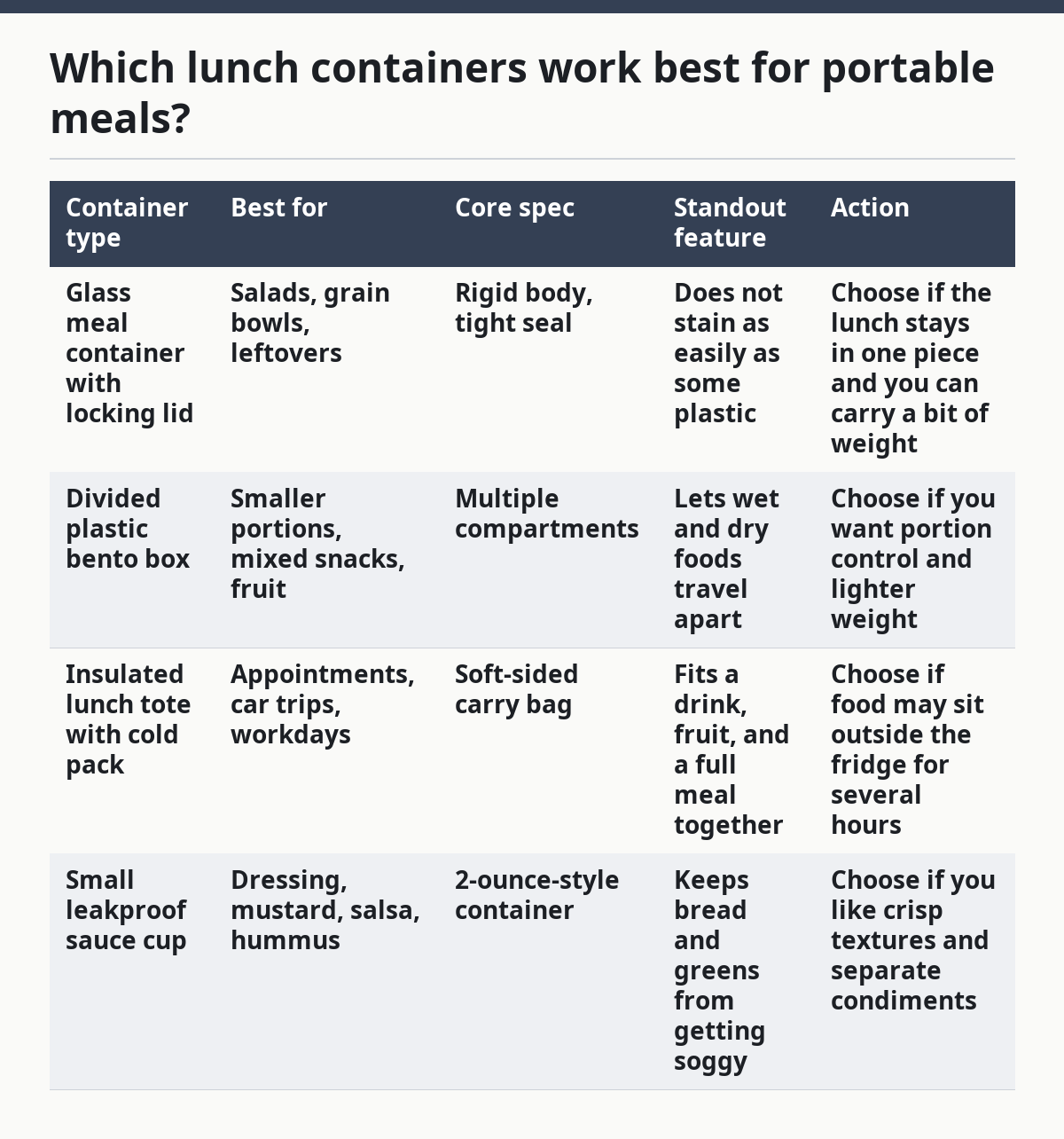
A heavy glass container can be awkward for someone with hand pain, and some plastic boxes stain or hold odors over time. On the other hand, lighter containers may not seal as well, which is a bad trade if lunch rides in a car for hours.
Who Should Skip This: someone with weak grip strength should skip a heavy glass box and use a divided plastic bento box or a lightweight insulated tote instead.
Buy this if: a senior wants a steady, no-spill lunch for an appointment day and can lift a heavier container.
Skip this if: a senior has hand arthritis and a heavy lid or thick glass is a dealbreaker.
Salads, sandwiches, grain bowls, fruit, and yogurt that hold up cold
These five lunch styles hold up cold because they stay stable in a container and do not depend on heat to taste good. They also make it easier to keep sodium in check, since you control the dressing, bread, and toppings.
Picture this: you open the lunch at 12:30 and it still looks like the meal you packed at 7 a.m. That is the goal.
- Salads: Use sturdy greens like romaine or kale, then add beans, chopped cucumber, tomatoes, and chicken or tuna. Keep dressing in a separate cup until eating time.
- Sandwiches: Choose whole-grain bread that will not collapse under moisture. Layer protein between dry ingredients so tomato and mustard do not soak the bread.
- Grain bowls: Quinoa, brown rice, or barley hold texture well and work with roasted vegetables, beans, or salmon.
- Fruit: Apples, pears, grapes, melon cubes, berries, and orange segments travel well in a small lidded cup.
- Yogurt: Plain yogurt works best with fruit or oats packed separately so it does not turn watery.
Because those foods stay sturdy, a common mistake is picking items that are “healthy” but too soft to travel. Cottage cheese with juicy fruit, a loaded pasta salad with lots of mayo, or wilted greens can be hard to eat neatly. The fix is simple: keep the base firm and the wet ingredients separate until lunch.
The best part is that once these five patterns are in rotation, grocery shopping gets easier. You do not need a new menu every week.
Simple packing routine for busy mornings
A simple packing routine for busy mornings is the fastest way to make portable lunches happen more than once. A short checklist beats a perfect recipe when the goal is a lunch that is ready by 10 minutes before you leave.
Picture this: you’re half-awake, the kettle is still hot, and the lunch bag has to be ready before the ride arrives. A repeatable routine cuts the friction.
- Pick one base. Salad, sandwich, grain bowl, fruit-and-yogurt box, or bean bowl.
- Pick one protein. Chicken, tuna, beans, lentils, egg, tofu, or plain Greek yogurt.
- Pick two produce items. One crisp item and one soft item work well, like cucumber plus berries.
- Pack one sauce separately. Dressing, salsa, mustard, or nut butter goes in its own cup.
- Add one cold pack. Put it beside the lunch, not under it, so the cold spreads through the bag.
- Check the lid. A quick press around the edge tells you if the seal is tight.
- Grab one eating tool. Fork, spoon, or napkin. Forgetting the utensil is a small problem until you’re sitting in a waiting room.
A rigid routine also helps with portion size. Many seniors do better with a lunch that is filling but not huge, especially if appetite is smaller or chewing is tiring.
When a portable lunch is the wrong fit
A portable lunch is the wrong fit when the food will sit too long without refrigeration, when grip strength makes the container hard to open, or when swallowing, kidney, or heart-care rules call for a more tailored meal plan. That is the point to change the lunch plan, not push through.
The truth is, a lunch that is safe and easy to eat beats one that looks ideal on paper. If a person cannot keep food cold for several hours, use a cooler bag, an ice pack, or a place to refrigerate it after arrival.
- Too long without cooling: Use foods that are shelf-stable for the trip, or arrange a fridge stop.
- Hard to open lids: Switch to a lighter container with an easier latch.
- Chewing trouble: Skip tough crusts, raw hard vegetables, and dry meats.
- Specific medical limits: Ask a registered dietitian or clinician if sodium, protein, fluids, or potassium need to be adjusted.
For a broader menu plan, the senior heart-healthy lunch and snack planning hub can help connect this portable lunch idea with the rest of the week. According to the American Heart Association, keeping sodium lower is a key part of a heart-healthy eating pattern.
What lunches travel well for seniors?
The best travel lunches are salads with sturdy greens, sandwiches on whole-grain bread, grain bowls, fruit cups, and plain yogurt packed separately. These foods hold shape, taste fine cold, and do not depend on a microwave.
A rigid container, a cold pack, and separate dressing make the biggest difference. Avoid meals that turn soggy fast or need a lot of last-minute assembly.
Drafted with AI; not yet reviewed by a person.