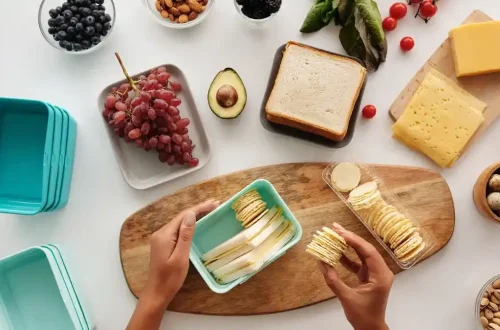
Last updated: November 19, 2026
Key Takeaways
- Pick low-sodium, high-fiber foods that still travel well in a cooler or on a buffet.
- Choose dishes that serve easily with a spoon or tongs after 30 to 60 minutes.
- Control time, temperature, and packaging, especially for dairy, eggs, meat, or cut produce.
- Finger foods work best when they are low-salt, low-sauce, and easy to handle.
Heart-healthy picnic and potluck foods for seniors are the right mix of low-sodium, easy-to-serve, and safe-at-room-temperature dishes. This guide to Heart-Healthy Picnic and Potluck Foods for Seniors shows what to bring, what to skip, and how to keep shared-meal food appealing after it travels.
What makes picnic food heart-healthy for seniors?
Heart-healthy picnic food for seniors is food with less sodium, more fiber, and sensible portions that still holds up in a cooler or on a buffet table. The best choices are often simple, familiar, and easy to eat with one hand, since potlucks often mean standing, chatting, and serving yourself from a crowded table.
Picture this: you’re packing one dish that needs to taste good after 30 minutes in a car, 2 hours on a table, and another round of serving with a plastic spoon. That’s the real test, not a glossy recipe photo.
A strong picnic dish often has three parts:
- A sturdy base like beans, whole grains, or crisp vegetables
- A flavor boost from herbs, citrus, vinegar, or yogurt instead of salty sauces
- A texture that stays pleasant when chilled
The best part? You do not need “special diet” food that feels punishing. A fruit salad, salad cups, bean salads, and a vegetable tray can all fit heart-smart eating if the dressing, salt, and serving setup are handled well.
For planning, it helps to think in travel time, serving time, and cleanup time. A dish that takes 15 minutes to assemble and can sit in a cooler with ice packs is usually a better potluck pick than something fragile that needs last-minute assembly.
What should you bring to a heart-healthy potluck?
You should bring a dish that can sit in a bowl, be served with a spoon or tongs, and still look good after 30 to 60 minutes on the table. That means sturdy, low-sodium crowd-pleasers such as bean salads, fruit salad, vegetable trays, and salad cups.
Here’s the catch: many potluck foods are “healthy-looking” but still loaded with salt in the dressing, cheese, cured meat, or bottled sauce. A dish can be colorful and still not be heart-friendly, so if someone has medical concerns, it is wise to consult a registered dietitian or other healthcare professional; the USDA Food Safety and Inspection Service also offers practical food handling guidance at https://www.fsis.usda.gov/ and the FDA covers safe handling at https://www.fda.gov/food.
Use this simple decision path:
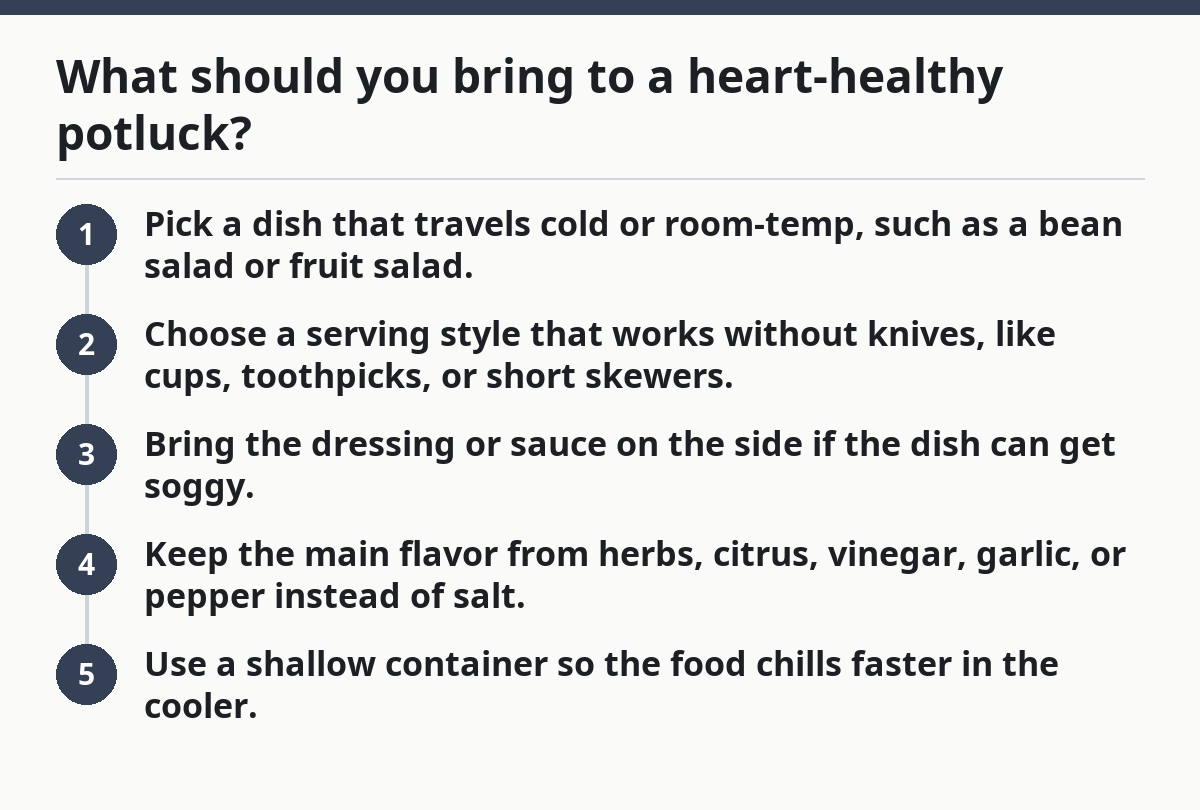
- Pick a dish that travels cold or room-temp, such as a bean salad or fruit salad.
- Choose a serving style that works without knives, like cups, toothpicks, or short skewers.
- Bring the dressing or sauce on the side if the dish can get soggy.
- Keep the main flavor from herbs, citrus, vinegar, garlic, or pepper instead of salt.
- Use a shallow container so the food chills faster in the cooler.
Good picnic and potluck options include:
- Fruit salad with berries, melon, grapes, or orange segments
- Bean salads with chickpeas, black beans, or kidney beans
- Vegetable trays with snap peas, cucumber, bell pepper, cherry tomatoes, and carrots
- Salad cups made in single-serve containers
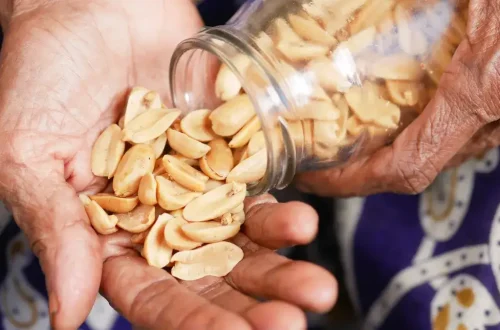
- Plain nuts in small portions, if the host allows them and allergies are not a concern
Now, you might be wondering about the “easy” dishes that older adults actually want to eat. The answer is simple: use food people already recognize. A chilled bean salad with parsley and lemon is easier to accept than a recipe built from five exotic ingredients.
How do I keep food safe when it sits out?
You keep food safe by controlling time, temperature, and packaging, especially when the dish includes dairy, eggs, meat, or cut produce. Food should not linger in the warm zone for long, so a cooler, ice packs, and a serving plan matter as much as the recipe.
Picture this: you’re setting a bowl on a picnic table while people move chairs, open containers, and talk for 20 minutes before serving starts. That delay is exactly where food safety slips.
Use a basic setup:
- Pack cold food in an insulated cooler with ice packs
- Keep hot food hot in a covered container if the host is serving hot items
- Put perishable dishes out only when people are ready to eat
- Use a small serving bowl and refill it from the cooler instead of exposing the whole dish
- Throw away leftovers that have sat out too long, especially in warm weather
A few choices are better than others:
- Best for sitting out: whole fruit, whole raw vegetables, bread, crackers, bean salads, and oil-and-vinegar slaws
- Needs more care: potato salad, egg salad, dairy-based dips, mayonnaise-heavy salads, and anything with meat or seafood
- Best kept cold until serving: salad cups with dressing, yogurt-based fruit mixes, and chopped produce
The truth is, a lot of potluck trouble comes from one big serving bowl sitting out for hours. A better move is to split food into two containers and refill as needed. That keeps the first container cold longer and makes the table look neat, too.
For general food safety guidance, the U.S. Department of Agriculture’s Food Safety and Inspection Service has practical storage and serving advice, and the FDA’s food safety pages cover safe handling for leftovers and perishables.
Easy finger foods that still fit a heart-smart diet
Easy finger foods for a heart-smart picnic are the ones you can pick up without much salt, sauce, or mess. That includes raw vegetables, fruit skewers, whole-grain crackers with a topping, and small portions of bean-based bites.
Picture this: you’re balancing a paper plate in one hand and a drink in the other. If the food needs a knife, a heavy sauce, or a lot of chewing, it gets left behind.
Good finger-food ideas include:
- Cucumber rounds topped with hummus or a bean spread
- Bell pepper strips and cherry tomatoes
- Grapes, berries, melon cubes, or orange wedges
- Whole-grain crackers with a low-sodium topping
- Small skewers with fruit and cheese, if the cheese portion stays modest
- Celery sticks with a bean or nut spread, if allergies are handled
A few rules keep finger foods heart-healthy:
- Keep portions small enough to eat in 2 or 3 bites
- Avoid salty coatings like seasoned snack mix
- Skip heavily processed meats and cheese cubes as the main item
- Offer toothpicks or short skewers for easier handling
One common mistake is bringing “light” snack food that is still mostly sodium. Pretzels, chips, and seasoned crackers may be easy to carry, but they are not the same as vegetables or fruit.
For an older guest who has trouble gripping small items, use larger pieces that are still easy to manage. A thick cucumber round is friendlier than a slippery olive. A sturdy fruit skewer is easier than a bowl of tiny grapes that roll everywhere.
Which picnic sides travel best without getting soggy?
The best travel sides are sturdy salads and vegetables that hold their shape for hours in a cooler and still taste good after dressing is added. Bean salads, fruit salad, and chopped vegetable trays usually outlast leafy greens with creamy dressing.
Because those ingredients stay firmer on the road, they make the Heart-Healthy Picnic and Potluck Foods for Seniors plan much easier to manage. Picture this: you’re trying to bring one side dish that won’t collapse before lunch. That means choosing ingredients that stay crisp, not ingredients that turn limp the second they meet dressing.
Try these transport-friendly sides:
- Bean salads with chickpeas, black beans, or cannellini beans
- Fruit salad with firm fruit such as melon, grapes, strawberries, and orange segments
- Vegetable trays with carrots, celery, peppers, snap peas, and broccoli florets
- Salad cups layered so lettuce stays dry until serving
- Simple grain salads with vegetables and a light vinaigrette
Here’s a basic assembly pattern that works:
- Start with the heaviest ingredient in the bottom of the container.
- Add drier vegetables or beans next.
- Put herbs and dressing in a separate small container.
- Chill the food before packing it.
- Keep the container flat in the cooler so it doesn’t spill.
One trade-off is flavor versus texture. A dish with lots of dressing may taste stronger, but it often turns soft and watery by the time it hits the table. A drier salad keeps its shape better, and the host can add dressing at the last minute if needed.
This is also where a lot of generic articles miss the point. They talk about “healthy salads” as if all salads travel the same. They don’t. A leafy salad can wilt fast. A bean salad stays useful much longer and is usually easier for seniors to serve themselves.
For more on keeping produce fresh and food safe on the road, the USDA FoodKeeper resource and USDA FSIS guidance are useful starting points.
What should you skip or cut back on?
You should skip the dishes that depend on salt, cream, or processed meat for flavor, because those ingredients make it harder to keep the meal heart-smart. That includes many deli platters, bacon-heavy salads, and creamy casseroles.
Picture this: you’re looking at a table full of food and trying to choose the “safe” item. The problem is that potluck food can hide a lot of sodium in plain sight.
Watch out for:
- Cured meats like salami, ham, and bacon
- Creamy salads with lots of mayonnaise or sour cream
- Pickled sides with heavy salt
- Cheese-heavy appetizers in large portions
- Chips, salted crackers, and packaged snack mixes as the main side
- Restaurant-style pasta salads with a salty dressing
If you want to make a smarter pick, choose plain food plus a bright flavor. Lemon, vinegar, dill, basil, parsley, cumin, garlic, and black pepper can do a lot of the work that salt usually does.
A helpful rule is to ask: does this dish still taste good if the salt shaker stays in the kitchen? If the answer is no, it probably needs a different recipe. Not every potluck favorite can be made heart-healthy without losing what made it popular in the first place.
This section also matters for who this guide is not for. If the person bringing the dish wants a rich, creamy casserole as the center of the meal, this page is not the best match. That would be a different kind of recipe search, not a picnic planning guide.
How do I pack a dish for a senior-friendly picnic?
You pack a senior-friendly dish in a container that is easy to carry, easy to open, and easy to serve without a lot of wrist force or sharp tools. Wide-mouth containers, lightweight lids, and shallow trays usually work better than deep bowls with tight seals.
Picture this: you’re arriving with one hand full and trying to pry open a stiff lid while people wait. That is bad design for a potluck, especially if hand strength or arthritis is part of the picture.
Use this packing order:
- Choose a container that matches the food, such as a lidded tray for vegetables or a divided container for fruit.
- Pack the heaviest items at the bottom and keep garnish separate.
- Put dressing, sauce, or salt-free seasoning in a small side cup.
- Label the dish if it contains common allergens like nuts, dairy, or sesame.
- Bring a serving spoon, tongs, or forks so the host doesn’t have to hunt for utensils.
The ergonomics piece matters. A dish should be simple to open, simple to lift, and simple to portion. If the container needs two hands and a lot of force, that’s a bad sign.
For a shared-meal table, a low, rectangular container often beats a tall bowl because it chills more evenly and lets guests see what’s inside. That’s useful when the dish is a bean salad or vegetable tray and you want the food to look inviting without extra fuss.
This article fits the larger senior heart-healthy lunch and snack planning hub, where the menu pieces come together into one practical routine.
The simplest potluck formula that works
The simplest potluck formula is one chilled main side, one fresh fruit or vegetable item, and one serving tool that makes the dish easy to share. That combination covers taste, safety, and convenience without turning the meal into a project.
Picture this: you’re asked to bring “something healthy” and have no time for a complicated recipe. The answer is not more effort. It’s a better structure.
Use this formula:
- Main side: bean salad or grain-and-vegetable salad
- Fresh item: fruit salad or vegetable tray
- Serving setup: spoon, tongs, or toothpicks
- Transport plan: cooler or insulated bag with ice packs
- Backup plan: extra napkins and a small card naming allergens
This approach works because it keeps the menu balanced without making the food fussy. It also respects the real world of potlucks, where dishes have to travel, sit out, and still appeal to a group.
The best Heart-Healthy Picnic and Potluck Foods for Seniors are not the fanciest dishes on the table. They are the ones people actually eat, that travel well, and that don’t fight the way the meal is served.
What foods are good for picnics?
The best picnic foods are sturdy, low-sodium, and easy to eat without a lot of cleanup. Fruit salad, vegetable trays, bean salads, salad cups, and simple finger foods all fit that pattern well. The key is choosing foods that hold up in a cooler and still taste good after they sit for a while.
How do seniors bring a dish to a potluck on a heart-healthy diet?
Seniors bring a dish to a potluck on a heart-healthy diet by choosing something that travels cold, serves easily, and uses herbs or citrus instead of a salty sauce. A bean salad, fruit salad, or vegetable tray is usually a safer bet than a creamy casserole or deli platter. A shallow container and a serving spoon make the dish easier to manage.
What foods are safest to serve outside?
The safest foods to serve outside are whole fruit, raw vegetables, crackers, bread, and other foods that do not spoil quickly. Perishable dishes like dairy-based salads, egg dishes, and meat items need more cooling and less time on the table. A cooler with ice packs helps keep cold foods in safer shape during the picnic.
Drafted with AI; not yet reviewed by a person.