
Last updated: November 19, 2026
Quick answer: Soft make-ahead breakfast egg cups for seniors usually bake best at 325°F in a 12-cup muffin tin and reheat gently, so the texture stays tender instead of rubbery. Soft make-ahead breakfast egg cups for seniors stay tender when you bake them gently, add moisture-rich vegetables, and reheat them covered instead of blasting them dry. This guide explains how to mix, bake, freeze, and warm soft make-ahead breakfast egg cups for seniors so they’re easy to chew and easy to serve.
What makes egg cups soft enough to reheat well?
Soft egg cups come from low heat, a moist filling, and a stop-short bake that leaves the center just set. A 325°F oven, a 12-cup muffin tin, and a short reheat later on do more for texture than any fancy ingredient list.
Picture this: you want breakfast ready before the morning rush, but you also want a cup that doesn’t turn tough in the microwave. The answer is in the method, not the recipe alone.
Egg cups stay softer when the egg mixture carries a little moisture from spinach, mushrooms, or bell peppers, and when the cups cool before freezing.
A good base starts with:
- whole eggs for structure
- finely chopped spinach, mushrooms, or bell peppers for moisture
- a modest amount of cheese for richness
- a lightly greased muffin tin so the edges release without tearing
Dry egg cups usually fail for one of three reasons: too much egg, too much heat, or too little resting time after baking. If any of those are off, the texture tightens fast.
For a heart-healthy breakfast system, this page fits into the larger hub on make-ahead mornings for seniors, but the focus here stays on egg cups and how to keep them tender after storage. The structure matters. So does the pan.
How do you make soft make-ahead breakfast egg cups?
Soft make-ahead breakfast egg cups are built in a 12-cup muffin tin with a gently whisked egg base, small diced vegetables, and a bake that stops while the centers still look slightly soft. The method below keeps the texture more tender than a high-heat, fully browned batch.
Picture this: you’re standing at the counter with eggs, chopped vegetables, and a muffin tin, trying to make breakfast that won’t crumble or dry out by Tuesday. The recipe has to be simple enough to repeat and gentle enough for an older appetite.
However, the fastest method is not always the softest one.
- Heat the oven to 325°F. Lower heat gives the eggs time to set without turning the edges leathery.
- Grease a 12-cup muffin tin well. Use a small amount of oil or nonstick spray so the cups release cleanly and the bottoms don’t stick.
- Whisk the eggs until blended, not foamy. Foam traps air and can make the texture puff, then collapse.
- Stir in finely chopped vegetables. Spinach, mushrooms, and bell peppers work well when cut small; large pieces make the cups fall apart.
- Add cheese and any cooked protein. A little shredded cheese or diced cooked chicken or turkey adds flavor and helps the cups feel less dry.
- Fill each cup about three-quarters full. Leave room for the eggs to rise without spilling over.
- Bake until just set, about 18 to 22 minutes. The centers should look firm but still moist; carryover heat finishes the job.
- Cool in the pan for 5 to 10 minutes. This helps the cups firm up enough to lift without tearing.
- Remove and cool fully on a rack. Freezing warm cups traps steam and encourages ice crystals.
For seniors, that last step matters. Hot food packed too soon can turn spongy on the outside and dry inside after thawing. That is a bad trade.
A simple base that stays tender
Use eggs as the main structure, then keep the add-ins modest. A mix like spinach, mushrooms, and a little cheese gives moisture without flooding the cups. If you want more protein, add diced cooked chicken, turkey, or ham in small amounts so the egg still holds together.
Use:
- 6 to 8 eggs for a standard batch
- 1 to 1 1/2 cups finely chopped vegetables
- 1/2 to 1 cup shredded cheese
- 1/2 cup diced cooked protein, if using
If the mix looks crowded before it goes into the oven, it will likely bake dense. That is the warning sign.
Which vegetable mix-ins work best for seniors?
Spinach, mushrooms, and bell peppers work well because they soften during baking and keep the cups from eating dry. The goal is not a garden bed. It is a moist, tender bite that holds together after chilling and reheating.
Picture this: you open the fridge on Sunday and want one batch to carry breakfast through several mornings. The vegetables in the tin decide whether the cups taste fresh or flat by day three.
For example, the right vegetables help both texture and flavor without demanding a long prep list.
Spinach works well because it wilts down fast and adds moisture. Mushrooms bring a soft, savory texture when chopped small and sautéed first for about 3 to 5 minutes. Bell peppers add color and a little sweetness, but they need fine dicing so they do not stay crisp in the finished cup.
Good mix-ins:
- spinach, chopped
- mushrooms, diced and pre-cooked
- bell peppers, finely diced
- onions, cooked soft before adding
Use caution with watery vegetables. Raw zucchini, tomatoes, and frozen vegetables that are not drained well can leave liquid in the bottom of the cup. That creates a rubbery top and a soggy base.
If you want the cups to feel more senior-friendly, cut vegetables very small. A fork should not have to fight through large chunks. That is an easy rule with a big payoff.
Better and worse vegetables
Spinach and mushrooms are often the safest bets for a soft result. Peppers work too, but only when diced small enough to melt into the eggs. Broccoli florets, big onion pieces, and wet tomatoes are less reliable if the goal is a tender, even bite.
For older readers who prefer mild food, the softer vegetables also keep the flavor calm. That matters when appetite is small and strong spice gets in the way.
What protein additions keep egg cups filling without drying them out?
Small amounts of cooked chicken, turkey, or cheese make egg cups more satisfying without making them heavy. The trick is to use protein as support, not bulk, so the texture stays soft after refrigeration or freezing.
Picture this: you want a breakfast that lasts until lunch, but you do not want a dense muffin that feels like leftovers from a casserole. The protein needs to fit the egg, not overpower it.
Lean cooked meats and moderate cheese do that job well.
Good additions include:
- diced cooked chicken
- diced cooked turkey
- finely chopped ham, if sodium is not a concern for the meal plan
- shredded cheddar, mozzarella, or Swiss in a small amount
Use proteins that are already cooked and cooled. Raw meat belongs elsewhere, not in a quick egg cup formula. A small amount of cheese can help the cups taste richer after reheating, but too much makes the texture greasy or tight. Two ounces of cheese is plenty for a modest batch.
On the flip side, sausage crumbles and bacon bits can make the cups taste salty and heavy. They also do not help with the soft texture senior readers usually want. If the goal is a lighter breakfast, skip the smoked or heavily seasoned meats.
How do you freeze and reheat egg cups without drying them out?
Freeze egg cups after they cool fully, then reheat them covered at low power or low oven heat so the steam stays in the food instead of escaping. That is the difference between a soft egg cup and a dry puck.
Picture this: it is Wednesday morning, and breakfast is already made. You need one cup hot, not a batch of dried-out shells. Freezing works well here, but only if the reheating step protects moisture.
The timing matters.
For freezing:
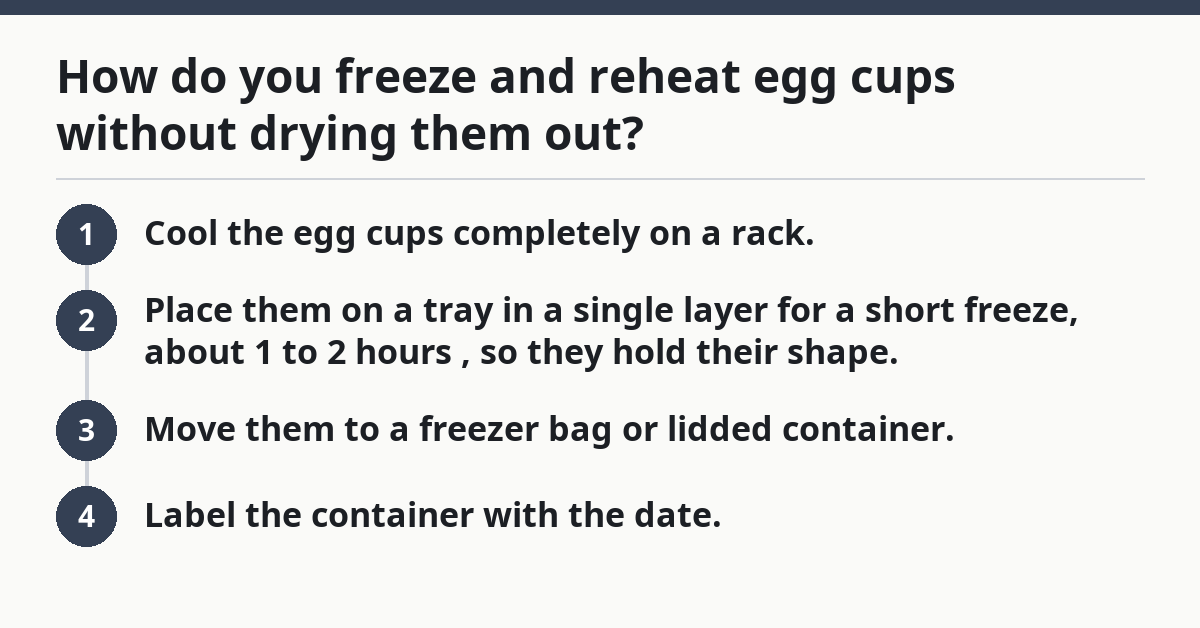
- Cool the egg cups completely on a rack.
- Place them on a tray in a single layer for a short freeze, about 1 to 2 hours, so they hold their shape.
- Move them to a freezer bag or lidded container.
- Label the container with the date.
For reheating:
- Microwave: wrap the cup in a damp paper towel and heat in short bursts until warm through.
- Oven: place in a covered dish at low heat until heated through.
- Air circulation: avoid high heat, which toughens the eggs fast.
A covered container or a damp towel helps trap steam. That steam softens the egg as it warms, instead of letting the surface dry out. If the cup seems cold in the center but hot on the edges, the heat is too high.
Common reheating mistakes
The biggest reheating mistake is blasting the cup too long in the microwave. That sets the egg hard around the edge before the center warms. Another problem is reheating uncovered, which dries the top fast. Both errors cost you texture, and the fix is simple: use shorter heat intervals and a cover.
If the cups were frozen flat and stored airtight, they usually reheat more evenly. If they were packed warm, they tend to clump with ice and turn uneven later. That is why cooling first is not optional.
What makes egg cups senior-friendly beyond texture?
Egg cups become easier for seniors when they are soft, mild, and portioned into a manageable size. A standard muffin cup gives a ready-made serving that does not need cutting, scooping, or much chewing.
Picture this: breakfast needs to be easy to lift with a fork and easy to finish in a few bites. The shape matters almost as much as the recipe.
One egg cup is a tidy portion; two can be enough for a fuller meal.
Senior-friendly details to keep in mind:
- use small pieces instead of large chunks
- keep seasoning modest
- avoid a hard browned top
- choose fillings that stay soft after chilling
- serve with fruit, yogurt, or toast if the meal needs more staying power
A soft egg cup is also easier to pair with other foods. It can sit beside oatmeal, sliced fruit, or whole-grain toast without taking over the plate. That helps the whole breakfast feel balanced.
The main trade-off is clear: the softer the cup, the less browned and crisp it will be. If someone wants crusty edges, this is not the recipe style for that person. But for a senior who needs a gentle texture, that trade-off is worth it.
The Best Make-Ahead Egg Cup Routine for a Full Week
A dependable routine is to make one batch in a 12-cup muffin tin, chill it fully, freeze the extras, and reheat only what you need. That gives you fresh-tasting breakfast with less waste and fewer morning decisions.
Picture this: one Sunday session sets up several mornings ahead. You chop once, bake once, and still get a soft breakfast on a weekday with almost no effort. That is the real win.
The routine is simple enough to repeat and strict enough to protect texture.
A practical weekly flow:
- Chop vegetables and cook any mix-ins that need softening.
- Whisk eggs and fold in the filling.
- Bake at 325°F until just set.
- Cool fully before storing.
- Keep a few in the fridge for the next 3 days.
- Freeze the rest for later in the week.
This method suits seniors who want breakfast ready but not monotonous. One batch can be varied by using spinach in half the cups and mushrooms in the others, or by mixing cheese and a small amount of turkey. That keeps the food familiar without making every cup taste the same.
If the page needs one takeaway, it is this: gentle heat, small vegetable pieces, and careful reheating do more for softness than any special ingredient. That is the heart of the system.
Key Takeaways
- Use a low oven and stop the bake while the centers are still moist.
- Keep vegetables small and choose soft ones like spinach, mushrooms, and bell peppers.
- Add protein in modest amounts so the cups stay tender.
- Cool fully before freezing to protect texture.
- Reheat covered or wrapped so the eggs warm through without drying out.
How do you keep egg cups soft after reheating?
Keep egg cups soft after reheating by warming them gently and trapping a little steam. A damp paper towel in the microwave or a covered dish in a low oven helps a lot. High heat dries the edges first, so short heating bursts work better than one long blast.
Can egg cups be frozen for later?
Yes, egg cups can be frozen for later if they are cooled completely first. Freeze them in a single layer before packing them into a freezer bag or container. That keeps them from sticking together and helps them reheat more evenly when you need a quick breakfast.
What vegetables work best in breakfast egg cups?
Spinach, mushrooms, and bell peppers work best in breakfast egg cups because they soften well and do not make the eggs watery when handled correctly. Chop them small, and cook any high-moisture vegetables before mixing them in. That gives you a softer texture and a cleaner bite.
Drafted with AI; not yet reviewed by a person.