
Last updated: November 19, 2026
A small bowl can carry a surprising amount of fuel. For seniors who need more calories, overnight oatmeal mix-ins work best when oats meet peanut butter, Greek yogurt, banana, and chopped walnuts or chia in a soft, easy-to-eat mix. The sections below sort out what to add, how much to use, and how to keep the bowl easy to eat. Overnight Oatmeal Mix-Ins for Seniors Who Need More Calories can also be a practical make-ahead breakfast when appetite is low.
Key Takeaways
- Peanut butter and walnuts bring dense calories fast.
- Greek yogurt adds protein and a thicker, creamier spoonful.
- Banana softens the bowl and helps with appetite when food tastes flat.
- Chia seeds make oats thicker, so use them in small amounts if chewing is hard.
- A smaller bowl with richer mix-ins can work well when appetite is limited.
What mix-ins make overnight oatmeal more filling for seniors?
Overnight oatmeal gets more filling when you add fat, protein, and soft fruit in the same bowl. That combination gives the meal staying power without making it hard to chew. A plain base of oats and milk is mild; a spoon of peanut butter or greek yogurt changes the whole bowl.
Open the fridge at 7 a.m. and the point gets obvious. You want breakfast that feels like a meal, not a snack. A 1-cup serving of overnight oats can still feel light unless you build it with calorie-dense add-ins and a little protein.
Good starters:
- Peanut butter: 1 to 2 tablespoons for rich flavor and easy calories.
- Greek yogurt: a few spoonfuls for protein and a thicker texture.
- Walnuts: chopped fine for crunch and healthy fats.
- Banana: half a banana for softness and natural sweetness.
- Chia seeds: 1 teaspoon to 1 tablespoon for thickness.
One creamy ingredient and one soft fruit often do more than a long ingredient list. Funny how that works.
How do you make overnight oats more filling?
Pair oats with at least one calorie booster and one protein source. Peanut butter plus greek yogurt is a strong base, and banana or chopped walnuts can round it out.
A simple formula works well for repeat mornings:
- Start with rolled oats and a liquid in a jar or bowl.
- Stir in 1 tablespoon peanut butter or another nut butter.
- Add 2 to 4 tablespoons greek yogurt for body.
- Fold in half a banana or 1 tablespoon chopped walnuts.
- Chill overnight, then stir before eating.
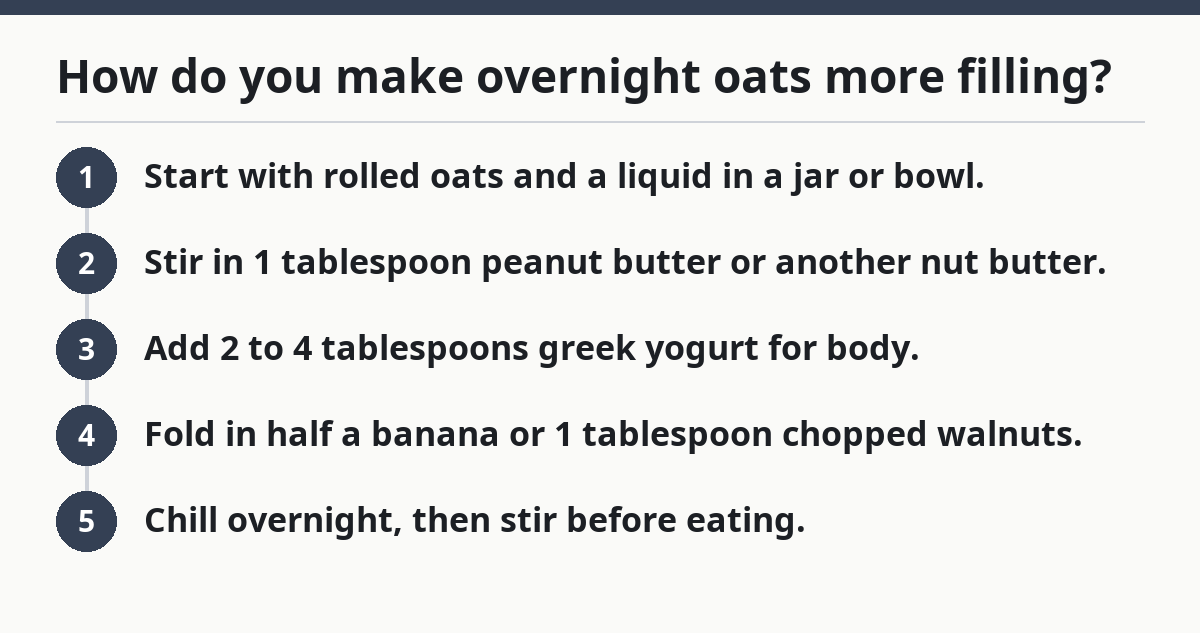
That gives you a breakfast with more texture and a heavier feel. It also helps if a larger plate of food looks tiring. And, honestly, a bowl like this is easier to finish than a big spread.
Which healthy fats add calories without making the bowl dry?
Nut butter, chopped nuts, and seeds add calories without turning overnight oats dry. These ingredients make the bowl feel richer and more satisfying, which matters when appetite is small.
You want the oatmeal to taste like breakfast, not paste. A spoon of peanut butter melts into the oats and gives the bowl a creamier finish, while walnuts bring crunch that wakes up a bland mouth.
Best fat boosters:
- Peanut butter for smooth richness.
- Walnuts for a soft crunch if chopped small.
- Chia seeds for thickness and a little extra fat.
- Ground flax if the texture suits the person eating it.
A 1-tablespoon serving of nut butter changes the mouthfeel fast. Chopped nuts do the same job in a different way, but large nut pieces can be a problem if chewing is tired or dentures are sensitive. That trade-off is worth thinking about.
Who this is not for: if dry crumbs or hard bits are hard to manage, plain peanut butter or smooth yogurt fits better than whole nuts.
What if chewing is an issue?
Use smooth or finely ground mix-ins instead of big chunks. Peanut butter, yogurt, mashed banana, and finely chopped walnuts are easier to manage than whole nuts or dry granola.
A few texture fixes help:
- Chop walnuts to about pea size or smaller.
- Mash banana before mixing it in.
- Stir in peanut butter while the oats are still soft.
- Add a little extra milk if the oats thicken too much.
Very thick oats can feel safer for some people, but they can also turn sticky. If that happens, loosen the bowl with 1 to 2 tablespoons of milk and stir again. Sticky oats? That’s the trap.
Protein boosters that work in overnight oatmeal
Protein boosters make overnight oatmeal steadier, and greek yogurt is the easiest place to start. It adds body, mild tang, and a lot of spoonable texture without a lot of work.
The breakfast needs to hold someone over until lunch, but the person does not want a big plate of eggs. Greek yogurt tucked into oats turns the bowl into a more complete meal with very little extra prep.
Good protein add-ins:
- Greek yogurt for creaminess and protein.
- Peanut butter for protein plus fat.
- Chia seeds for a small boost and a thicker finish.
- Milk instead of water, if dairy fits the plan.
A practical bowl might use rolled oats, 1 to 2 tablespoons peanut butter, and 2 to 4 tablespoons greek yogurt. That mix gives body without making the bowl feel too heavy.
Here’s the catch: yogurt can thin out a bowl if too much is added at once, and some brands are tart enough to put off a low-appetite eater. If that happens, use a smaller amount and sweeten with banana instead of sugar. Sour can sneak up on you.
Who should skip this setup: if dairy texture feels unpleasant, use peanut butter and banana instead of leaning on yogurt.
When should you use greek yogurt instead of milk?
Use greek yogurt instead of extra milk when the bowl needs more thickness and more protein in the same bite. Yogurt gives a denser spoonful, while milk mainly loosens the oats.
That matters for seniors who lose interest when breakfast looks watery or thin. Greek yogurt also helps if the oats sit overnight and become looser than expected by morning.
A simple swap:
- Use 2 to 4 tablespoons greek yogurt.
- Cut back on liquid a little.
- Stir well after chilling so the bowl stays even.
If the person prefers a lighter mouthfeel, use milk first and add yogurt only as a topping. That keeps the option open without turning the whole bowl sour or heavy. It’s a practical compromise.
Fruit add-ins that help with appetite and texture
Fruit add-ins help overnight oatmeal taste fresher, and banana is the easiest soft fruit for this job. It sweetens the bowl, softens the texture, and blends well with peanut butter and yogurt.
The bowl can look dull before the first bite. A mashed banana changes the smell, the color, and the spoonful in one step.
Best fruit choices:
- Banana for softness and mild sweetness.
- Soft berries, if the seeds do not bother the eater.
- Applesauce, if a smoother bowl is easier to manage.
Half a banana is often enough for one serving. More fruit can push the oats toward dessert, which may be fine for a small appetite but can crowd out the rich, nutty flavor you want from the mix-ins.
Banana works with both peanut butter and walnuts, so you can build calories without needing extra sugar. It also helps if the person finds cold breakfast dull; the natural sweetness gives the bowl a friendlier taste. That little lift matters.
How do you keep fruit from making the oats watery?
Use mashed fruit, not fruit that is dripping or very juicy. Banana is easiest because it thickens instead of flooding the bowl.
A few fixes help:
- Mash the banana before mixing it in.
- If using berries, add them right before eating.
- If the bowl turns loose, stir in a teaspoon of chia seeds or a little more oats.
- Let the bowl sit 5 to 10 minutes after stirring if it needs to thicken.
That keeps the texture steady and stops the oats from becoming thin overnight. It also helps the flavor stay even from the first bite to the last. No puddle at the bottom.
How much to make: portion scaling for small and large appetites
Portion scaling matters because seniors who need more calories do not always need a huge bowl. A small, rich serving can beat a large bowl that gets half eaten and then forgotten.
The fridge may be full, but the eater only has room for a few spoonfuls. A 1-cup jar with dense mix-ins may be a better plan than a big container that feels overwhelming.
Use this as a starting point:
- Small appetite: a modest portion with peanut butter, greek yogurt, and banana.
- Medium appetite: the same base, plus walnuts or chia.
- Larger appetite: a bigger oat base with one extra spoon of yogurt or nut butter.
A smaller bowl can still carry enough calories if the mix-ins are dense. More oats alone add bulk, but nut butter and yogurt add useful energy in less space. That math stops working fast if the serving gets too big.
What is a good overnight oatmeal ratio?
A good overnight oatmeal ratio is enough oats to hold the add-ins without turning soupy or cement-like. The exact mix depends on the liquid and the toppings, but the aim is a spoonable bowl that stays soft after chilling.
A practical approach:
- Start with a base that looks a little loose before it goes in the fridge.
- Add 1 calorie booster, such as peanut butter.
- Add 1 protein booster, such as greek yogurt.
- Finish with soft fruit or finely chopped nuts.
If the bowl thickens too much overnight, stir in a splash of milk in the morning. If it stays too loose, add a teaspoon of chia seeds next time.
Common mistakes that make high-calorie oats harder to eat
Loading the bowl with dry, hard, or bulky add-ins makes overnight oats less useful. A breakfast built for calories still needs to be easy to swallow and easy to finish.
On paper, the recipe can look healthy. In the bowl, the spoon sticks, the nuts are too big, and the whole thing sits there untouched. That’s wasted effort and a missed breakfast.
Mistakes to avoid:
- Whole nuts when chewing is weak.
- Too much chia at once, which can make the bowl overly thick.
- Too much fruit juice or watery toppings, which can thin the mix.
- Huge portions that are left behind.
The fix is simple: keep the texture soft, use chopped or mashed ingredients, and build calories with ingredients that fit the eater’s mouth, not just the recipe card. A smoother bowl is often the more useful bowl.
When should the bowl be softened?
Soften the bowl when chewing takes effort or when the oats turn too thick after chilling. A stiff spoonful can be frustrating, even if the flavor is good.
Use these adjustments:
- Add 1 to 2 tablespoons milk.
- Mix in extra yogurt for creaminess.
- Mash the banana more finely next time.
- Let the bowl sit at room temperature for a few minutes before eating.
If the oats still feel too firm after that, the next batch needs less chia or fewer dry add-ins. Small tweaks matter more than a full recipe change.
A simple overnight oatmeal mix-in formula to reuse
A reusable formula is oats + peanut butter + greek yogurt + banana with walnuts or chia as needed. That mix covers calories, protein, and texture without a long ingredient list.
You want a repeatable breakfast, not a new project every morning. A 5-minute assembly routine makes overnight oats easier to keep in rotation.
Use this order:
- Add oats to a jar or bowl.
- Stir in peanut butter so it spreads well.
- Mix in greek yogurt for creaminess.
- Add mashed banana for softness and taste.
- Top with chopped walnuts or chia seeds if more calories are needed.
- Chill overnight and stir before serving.
This formula also fits the heart-healthy breakfast make-ahead systems for seniors on the hub page, because it stays practical and easy to batch. The formula is the one that can be repeated on a tired morning without much thought.
How do you make overnight oats more filling?
Add dense mix-ins like peanut butter, greek yogurt, walnuts, and banana. Those ingredients add calories, protein, and softness without needing a huge serving.
The easiest fix is to pair one fat source with one protein source. Peanut butter and greek yogurt do that well, and banana helps the bowl taste better when appetite is low. If the eater needs more staying power, a small handful of chopped walnuts can help too.
Which mix-ins are best for low appetite?
The most practical mix-ins for low appetite are banana, peanut butter, and greek yogurt. They taste familiar, feel soft, and do not ask much from the person eating them.
Banana adds sweetness without a strong smell, which helps if food is off-putting in the morning. Peanut butter brings rich flavor in a small amount, and greek yogurt makes the bowl creamy. Chia seeds can help with thickness, but they are not the first choice if the person wants a mild bowl.
Can overnight oats be softened for easier chewing?
Yes, overnight oats can be softened for easier chewing with extra milk, more yogurt, or mashed banana. That keeps the bowl spoonable and less sticky.
Use finely chopped walnuts instead of large pieces, and skip any hard topping that needs a lot of chewing. If the oats thicken too much in the fridge, stir in a little liquid before serving. A softer bowl is often the better match for dentures, tired jaws, or a dry mouth.
Drafted with AI; not yet reviewed by a person.