
Last updated: November 19, 2026
Key Takeaways
- Build breakfast from protein, fiber, and modest sodium, and match it to thyroid medication timing if needed.
- Leave space between thyroid medicine and food, coffee, calcium, or iron so absorption is less likely to be affected.
- Eggs are a practical breakfast option for many seniors with thyroid conditions when paired with toast, fruit, or vegetables.
- Plain yogurt, whole grains, fruit, milk, and coffee can fit a heart-healthy breakfast, but timing and portions matter.
A thyroid-friendly breakfast meal for Heart-Healthy Breakfast Ideas for Seniors With Thyroid Conditions is usually one that is timed around medication, light on iodine-heavy extras, and steady enough to support the heart. The steps below sort out what to eat, what to pair, and what to avoid mixing too close to the morning pill.
A quick note before you plan your plate: if you take thyroid medicine, have other heart or kidney issues, or use multiple supplements, speak with a qualified clinician about your own situation. The American Thyroid Association and MedlinePlus both advise checking medicine timing and interactions with your care team.
What a thyroid-friendly breakfast meal needs to do
A thyroid-friendly breakfast meal should be easy on medication timing, use familiar foods like eggs, plain yogurt, whole grains, fruit, milk, and coffee with care, and avoid turning breakfast into a supplement pile. That matters more in seniors, where appetite, bone health, and heart goals often overlap.
PubMed search results for this topic can vary by date and filter, so use the current literature rather than a fixed count. The pattern is still useful enough to guide breakfast choices, even when the research mix changes.
- Protein helps the plate hold. Eggs, plain yogurt, and milk can make breakfast less likely to leave you hungry by 10 a.m.
- Whole grains add steady fuel. Oatmeal, whole-wheat toast, and similar grains are easier to build around than pastries.
- Fruit brings color and fiber. Berries, citrus, apples, and pears fit well with heart goals.
- Caffeine needs timing. Coffee can be part of breakfast, but it may need to be away from medication.
What should seniors with thyroid conditions eat for breakfast?
Seniors with thyroid conditions should aim for a breakfast built from protein, fiber, and modest sodium, with the timing arranged around thyroid medication if they take it. The meal does not need to be fancy; it needs to be predictable, gentle on the stomach, and not packed with iodized extras or huge supplement doses.
A simple breakfast can still look normal, and that helps with consistency.
Picture this: you’re standing in the kitchen at 7 a.m., medication timing on one hand and a hungry stomach on the other. The answer is usually a simple plate—something with eggs, whole grains, or plain yogurt, plus fruit, and a careful eye on coffee.
Use this order as a practical template:
- Start with the medication rule. If thyroid medicine is taken in the morning, verify the label or clinician instructions about food timing, because breakfast right away may interfere with absorption for some medicines.
- Build a protein anchor. Add eggs, plain yogurt, or milk-based foods so the meal has staying power; check that the portion is easy to chew and swallow.
- Choose one whole grain. Pick oatmeal, whole-grain toast, or unsweetened whole-grain cereal; verify the label does not hide a lot of sodium or sugar.
- Add fruit. Use fresh, frozen, or unsweetened fruit; check that the portion doesn’t rely on syrup or heavy added sugar.
- Keep iodine awareness in mind. Avoid using large amounts of seaweed products or iodine supplements unless a clinician has told you otherwise.
- Separate coffee if needed. If coffee seems to clash with medication timing, move it later; verify the morning pill still sits on a consistent schedule.
- Watch the salt. Skip processed breakfast meats and heavy salty cheeses if heart health is the goal; check sodium on packaged items.
- Review the whole plate. If the meal is mostly refined bread, sugary cereal, or supplement shakes, that’s a sign the balance is off.
A problem shows up when breakfast turns into a medication snag or a sugar spike. That’s the plate to rethink.
- Good signs: steady energy, a predictable routine, and a breakfast you can repeat most mornings.
- Warning signs: breakfast that makes you nauseated, coffee that forces medication changes, or a plate built mostly from processed foods.
How do you time breakfast around thyroid medication?
Breakfast timing around thyroid medication usually means leaving enough space between the pill and food, coffee, calcium, or iron so absorption is less likely to be disturbed. The exact timing depends on the medicine and the person, which is why the prescription label and pharmacist instructions matter.
A “heart-healthy” breakfast can still be the wrong breakfast if it lands at the wrong time.
Picture this: you’ve already poured coffee and buttered toast, then remember the morning pill. That’s where routine beats improvisation. A consistent schedule is easier to keep than a perfect one.
Use these timing checks:
- Take the pill the same way each day. Verify the routine with the label; inconsistency can make breakfast planning harder.
- Keep coffee out of the immediate window if advised. Coffee can be a problem for some thyroid medicines, so check whether you need to wait.
- Separate calcium-rich foods or supplements if instructed. Milk and plain yogurt are useful breakfast foods, but timing may matter.
- Watch iron supplements. Iron often belongs away from thyroid medicine, even when breakfast seems convenient.
- Do not stack everything at once. A pill, coffee, calcium, and a multivitamin in one sitting is a common mistake.
- If the schedule is confusing, ask for a written plan. A schedule you can follow daily is the one that usually works best.
A poor fit looks like this: the pill is swallowed with coffee and a fortified breakfast, then the day starts with uncertainty. That can mean a less predictable routine, and in seniors, predictability is half the battle.
Are eggs a good breakfast for thyroid health?
Eggs can be a good breakfast choice for many seniors with thyroid conditions because they provide protein, are easy to portion, and fit naturally with toast, fruit, or vegetables. They are not magic, and they are not right for every person, but they are a practical building block.
Picture this: you want a breakfast that feels normal, not medical. Eggs do that job well when they are cooked simply and paired with something fiber-rich.
A few useful points keep eggs in the right lane:
- Cook them plainly. Poached, boiled, or lightly scrambled eggs avoid excess salt and heavy fats.
- Pair them with whole grains. Whole-wheat toast or oatmeal helps round out the meal.
- Add produce. Tomatoes, spinach, berries, or melon bring fiber and color.
- Mind the side dishes. Bacon, sausage, and salty cheese can undo the heart-friendly part.
- Watch individual cholesterol concerns. Heart health needs are personal, so food patterns matter more than one item alone.
Eggs are not the best fit for every breakfast plan. If a person is relying on egg-heavy meals and skipping fruit, whole grains, and fluid, the plate is too narrow. Better to use eggs as one piece of breakfast, not the whole story.
What about plain yogurt, whole grains, fruit, milk, and coffee?
Plain yogurt, whole grains, fruit, milk, and coffee can all fit into a heart-healthy breakfast, but not all in the same way or at the same time. The balance depends on medication timing, lactose tolerance, caffeine sensitivity, and what kind of thyroid condition is in the picture.
The truth is, breakfast foods are not good or bad by themselves.
- Plain yogurt: Useful for protein and texture. Choose unsweetened if possible, and check whether it needs to be separated from medication.
- Whole grains: Oatmeal, whole-grain toast, or unsweetened cereal give the meal staying power. The problem is packaged versions that sneak in sugar or sodium.
- Fruit: Fresh fruit is the easiest win. Frozen fruit without syrup is also a good fit.
- Milk: Handy for protein and calcium, but calcium can matter for medication timing. A glass at breakfast is not automatically wrong; it just needs context.
- Coffee: Fine for some people, risky for others if taken too close to thyroid medicine. Caffeine can also bother the stomach in older adults.
Picture this: you’re trying to keep breakfast heart-healthy, but every item seems to come with a rule. That is normal. The fix is not to ban these foods; it is to place them well.
A practical plate often looks like yogurt and fruit, or eggs and toast, with coffee delayed if needed. That keeps the meal simple and realistic.
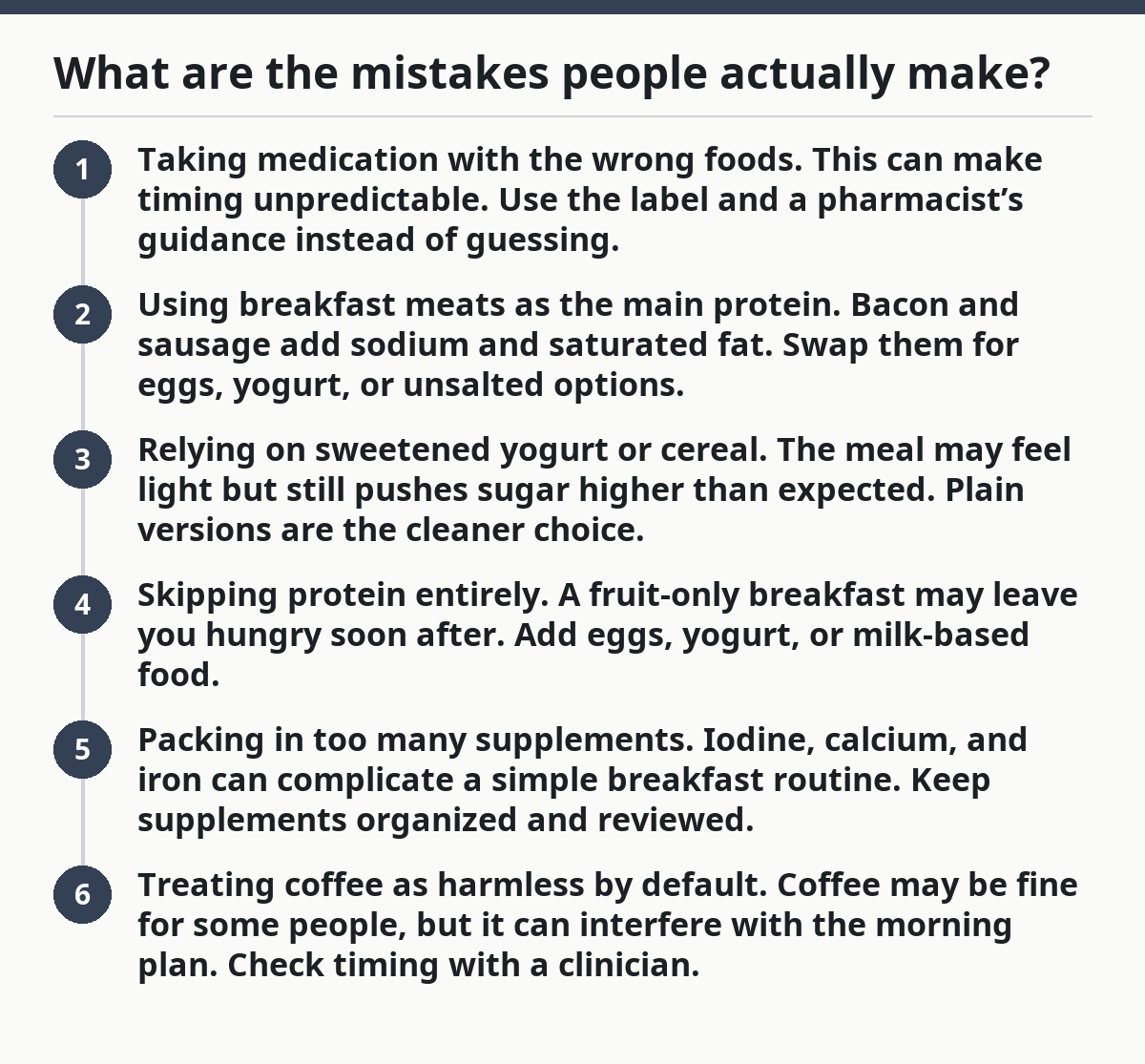
What are the mistakes people actually make?
The most common mistakes are mixing medication and breakfast carelessly, overloading breakfast with salty processed foods, and leaning on sugar-heavy items that look harmless. Those choices can make the meal harder on the heart and harder to keep consistent.
Picture this: the breakfast is quick, but the morning gets messy. That is usually when the mistakes happen.
- Taking medication with the wrong foods. This can make timing unpredictable. Use the label and a pharmacist’s guidance instead of guessing.
- Using breakfast meats as the main protein. Bacon and sausage add sodium and saturated fat. Swap them for eggs, yogurt, or unsalted options.
- Relying on sweetened yogurt or cereal. The meal may feel light but still pushes sugar higher than expected. Plain versions are the cleaner choice.
- Skipping protein entirely. A fruit-only breakfast may leave you hungry soon after. Add eggs, yogurt, or milk-based food.
- Packing in too many supplements. Iodine, calcium, and iron can complicate a simple breakfast routine. Keep supplements organized and reviewed.
- Treating coffee as harmless by default. Coffee may be fine for some people, but it can interfere with the morning plan. Check timing with a clinician.
A breakfast plan goes wrong when it looks healthy on paper but ignores the pill schedule. That is the part people miss.
When does the standard breakfast plan need to change?
The standard breakfast plan needs to change if swallowing is hard, appetite is poor, the diet includes a strict iodine rule, or the person has another condition that changes food timing. That is when a generic breakfast list stops being enough.
Picture this: the usual oatmeal-and-eggs plan sounds fine, but the morning reality is different. Then the plan has to fit the person, not the brochure.
Morning nausea or trouble swallowing: The meal may need softer textures or a smaller start — ask a clinician or dietitian about texture and timing.
A clinician has ordered a low-iodine pattern: Seaweed, iodized products, and certain fortified foods may need review — use the exact instructions given to the person.
Calcium or iron timing is complicated: Breakfast foods like milk and yogurt may need spacing — confirm the schedule rather than guessing.
Coffee is nonnegotiable for the routine: The medication plan may need to be built around it — ask for a schedule that can actually be followed.
Appetite is very low in the morning: A large breakfast can be unrealistic — use a smaller first meal and add a later snack if advised.
Heart failure, kidney disease, or other restrictions are present: Sodium, fluid, or mineral goals may change the usual advice — get individualized guidance.
The wrong move is forcing a standard breakfast onto a body that has different rules. That is how simple routines turn into skipped meals or medication confusion.
What kind of result should you expect?
A good result is a breakfast routine that feels repeatable, keeps hunger down, and does not fight the morning pill schedule. It should be plain enough to manage on low-energy mornings and flexible enough to rotate through eggs, plain yogurt, whole grains, fruit, milk, and coffee without drama.
You do not need a perfect menu.
If the breakfast is heart-aware, thyroid-aware, and easy to keep, that is success. If it leaves you confused about timing or forces you into foods you dislike, the plan needs another pass. That is why the smaller system matters: one protein, one grain, one fruit, and a medication routine that stays steady.
For a broader framework, the hub on senior heart-healthy breakfast planning can help connect this page to the rest of the morning meal plan.
What should seniors with thyroid conditions eat for breakfast?
Seniors with thyroid conditions should eat a breakfast that is simple, protein-rich, and matched to their medication timing. Eggs, plain yogurt, whole grains, and fruit are common building blocks, while salty processed meats and heavy sugar should stay in the background. If iodine limits or other medical restrictions apply, the breakfast plan needs to be adjusted.
Should thyroid medication be taken with breakfast?
Thyroid medication is often not taken with breakfast, but the exact timing depends on the medicine and the person’s instructions. Food, coffee, calcium, and iron can matter, so the safest move is to follow the prescription label and ask a pharmacist or clinician if the schedule is unclear.
Are eggs a good breakfast for thyroid health?
Eggs can be a good breakfast food for many seniors with thyroid conditions because they provide protein and fit easily with fruit or whole grains. They are not a cure or a special thyroid food, and the rest of the plate still matters. The healthiest version is usually plain and not paired with salty breakfast meats.
Drafted with AI; not yet reviewed by a person.