Last updated: November 19, 2026
Key Takeaways
- You don’t need a diet chart.
- A heart-healthy senior dinner plate is easiest to remember as half plants, one quarter protein, one quarter whole grains, plus a small fat add-on.
- The simplest senior dinner plate uses half vegetables and fruit, one quarter protein, and one quarter whole grains.
- Vegetables help the plate stay heart-friendly because they add volume, fiber, and texture without crowding out the rest of the meal.
A heart-healthy senior dinner plate is easiest to build when you use the plate method: half vegetables and fruit, one quarter lean protein, and one quarter whole grains. That keeps dinner simple, visual, and easier to portion. The steps below settle what goes where, how much goes on the plate, and how to keep sodium in check. In How to Balance a Heart-Healthy Senior Dinner Plate, the goal is a clear plate, not a complicated diet plan.
Build the dinner plate before you cook
Because of that, picture this: you’re standing at the counter with one plate, one skillet, and a fridge that holds mixed leftovers from the week. You don’t need a diet chart. You need a clear plate layout that tells you where each food lands.
Start with an 8- to 10-inch plate, not a serving bowl. A plate gives you a better read on portions, and it keeps dinner from turning into a pile of “healthy” food that still runs too big. The plate method is the easiest visual cue for older adults because it removes guesswork.
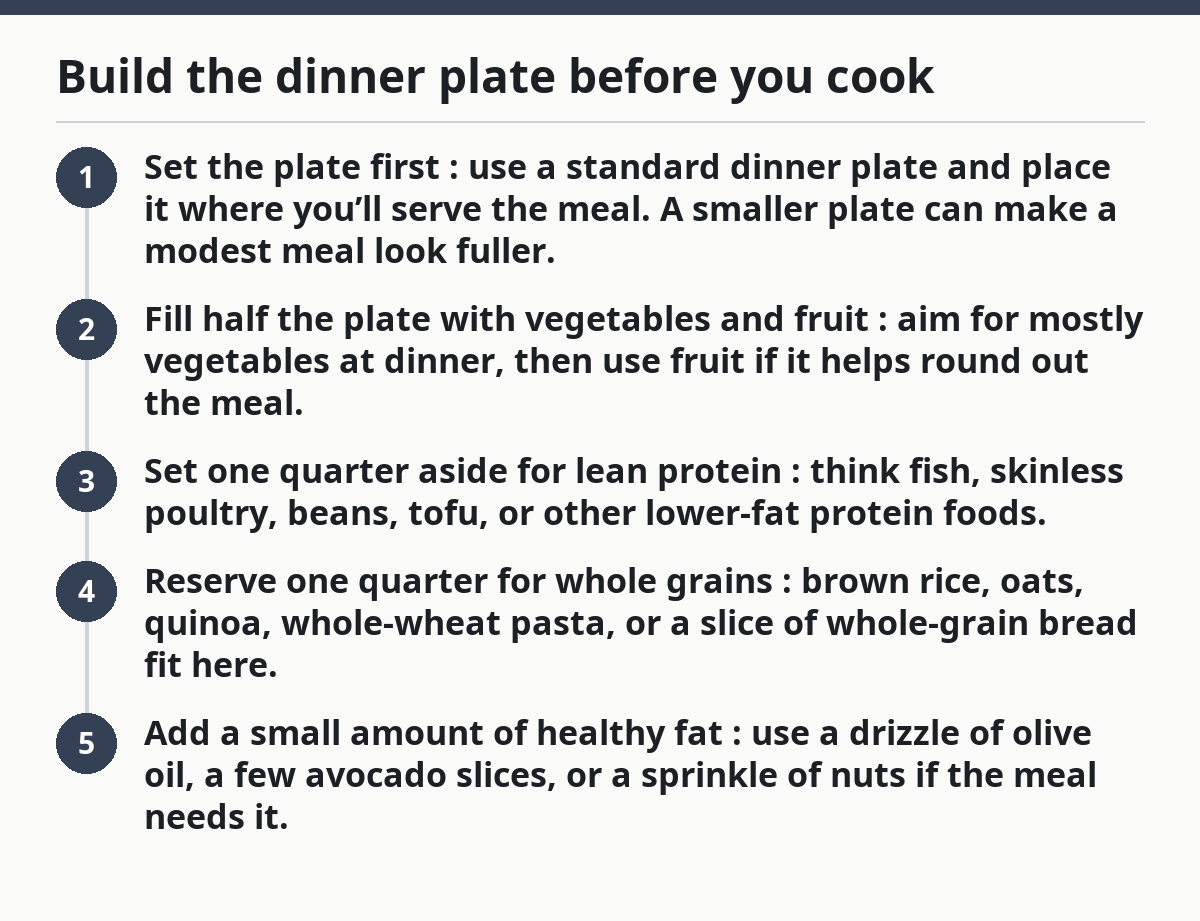
- Set the plate first: use a standard dinner plate and place it where you’ll serve the meal. A smaller plate can make a modest meal look fuller.
- Fill half the plate with vegetables and fruit: aim for mostly vegetables at dinner, then use fruit if it helps round out the meal.
- Set one quarter aside for lean protein: think fish, skinless poultry, beans, tofu, or other lower-fat protein foods.
- Reserve one quarter for whole grains: brown rice, oats, quinoa, whole-wheat pasta, or a slice of whole-grain bread fit here.
- Add a small amount of healthy fat: use a drizzle of olive oil, a few avocado slices, or a sprinkle of nuts if the meal needs it.
The better part is that you can build this plate from leftovers. A baked salmon fillet, roasted broccoli, and ½ cup of brown rice still follow the same structure.
For a broader meal framework, the hub page on Heart-Healthy Dinner Planning for Seniors With Special Diet Needs — The Complete Guide can sit beside this one. For related meal ideas, see Heart-Healthy Breakfast Ideas for Seniors and Low-Sodium Lunch Ideas for Older Adults.
What should a balanced heart-healthy senior dinner plate look like?
A balanced heart-healthy senior dinner plate looks like 2 parts plants, 1 part protein, 1 part whole grain, and a small fat add-on. That picture matters more than a rigid recipe because many seniors eat smaller dinners, and the plate still needs to deliver fiber, protein, and steady energy. The American Heart Association recommends filling most of the plate with plants, and the USDA MyPlate model uses the same half-plate vegetable and fruit pattern.
Here’s the visual breakdown that works well at dinner:
- Half the plate: nonstarchy vegetables, plus fruit if needed
- One quarter: lean protein
- One quarter: whole grains or a starchy whole-food side
- Small side or garnish: healthy fats
Picture this: you’ve got grilled chicken, green beans, quinoa, and sliced strawberries. The vegetables take the biggest space, the chicken sits in a neat corner, and the grain fills the last quarter without crowding the plate.
A few practical cues help the plate work in real life:
- Use 2 or more colors from vegetables or fruit so the plate doesn’t turn beige.
- Keep sauces light enough that they don’t flood the food.
- If the protein is fatty, trim the grain portion a bit instead of stacking both heavy.
- If the meal has a soup or salad, count that food inside the same plate balance, not as a bonus round.
The point is not perfection. It is shape. A dinner plate that looks like a balanced map is easier to repeat than one built by memory.
How much of each food group should go on a senior dinner plate?
The simplest senior dinner plate uses half vegetables and fruit, one quarter protein, and one quarter whole grains. That ratio gives you a visual structure without needing calorie math, and it works well for a normal dinner plate rather than a restaurant tray.
Use these portion landmarks:
- Vegetables and fruit: fill half the plate with cooked vegetables, salad, or a mix of both. Nonstarchy vegetables carry most of the space.
- Lean protein: place a palm-sized portion in one quarter of the plate. Fish, poultry, beans, lentils, tofu, or low-fat dairy-based dishes fit here.
- Whole grains: place a modest scoop in the last quarter. Brown rice, barley, farro, corn, or whole-wheat bread all count.
- Healthy fats: keep them small. A teaspoon or two of oil, a few olives, or a small avocado slice is usually enough to add flavor.
Now, you might be wondering about fruit at dinner. Fruit can sit in the vegetable-and-fruit half, especially if the meal needs a fresh side or dessert-like finish. Berries, melon, orange slices, or a small apple work better than fruit packed in syrup.
The truth is, this plate method also helps when appetite is lower. If a senior cannot finish a big meal, the plate still protects the parts that matter most: color, fiber, and protein. That matters for muscle support and steadier fullness, even on a light dinner. According to the National Institute on Aging, older adults often need nutrient-dense foods when appetite drops.
Vegetables first: the easiest way to make the plate heart-friendly
Vegetables make the plate heart-friendly because they add volume, fiber, and texture without crowding out the rest of the meal. On a dinner plate, they earn the biggest share for a reason: they help the meal look full without leaning on salt or heavy fat.
Choose vegetables that fit the meal, not just the pantry. Roasted carrots, steamed green beans, sautéed spinach, cauliflower, zucchini, cabbage, tomatoes, and peppers all work. A mixed tray at 400°F for 20 to 25 minutes is a common roasting range for vegetables, and it can turn plain vegetables into a practical dinner side.
Use these rules of thumb:
- Choose mostly nonstarchy vegetables for the half-plate space.
- Keep breaded or fried vegetables off the main plan; they act more like extras than anchors.
- Use herbs, garlic, lemon, vinegar, or pepper instead of salty seasoning blends.
- If chewing is hard, cook vegetables until tender but not mushy.
The catch: not every vegetable side is automatically heart-smart. Cream sauces, cheese-heavy toppings, and heavy butter can push the meal away from the goal fast. A spoonful of Parmesan is one thing; a casserole that hides two cups of cheese is another.
A simple plate often works better than a fancy one. Spinach and tomatoes beside baked fish are more useful than a complicated vegetable bake that brings a lot of sodium with it. If the vegetables taste flat, fix the flavor with acid and herbs first. Salt can stay the last resort. For seasoning ideas, see Heart-Healthy Seasonings and Flavor Swaps.
Lean protein belongs in a tight quarter of the plate
Lean protein belongs in a tight quarter of the plate because it supports fullness without taking over the meal. For seniors, that quarter matters more than many people think. If protein swallows half the plate, the meal usually loses vegetables and grain space.
Good dinner options include baked fish, skinless chicken or turkey, beans, lentils, tofu, edamame, and eggs used in a lighter dish. A palm-sized portion is a useful visual guide. For a fish fillet, the fillet itself often fills that quarter without much trimming.
Keep these details in mind:
- Choose cooking methods like baking, poaching, steaming, or light sautéing.
- Watch for processed proteins such as sausage, bacon, deli meat, and breaded cutlets; they often bring more sodium and saturated fat.
- If the protein is already rich, like salmon, keep the added oil small.
- If the meal is plant-based, beans and lentils can share the protein quarter with a little whole grain.
Picture this: you’ve got a tuna salad made with olive-oil mayo, served with cucumber slices and a small portion of whole-grain crackers. The protein stays in its lane, the vegetables keep the meal fresh, and the grain adds enough structure to keep dinner from feeling thin.
One honest trade-off: very low-fat protein can feel dry. That’s where a small amount of healthy fat helps. A teaspoon of olive oil, a spoon of yogurt sauce, or avocado slices can improve the meal without turning it greasy.
Whole grains and healthy fats keep the plate steady
Whole grains and healthy fats keep the plate steady because they round out the meal and slow the rush of hunger that can hit later in the evening. The grain quarter is not a bonus. It is part of the structure that makes the plate feel complete.
Use whole grains that are easy to portion:
- ½ to 1 cup of cooked brown rice, quinoa, barley, or whole-wheat pasta
- 1 slice of whole-grain bread
- A small baked potato with skin, if it fits the meal pattern
- Oat-based savory sides when dinner calls for something softer
Healthy fats need a light hand. Use olive oil, canola oil, avocado, nuts, seeds, or tahini in small amounts. A drizzle over vegetables or a spoon in a sauce is usually enough.
Here’s the catch: healthy fats are still energy-dense. Too much oil can make a heart-healthy dinner look fine on paper and heavy on the plate. The goal is flavor and texture, not a glossy finish on everything.
For an older adult who eats a smaller dinner, the grain and fat pieces can help the meal feel satisfying. They also help with mouthfeel, which matters when dry food gets skipped. Still, the vegetable half should stay intact. If you shrink the vegetables to make room for more grains or oil, the plate loses balance fast. For grain portions, the USDA MyPlate guide keeps the same quarter-plate pattern.
Common plate mistakes that throw off heart health
A balanced plate can go wrong in a few ordinary ways, and each one has a cost. The fix is usually simple once you can see the pattern.
-
Protein takes over the plate
This crowds out vegetables and grains. Use a smaller serving dish or cut the main protein before plating. -
Vegetables hide under cheese or cream
The plate still looks green, but the sodium and saturated fat jump. Roast, steam, or sauté with herbs instead. -
Whole grains turn into a giant starch pile
A big scoop of rice or pasta can eat up the plate. Measure the grain with a cup first, then fill the rest with vegetables. -
Salt does the flavor job alone
Heavy seasoning can drown out the rest of the meal. Use lemon, garlic, onion, rosemary, dill, or pepper before salt. -
Fruit replaces vegetables entirely
Fruit belongs on the plate, but it does not take the whole vegetable half. Save it for a side, a salad topping, or a small finish.
Before you serve, step back and look for the shape. If the food looks like one large mound with a garnish on top, the balance is off. If the plate has clear sections and at least 2 colors of vegetables, you’re close.
A heart-healthy dinner plate does not need perfect measuring cups every night. It needs the same pattern often enough that the eye learns it. For sodium limits, the FDA says adults should keep sodium under 2,300 mg a day.
A simple senior dinner plate you can repeat tonight
A repeatable senior dinner plate is the one you can build in 10 minutes without a recipe card. That is the real test. If the method takes too long, it will not stick.
Try this template:
- Half plate: roasted broccoli and sliced tomatoes
- One quarter: baked salmon or skinless chicken
- One quarter: brown rice or quinoa
- Small finish: olive oil and lemon, or a few avocado slices
You can swap the foods and keep the shape. Turkey, lentils, green beans, barley, carrots, peas, tofu, and a small fruit serving all fit the same system. The method stays the same even when the menu changes. That consistency is the heart of How to Balance a Heart-Healthy Senior Dinner Plate.
This is also the right place to keep sodium lower without making dinner dull. Choose plain grains, unseasoned proteins, and vegetables cooked with herbs. If you use a sauce, keep it on the side. That one habit often does more than any special “heart-healthy” label on the package.
The bottom line is plain: a balanced dinner plate is a visual habit, not a recipe. Build the shape first, flavor it second, and keep the vegetable space intact. For more meal planning help, see Heart-Healthy Dinner Planning for Seniors With Special Diet Needs and Senior Meal Planning on a Budget.
What should a balanced heart-healthy senior dinner plate look like for seniors?
A balanced heart-healthy senior dinner plate for seniors looks like half vegetables and fruit, one quarter lean protein, and one quarter whole grains. The plate should read clearly at a glance, with vegetables taking the most space and sauces staying light. That layout keeps the meal practical, familiar, and easier to repeat at home.
How much of each food group should go on a senior dinner plate?
The easiest guide is half vegetables and fruit, one quarter protein, and one quarter whole grains, with a small amount of healthy fat added for taste. That structure works well on a standard dinner plate and helps keep portions visible. If appetite is smaller, keep the same shape and reduce the overall amount, not the balance.
Drafted with AI; not yet reviewed by a person.