Last updated: November 19, 2026
Quick Answer: 3 soft heart-healthy stir-fry recipes for seniors can be made with fully cooked vegetables, tender protein, and a light low-sodium sauce so the food is easy to chew and still feels like a real dinner. Soft heart-healthy stir-fry recipes for seniors work best when they are tender, low in salt, and flexible enough to work in a skillet or wok with rice, noodles, chicken, tofu, or extra vegetables.
What makes a stir-fry soft and heart-healthy?
Soft heart-healthy stir-fry recipes for seniors use vegetables cooked long enough to lose their crunch without turning to mush, and they use less sodium, lean protein, and little to no heavy oil. The goal is not a crisp, restaurant-style sear. It is a tender one-pan meal that is easier to chew and easier on the salt shaker.
That means starting with vegetables that soften well, like mushrooms, zucchini, bell peppers, spinach, napa cabbage, carrots cut thin, and snow peas cooked past the snap stage. It also means choosing protein that stays tender: small pieces of chicken breast, extra-firm tofu, or cooked shrimp if seafood fits the meal plan. For seniors with chewing trouble, the cut matters as much as the ingredient. Bite-size pieces cook faster and feel gentler in the mouth.
A heart-healthy stir-fry usually works best with a sauce built from low-sodium broth, reduced-sodium soy sauce, fresh ginger, garlic, a little rice vinegar, and cornstarch or arrowroot for body. The sauce should coat the food, not drown it. A small amount of sesame oil can add flavor, but 1 teaspoon is often enough for a whole skillet. The point is flavor without a salty finish.
This kind of meal is not a good fit for anyone who wants crunchy vegetables or a heavily browned, takeout-style wok char. It is also not the best choice if the person needs a strict texture-modified diet beyond “soft.” In that case, a clinician or dietitian should guide the texture level.
How do you make stir-fry soft enough for seniors?
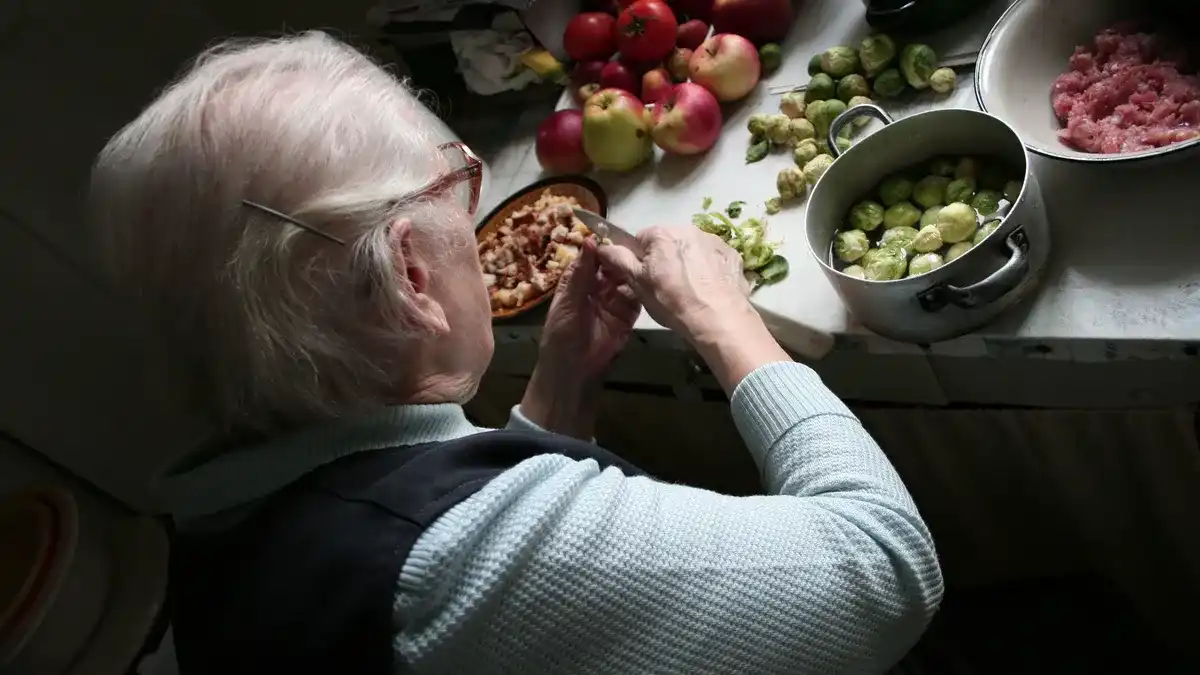
You make stir-fry soft enough for seniors by cooking the vegetables first, keeping the heat at medium to medium-high, and finishing only when the toughest vegetable is fully tender. A soft stir-fry is a timing job more than a recipe trick.
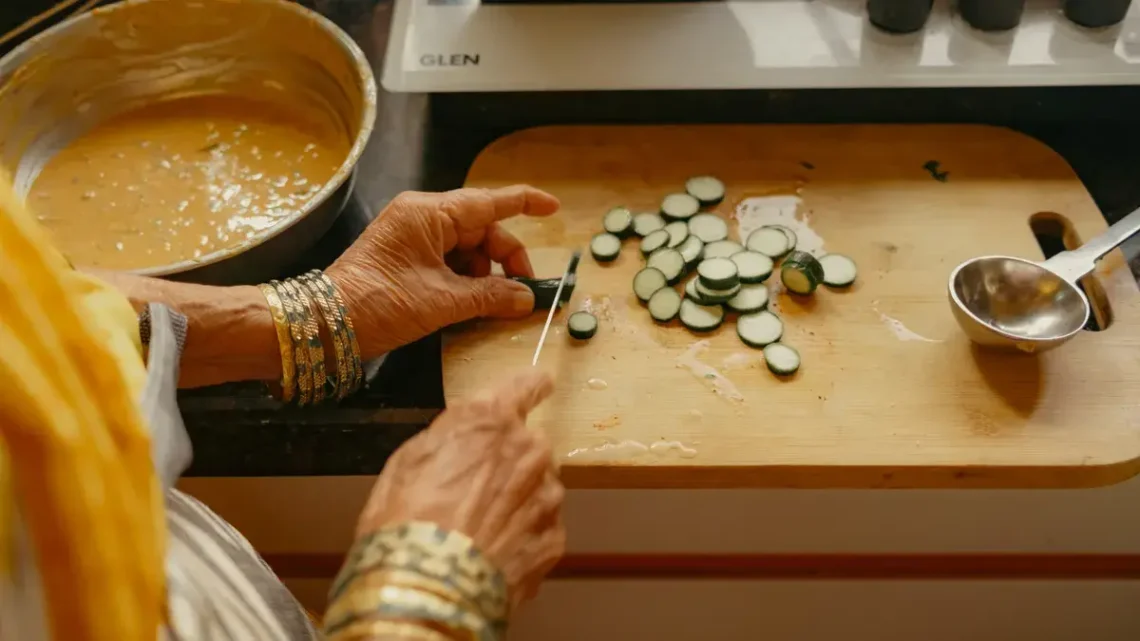
Start with the vegetables that need the longest cooking time. Carrots, broccoli florets, and cabbage go in before mushrooms, spinach, or zucchini. Cut everything smaller than you would for a crisp stir-fry: thin half-moons, short matchsticks, or 1-inch pieces. Smaller pieces soften in 4 to 8 minutes instead of staying firm in the middle.
Use a skillet or wok that is wide enough to spread the ingredients out. A 12-inch skillet can work well for a family-size batch because the food can sit in a single layer long enough to soften evenly. If the pan is crowded, the vegetables steam unevenly and the protein can toughen. Add a few tablespoons of water or low-sodium broth when the pan starts to dry out. That keeps the food tender without turning the dish soupy.
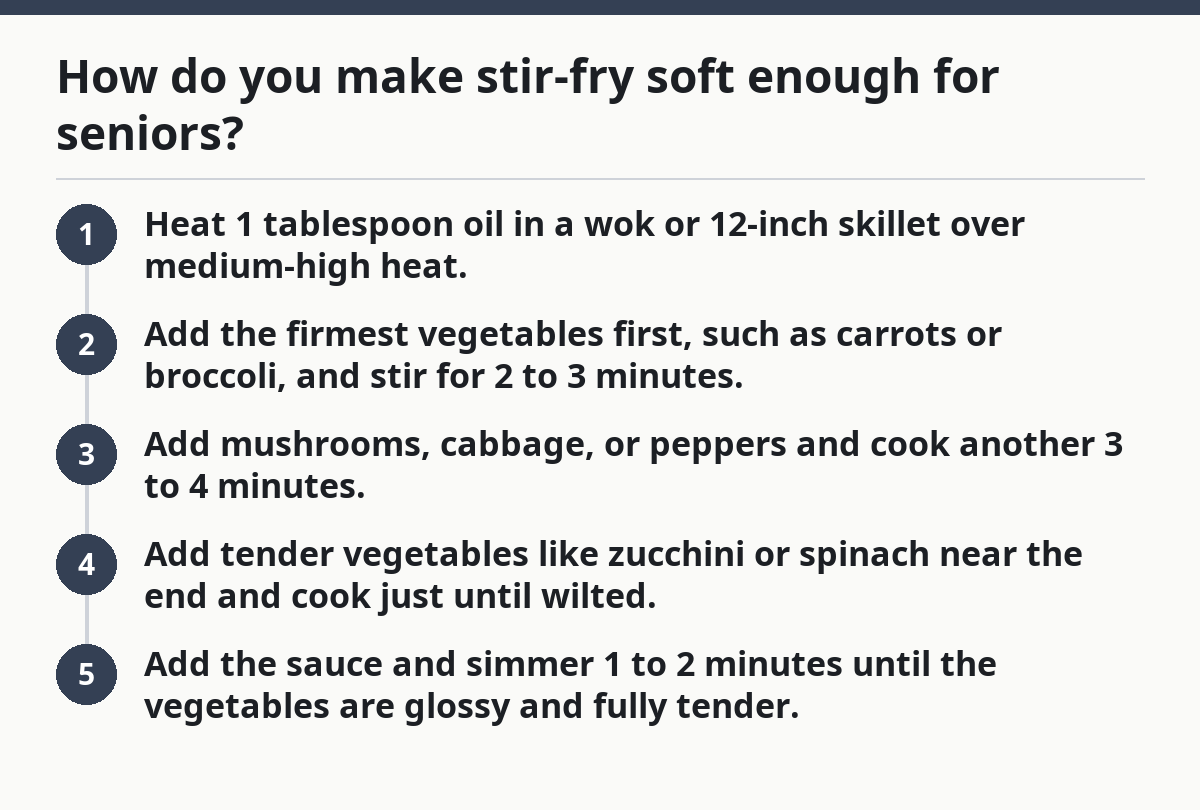
Soft stir-fry also depends on the order of cooking:
- Heat 1 tablespoon oil in a wok or 12-inch skillet over medium-high heat.
- Add the firmest vegetables first, such as carrots or broccoli, and stir for 2 to 3 minutes.
- Add mushrooms, cabbage, or peppers and cook another 3 to 4 minutes.
- Add tender vegetables like zucchini or spinach near the end and cook just until wilted.
- Add the sauce and simmer 1 to 2 minutes until the vegetables are glossy and fully tender.
The drawback is that soft vegetables lose some crisp texture and a little visual drama. That is the trade-off for easier chewing. If the goal is senior-friendly dining, that trade is usually worth it.
A simple low-sodium stir-fry sauce that still tastes like dinner
A low-sodium stir-fry sauce can taste complete if it balances salt reduction with acid, aromatics, and a little sweetness. The sauce does not need to be bland just because it is heart-conscious.
A useful base for about 4 servings is:
- 1/3 cup low-sodium broth
- 1 to 2 tablespoons reduced-sodium soy sauce
- 1 teaspoon grated ginger
- 1 small garlic clove, minced
- 1 teaspoon rice vinegar
- 1 teaspoon honey or maple syrup
- 1 teaspoon cornstarch mixed with 1 tablespoon cold water
Whisk it before adding it to the pan. The cornstarch thickens the sauce in about 1 minute of simmering, which helps it cling to the food instead of running to the bottom of the dish. If you want more flavor without more salt, add scallions, black pepper, a squeeze of lime, or a pinch of crushed red pepper if heat is welcome.
There is a real limit here: low-sodium soy sauce still contains sodium. A label can say “reduced sodium” and still carry more salt than a reader expects. That is why the bottle label matters more than the marketing term. The American Heart Association’s advice on sodium is a useful reference point when comparing packaged ingredients, and the FDA’s guidance on the Nutrition Facts label helps with serving sizes and sodium per serving.
This sauce is not ideal for someone who needs a very thick, glaze-like coating or who dislikes ginger. It also will not fully replace the flavor of a high-sodium bottled stir-fry sauce. That is the trade-off for keeping the dish heart-healthy.
Tender protein choices that stay easy to chew
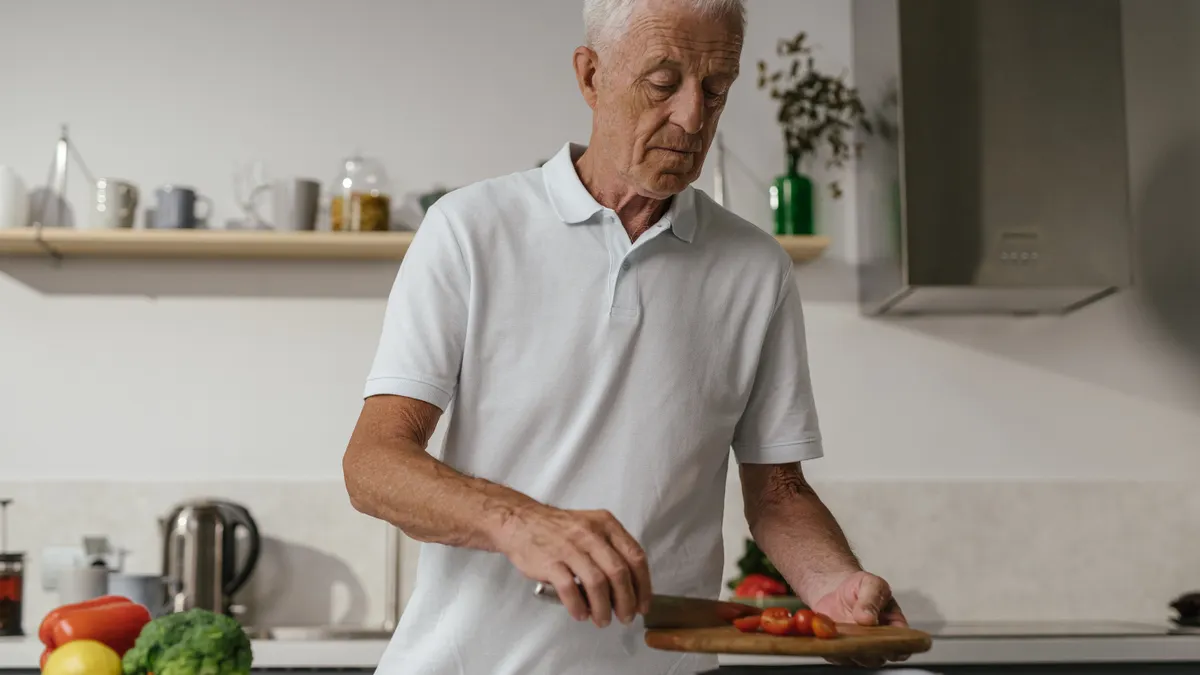
Tender protein choices for a soft heart-healthy stir-fry are chicken breast cut small, tofu, and sometimes eggs or very finely sliced lean meat if it fits the meal plan. The protein should cook fast and stay moist, not dry out into little chewing chores.
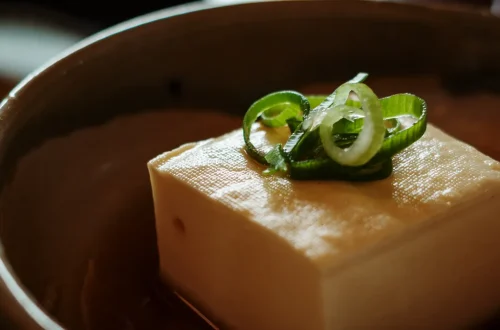
Chicken breast works well if it is cut into thin strips or 3/4-inch pieces and cooked just until done. It pairs easily with broccoli, peppers, carrots, or mushrooms. Tofu is often the easiest option because extra-firm tofu can be pressed, cubed, and browned lightly in a skillet, then simmered in sauce until soft. It brings protein without much chewing effort and takes on the flavor of the sauce quickly. For a softer texture, some cooks prefer medium-firm tofu, though it needs gentler handling.
If using chicken, keep the pan from running dry. A tablespoon of oil plus a few splashes of broth during cooking helps preserve tenderness. Overcooked chicken becomes stringy, which is exactly what many seniors are trying to avoid. If tofu is the choice, handle it in larger cubes and stir less often so it stays intact.
A soft stir-fry is not the right place for thick-cut beef, crispy tofu cubes, or large shrimp seared hard in a hot pan. Those textures can be too chewy. For the same reason, tough cuts like flank steak need more work than this page is meant to cover.
For a heart-conscious dinner, the healthiest move is usually the simplest one: keep the protein lean, the piece size small, and the sauce light. A 1-cup serving of protein-heavy stir-fry with vegetables and rice can be satisfying without feeling heavy.
Rice and noodle pairings that keep the meal easy to eat
Rice and noodle pairings make a soft stir-fry feel complete, and the best choice is the one that stays tender after the sauce hits it. Steamed white rice, brown rice, soft rice noodles, and lo mein-style noodles all work, but they behave differently on the plate.
White rice is the softest standard choice. It absorbs sauce well and gives seniors a familiar, easy-chewing base. Brown rice has more chew, so it is better for someone who likes a firmer grain and can manage it comfortably. Rice noodles are useful when the meal needs a very soft texture; they soften quickly and stay slippery in sauce. If a noodle is overcooked slightly, that is often acceptable in a senior-friendly stir-fry because it stays easier to chew than undercooked pasta.
Portioning matters here. A stir-fry can turn heavy fast if the rice or noodles take over the plate. I would keep the grain or noodle base to about half the bowl and let the vegetables and protein fill the rest. That keeps the meal balanced without making the pan sauce disappear into starch.
One-pan dinners are easiest when the rice is already cooked. Leftover rice from the refrigerator works especially well in a skillet because it warms through quickly. If using fresh rice, let it sit long enough to steam-dry a bit so it does not go gummy. Noodles should be cooked just to the softer side of done, then tossed into the pan for a minute or two with the sauce.
This is not the place for heavily salted packaged noodle sauces. They often push sodium higher than needed, and the meal can lose its heart-healthy edge in a single pour.
Three soft stir-fry combinations that work in one pan
These three combinations give a senior-friendly stir-fry enough variety without demanding special tools or hard-to-find ingredients. Each one works in a wok or 12-inch skillet and can be built in about 20 to 25 minutes, depending on how much chopping is needed.
Chicken, carrot, and cabbage over rice
Use thinly sliced chicken breast, carrot coins cut very thin, shredded cabbage, and mushrooms. Cook the carrots first, then the chicken, then the cabbage and mushrooms. Finish with the low-sodium sauce and serve over white rice. This version is mild, familiar, and easy to eat.
Tofu, zucchini, and bell pepper with noodles
Use extra-firm tofu cubes, zucchini half-moons, red bell pepper strips, and soft rice noodles. Brown the tofu lightly, add the vegetables, and let them soften until the pepper has lost its raw edge. Toss with noodles and sauce at the end. This one is a strong choice for readers who want a meatless dinner that still feels filling.
Chicken, spinach, and mushroom rice bowl
Use chicken strips, sliced mushrooms, and a big handful of spinach. The spinach wilts in less than 2 minutes, so it goes in last. Serve it over rice with a small amount of sesame oil and a splash of vinegar. This version is especially useful when the cook wants a fast dinner and does not want to handle many ingredients.
Each of these is a one-pan dinner, but only if the ingredients are cut before the heat goes on. Once the pan starts, the cooking moves quickly. A small prep bowl for each ingredient keeps the sequence clean and reduces the chance of overcooking.
Common mistakes that make senior stir-fry hard to eat
The biggest mistakes are high heat, large vegetable pieces, too much sodium, and dry protein. Each one changes the dish in a way that makes it less friendly for older adults.
High heat can brown the outside of chicken or tofu before the inside softens. Large pieces of carrot or broccoli can stay hard in the center even if the outside looks done. Too much soy sauce, bottled sauce, or broth can push sodium higher than intended and make the dish taste sharp rather than balanced. Dry protein is often the most disappointing problem because once chicken or tofu toughens, there is no easy fix at the table.
The correction is straightforward. Cut smaller. Use a modest heat. Add a splash of broth if the pan dries out. Taste the sauce before it goes into the skillet, not after the whole dish is already too salty. If the first version comes out too soft, shorten the final simmer by 1 minute next time rather than swinging back to crisp vegetables.
This style of cooking is not meant to mimic a restaurant takeout stir-fry. It is meant to be eaten comfortably. That difference matters. A reader looking for charred edges and crackly vegetables will be disappointed. A reader who wants a soft, heart-conscious dinner for a senior will usually be happier with the gentler version.
The Cleveland Clinic’s general nutrition guidance on heart health and the American Heart Association’s sodium guidance are both useful references when planning the broader diet around these meals. For the recipe itself, the practical rule is simple: tender first, salty last.
Key Takeaways
- Soft stir-fry works best when the vegetables are fully cooked and the pieces are small.
- A light sauce made with low-sodium broth, reduced-sodium soy sauce, ginger, garlic, and a little cornstarch gives flavor without heaviness.
- Chicken breast and tofu are the most practical tender proteins for this style of dinner.
- White rice, rice noodles, and soft wheat noodles can all fit, but the grain or noodle should not dominate the plate.
- A wide wok or 12-inch skillet can help the food cook more evenly, because crowding makes the food cook unevenly.
- This style is better for seniors who need easier chewing than for readers who want crisp vegetables or strong takeout flavor.
Can stir-fry be soft enough for seniors?
Yes, stir-fry can be soft enough for seniors if the vegetables are fully cooked and the protein is cut small. The texture changes from crisp to tender when the pan is cooked longer and the pieces are kept bite-size. That makes the dish much easier to chew without turning it into soup.
How do you make stir-fry low in sodium?
You make stir-fry low in sodium by using reduced-sodium soy sauce, low-sodium broth, and fresh flavor from ginger, garlic, vinegar, and scallions. The first sentence of the sauce matters most: taste before you pour, because bottled sauces can add salt fast even in small amounts. A little cornstarch thickens the sauce so less of it is needed.
What vegetables work best in a soft stir-fry?
Mushrooms, zucchini, cabbage, spinach, bell peppers, and thin-cut carrots work well in a soft stir-fry because they soften well in 5 to 10 minutes and do not stay stubbornly crunchy. Broccoli can work too if the florets are small and cooked long enough to become tender throughout.
Sources
- American Heart Association: https://www.heart.org/
- U.S. Food & Drug Administration, Nutrition Facts label: https://www.fda.gov/food/nutrition-facts-label
- Cleveland Clinic heart health guidance: https://my.clevelandclinic.org/health/articles/16950-heart-healthy-diet
Drafted with AI; not yet reviewed by a person.