Last updated: November 19, 2026
Key Takeaways
- Purees give a neater plated side dish than soup when you want gentle texture.
- Carrots, cauliflower, sweet potatoes, and parsnips usually blend smoothly without stringy bits.
- Start with little liquid, then reduce the puree briefly if it still seems thin.
- Flavor with acid, herbs, and fat first; salt is less important.
Soft Vegetable Purees That Are Not Soup for Seniors are a good plated side dish when the goal is gentle texture, not a bowl of soup. Quick answer: a good puree usually holds a spoon line for about 10 seconds. The sweet spot is a puree that mounds on a plate, tastes like vegetables instead of baby food, and fits a soft meal without spreading. For seniors, that usually means cooking vegetables until very tender, then blending with just enough liquid to make them smooth and spoonable.
What vegetable purees do better than soup at the table
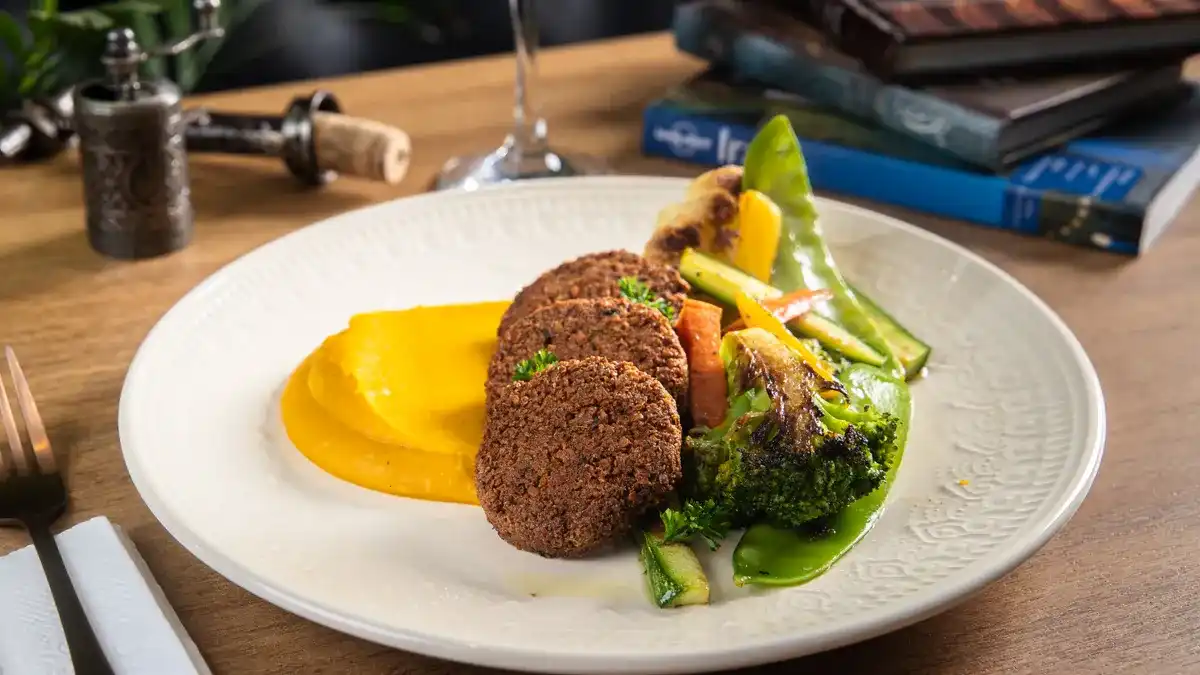
Vegetable purees work better than soup when you want a neat side dish that stays on the plate. A puree can sit beside fish, chicken, eggs, or beans in a 1/4-cup to 1/2-cup portion without running into everything else. That matters for diners who want a softer texture but still want a meal that looks like a meal.
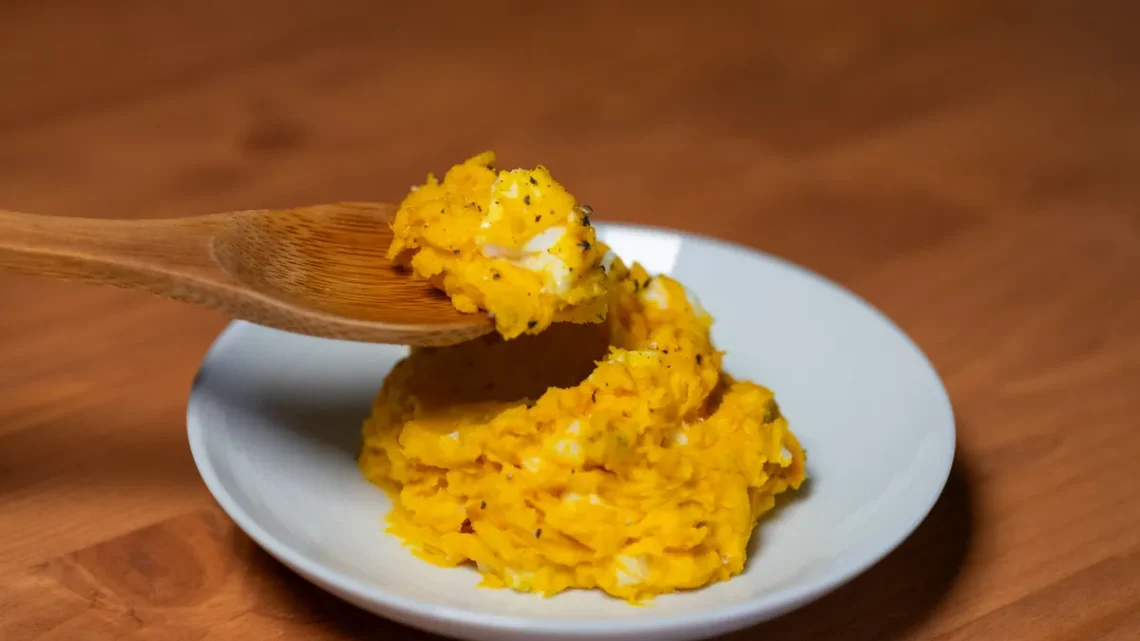
The biggest difference is thickness. Soup is built to pour. A side dish puree should be thick enough to hold shape on the spoon and not slide across the plate. Think of mashed potato texture, but smoother. That consistency makes it easier to portion next to other foods and easier to flavor with herbs, oil, or a little butter.
This format is also useful when a person is tired of the same soft foods every day. A carrot puree can taste bright and sweet. Cauliflower can taste mild and buttery. Sweet potato brings more body. Parsnip adds a gentle, earthy note. These are not dramatic flavors, but they give enough variety that a weekly menu does not feel flat.
The limit is real, too: if the person needs a medically prescribed texture, this page is not the place to guess. Soft vegetable purees for ordinary mealtimes are different from foods prepared for swallowing concerns. If that is the issue, consult a clinician or speech-language pathologist and follow their plan; NICE and ASHA both recommend professional assessment for swallowing problems.
For a broader menu, this page fits the heart-healthy soft vegetables and sides hub, which can help you build the rest of the plate without repeating the same dish every night.
Which vegetables puree well for a smooth side dish?
Carrots, cauliflower, sweet potatoes, and parsnips puree well because they turn soft without staying fibrous or stringy. That is the short answer. The longer answer is that many of the best vegetables for a plated puree cook evenly and blend into a clean, even texture after 15 to 25 minutes of simmering or roasting, depending on the vegetable and cut size.
Carrots are a good starting point because they bring color and a naturally sweet flavor. Steam chunks until they collapse easily under a fork, then blend with a small amount of olive oil or warm stock until smooth. Cauliflower works when you want a pale puree that can take on other flavors. Steam florets until they are very soft and blend while still warm.
Sweet potatoes make the thickest puree of the group, which is useful when a side dish should hold a shape on the plate. They are also easy to season with cinnamon, ginger, or a little nutmeg, though savory herbs work just as well. Parsnips sit between carrot and potato in flavor: slightly sweet, slightly earthy, and good in a blend.
A few vegetables are harder to use as a smooth side dish. Green beans, peas, and broccoli can puree, but they often keep skins, fibers, or a strong vegetal taste unless they are passed through a sieve. That extra step is fine if you want a very polished result, but it adds time.
A useful rule: choose vegetables that start tender and finish creamy. If the vegetable has tough skins, stringy stems, or a sharp bitter edge, it usually needs more work than this page is meant to cover.
How do you make vegetable puree thicker?
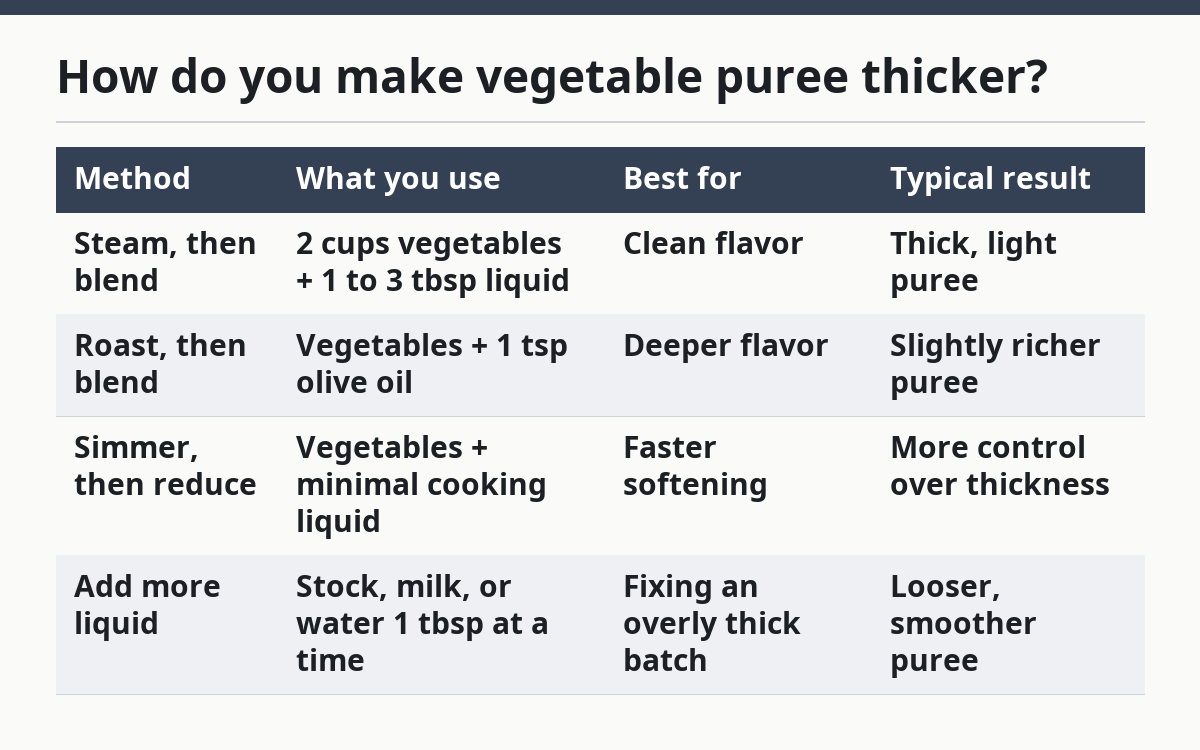
You make vegetable puree thicker by starting with less liquid and reducing it after blending if needed. That is the most reliable method for a puree that stays on the plate instead of becoming a sauce. The goal is usually a texture closer to mashed potatoes than to cream soup.
| Method | What you use | Best for | Typical result |
|---|---|---|---|
| Steam, then blend | 2 cups vegetables + 1 to 3 tbsp liquid | Clean flavor | Thick, light puree |
| Roast, then blend | Vegetables + 1 tsp olive oil | Deeper flavor | Slightly richer puree |
| Simmer, then reduce | Vegetables + minimal cooking liquid | Faster softening | More control over thickness |
| Add more liquid | Stock, milk, or water 1 tbsp at a time | Fixing an overly thick batch | Looser, smoother puree |
- Cook 2 cups of chopped vegetables until completely tender. Steam, roast, or simmer them until a fork passes through without resistance. This gives the blender less work and helps the puree stay smooth.
- Drain off all but a spoonful or two of cooking liquid. Too much water at this stage is the main reason a puree turns thin and slack.
- Blend in a food processor, high-speed blender, or with an immersion blender. Add liquid 1 tablespoon at a time, not by the cup, until the blades catch and the mixture turns silky.
- Stop and check the texture after 30 to 60 seconds of blending. A thick puree should mound briefly on a spoon instead of sliding off immediately.
- If it is still thin, return it to a small pan and cook over low heat for 2 to 4 minutes, stirring often. Evaporation will tighten the texture without changing the flavor much.
- Finish with 1 to 2 teaspoons of olive oil, if desired. Fat helps the puree feel smooth and rich, even when the ingredient list stays short.
The common mistake is to add stock, milk, or water until the mixture “looks right” in the blender. That usually makes a puree too loose for serving as a side dish. Another mistake is to overblend a watery mixture and expect it to thicken on its own. It will not. Extra blending only makes the texture finer, not denser.
If the puree gets too thick, loosen it with 1 teaspoon at a time of warm liquid. That is easier to control than trying to rescue an over-thin batch.
Seasoning without salt: what actually gives flavor
Vegetable purees need acid, herbs, and fat more than salt. That is the simplest way to keep the flavor alive when the dish is meant to be gentle and soft. Olive oil is the easiest starting point because it rounds out carrot, cauliflower, sweet potato, and parsnip without making the puree heavy.
A few small additions do a lot of work. A squeeze of lemon can brighten cauliflower. Chopped parsley or chives can lift a carrot puree. A little grated ginger works well with sweet potato. Rosemary, thyme, and sage suit parsnip, but they should be used sparingly; strong herbs can take over a smooth puree fast. Start with 1/4 teaspoon dried herbs or 1 teaspoon chopped fresh herbs for a small batch.
A small spoonful of chopped herbs can also sharpen a puree without making it busy. Chopped dill, for example, works well in a carrot puree, while chives suit cauliflower. Keep the pieces fine so the puree stays smooth.
Roasting the vegetables before pureeing also changes the flavor more than most people expect. A tray in a 400°F oven for 20 to 30 minutes creates browning, which deepens sweetness and adds a more savory note. That matters when the puree is serving as a side dish rather than a bowl of soup. Steam gives a cleaner taste; roast gives more character.
The trade-off is that stronger seasoning can make a puree less universally liked at the table. A person who wants very plain food may prefer butter and a little warm milk instead of garlic, paprika, or citrus. That is fine. The point is not to hide the vegetable flavor. The point is to keep the dish from tasting flat.
A dependable formula is vegetable plus olive oil plus one accent. For example: carrot, olive oil, and dill; cauliflower, olive oil, and lemon; sweet potato, olive oil, and ginger; parsnip, olive oil, and thyme.
Simple plated combinations that work on an ordinary dinner plate
Simple plated combinations that work on an ordinary dinner plate usually use one dominant vegetable and one support vegetable, not a long list. That keeps the flavor clear and the texture smooth. A 2-to-1 ratio is a useful starting point: 2 cups of the main vegetable to 1 cup of the secondary vegetable before cooking.
Carrot and cauliflower is a good combination when you want color and a lighter texture. The carrot brings sweetness, and the cauliflower softens the flavor without turning the puree bland. Sweet potato and parsnip gives a thicker, more substantial puree with a warm, slightly sweet finish. Cauliflower and parsnip makes a pale puree with more body than cauliflower alone. Carrot and sweet potato is the most naturally sweet option, so it works best with a savory herb or acid to keep it from reading like dessert.
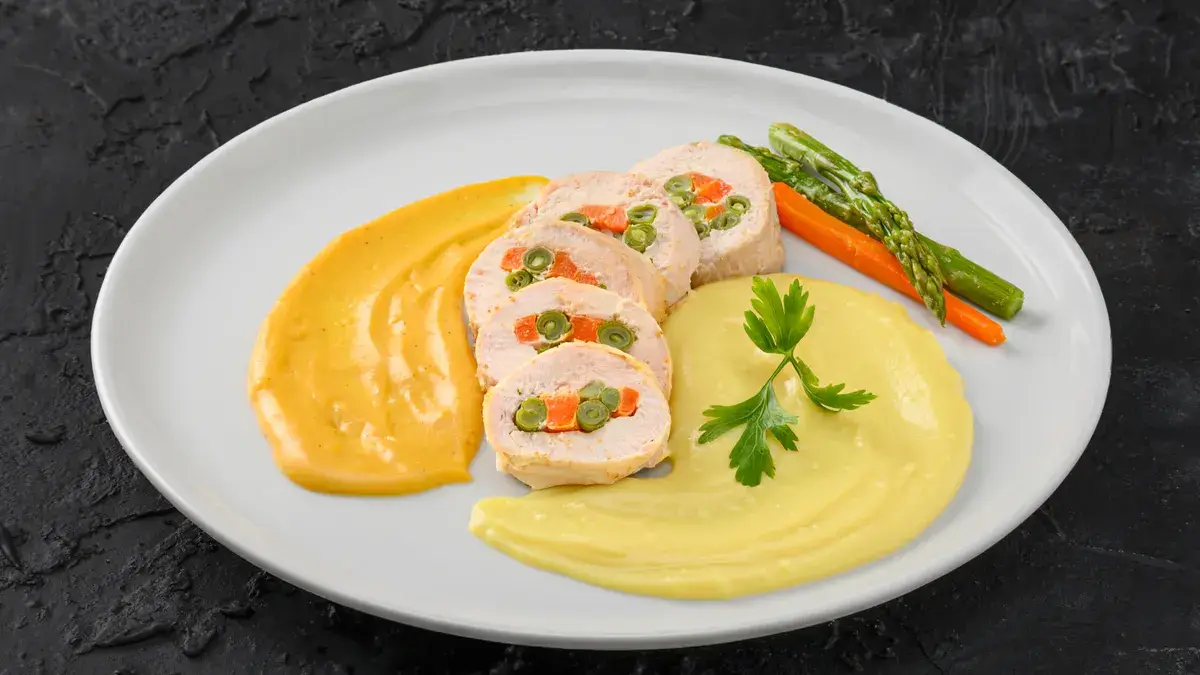
These combinations are useful because they let the puree act like a side dish, not a separate course. A 1/3-cup serving beside roasted chicken, baked fish, or a soft omelet is enough to finish the plate without feeling like the meal has turned into soup. The puree should sit in a smooth swoop or small mound, not flood the plate.
A good plating habit is to keep the puree thick enough to hold a spoon mark for about 10 seconds. That is not a laboratory standard; it is a practical one. If the mark closes instantly, the puree is probably too loose for the role.
The downside of combining vegetables is that one ingredient can dominate the color or flavor. Cauliflower can disappear under carrot. Parsnip can make sweet potato taste sweeter than intended. If a blend seems muddy, reduce the number of ingredients and season more cleanly. Two vegetables often beat four.
When soft vegetable purees are the right choice — and when they are not
Soft vegetable purees are right when the eater wants a gentle texture, a plated side dish, and vegetables that still taste like vegetables. They are not the right choice when the plate needs crunch, when a watery puree would annoy the person eating it, or when a prescribed texture level has to be followed exactly.
These purees are especially useful for meals built around soft proteins and starches. Think baked fish with carrot puree, scrambled eggs with cauliflower puree, or roast chicken with sweet potato and parsnip puree. The puree gives the plate color and moisture without turning dinner into a bowl. That makes it easier to keep portions small and tidy.
They are less useful when the meal is already soft and bland. If everything on the plate is puréed, the meal can feel monotonous. That is one reason I would not use this approach for every dish in a week. Two or three times over 7 days is often enough for variety; the rest of the time, soft steamed vegetables or a smooth mash may be a better fit.
Another honest drawback: purees can be time-consuming if they are made from scratch for one person. Roasting, blending, and adjusting thickness takes more effort than steaming a few florets. If the only goal is speed, this is not the simplest route.
For readers building a broader menu, the heart-healthy soft vegetables and sides hub can help with the rest of the plate. This page stays focused on the puree itself: soft, thick, and served as food, not as soup.
One practical method for serving vegetable purees without turning them into soup
The easiest method is to cook, blend, and plate the puree warm with very little liquid. Start with 3 cups of chopped vegetables, cook them until very soft, then blend with 1 to 3 tablespoons of warm liquid and 1 teaspoon of olive oil. Spoon it onto a plate with the back of a spoon to make a small oval or swoop.
Serve it right after blending if possible. A puree thickens slightly as it cools, which is useful, but it also loses some of its smoothness if it sits too long. If it begins to stiffen, stir in a teaspoon of warm water or stock. If it is too loose, let it sit in a small pan over low heat for 2 minutes and stir.
That basic approach works because it gives control at each step. The cooking stage softens the vegetable. The blending stage makes the texture even. The final heat adjustment sets the thickness. A saucepan, a blender, and a spoon are enough.
The most common serving mistake is treating puree like soup and adding liquid until it pours. That changes the dish completely. The second mistake is serving it cold from the refrigerator. Cold puree feels dense and heavy instead of soft and clean. Warm or gently hot is usually the better target for a plated side dish.
What vegetable puree should look and feel like on the spoon
A good vegetable puree should be smooth, thick, and able to hold a soft peak for a moment. The spoon should scoop it cleanly, and it should stay in place on the plate without spreading like sauce. If it can be swirled into a shallow mound, it is in the right range.
The texture should not be grainy, watery, or gluey. Graininess usually means the vegetable was not cooked long enough or needs a stronger blender. Wateriness means too much liquid was added or the puree was not reduced. Gluey texture often comes from overworking starchy vegetables in a very high-speed blender for too long. Sweet potato can do this if pushed too hard.
A smooth mash is a close cousin of puree and can be the better choice when the diner wants a little texture rather than a perfectly fine finish. The difference is simple: mash still has some structure, while puree is more uniform. If the reader wants something closer to mashed potatoes, stop blending earlier. If the goal is a polished side dish, blend until the texture is even and silky.
The finish matters too. A glossy surface from olive oil or butter usually signals a better result than a dull, pasty one. That sheen makes the dish look intentional on the plate, not just softened in a hurry.
What vegetables puree well for seniors?
Carrots, cauliflower, sweet potatoes, and parsnips puree especially well because they become soft and smooth without much fiber left behind. They also hold flavor after blending, so the puree still tastes like the vegetable rather than just starch and liquid. A 2- to 3-cup batch is a practical place to start for one or two servings.
How do you make vegetable puree thicker?
You make vegetable puree thicker by using less liquid at the blending stage and reducing it briefly on the stove if needed. Start with 1 tablespoon of liquid, then add more only as the blades need it. If the puree still feels loose, simmer it for 2 to 4 minutes over low heat and stir often.
Can puree be served as a side dish?
Yes, puree can be served as a side dish when it is thick enough to sit neatly on the plate. A good serving size is usually about 1/3 to 1/2 cup beside the main food. It should complement the meal, not pour around it like soup.
Sources
- National Institute for Health and Care Excellence (NICE), swallowing difficulties guidance: https://www.nice.org.uk/
- American Speech-Language-Hearing Association (ASHA), Adult Dysphagia: https://www.asha.org/practice-portal/clinical-topics/adult-dysphagia/
- NHS, Dysphagia: https://www.nhs.uk/conditions/swallowing-problems-dysphagia/
Drafted with AI; not yet reviewed by a person.