Last updated: November 19, 2026
Key Takeaways
- A heart-healthy breakfast plate for seniors should include protein, whole grains, fruit, and a small amount of dairy or nuts.
- Seniors balance breakfast nutrients by putting protein and fiber first, then adding fruit and a modest portion of whole grains.
- Breakfast proteins work best when they are easy to chew, lightly processed, and simple to pair with other foods.
- A practical plate uses one serving of fruit, one serving of whole grains, and a modest dairy portion unless appetite is very small.
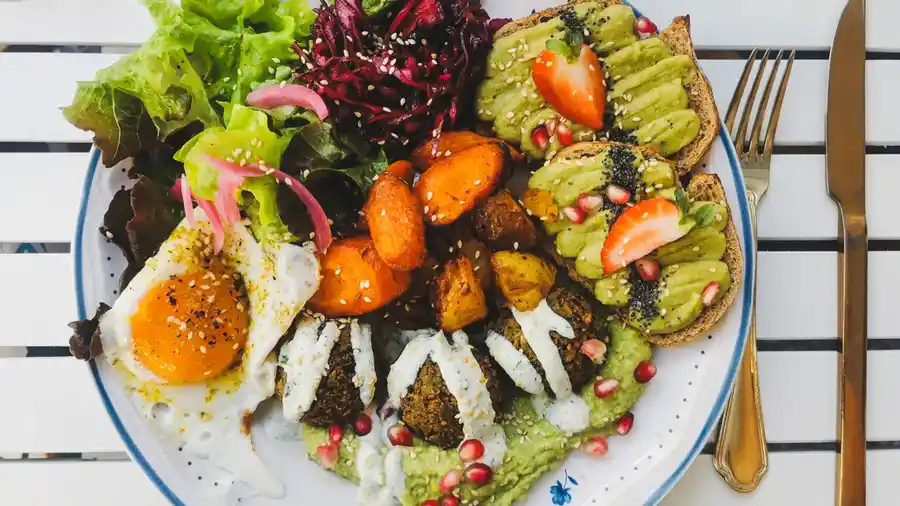
A heart-healthy breakfast plate for seniors starts with protein, fiber, fruit, and smart portions. Quick answer: build it around 4 parts, then keep the plate easy to chew and easy to finish. The plate below shows how to put those pieces together without making breakfast feel fussy. It also settles how much to serve, what to choose, and what to change when chewing is harder. For general heart-healthy eating patterns, see the American Heart Association and the NIH National Institute on Aging.
What a heart-healthy breakfast plate should include
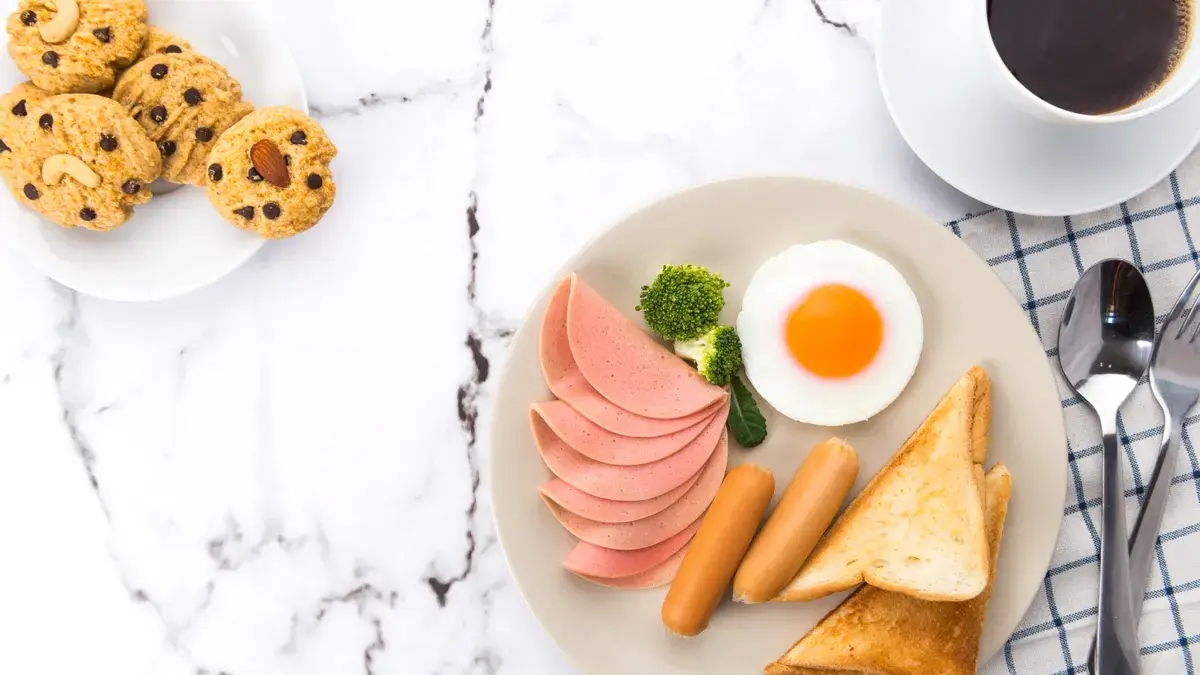
A heart-healthy breakfast plate should include protein, whole grains, fruit, and a small amount of dairy or nuts. That mix gives steadier energy, better texture, and a better shot at fullness without a heavy plate.
Picture this: you’re standing at the counter with a plate, a bowl, and a toaster. You want breakfast that helps the heart but still feels easy to eat at 7 a.m. The right plate is built from familiar foods, not special recipes. It just needs 4 parts that work together.
A simple plate usually looks like this:
- Protein food: eggs, Greek yogurt, cottage cheese, tofu, nut butter, or a small portion of smoked salmon
- Whole grain: oatmeal, whole-grain toast, high-fiber cereal, or a warm grain like brown rice if that’s what you have
- Fruit: berries, orange slices, banana, melon, or applesauce with no added sugar
- Dairy or nuts: milk, kefir, yogurt, chopped nuts, or seeds for extra texture and fat quality
- Vegetables: tomatoes, spinach, mushrooms, peppers, or avocado if breakfast already feels savory
A good plate is not built around one food group. It is built around balance. If the plate is mostly refined bread or pastry, it usually leaves you hungry again fast. If it is only protein, it misses fiber. That is the trade-off. The USDA MyPlate guide gives a useful visual check: half the plate plants, with grains and protein making up the rest.
How do seniors balance breakfast nutrients?
Seniors balance breakfast nutrients by putting protein and fiber first, then filling in with fruit and a modest portion of whole grains. That order helps the meal feel satisfying without turning breakfast into a carb-heavy start that fades by midmorning.
The truth is, many breakfasts lean too hard in one direction. A bowl of plain cereal is quick, but it can leave the plate thin on protein. A couple of eggs alone may be filling, but they leave out fiber and plants. The goal is not perfection. It is a plate that covers the basics in one sitting.
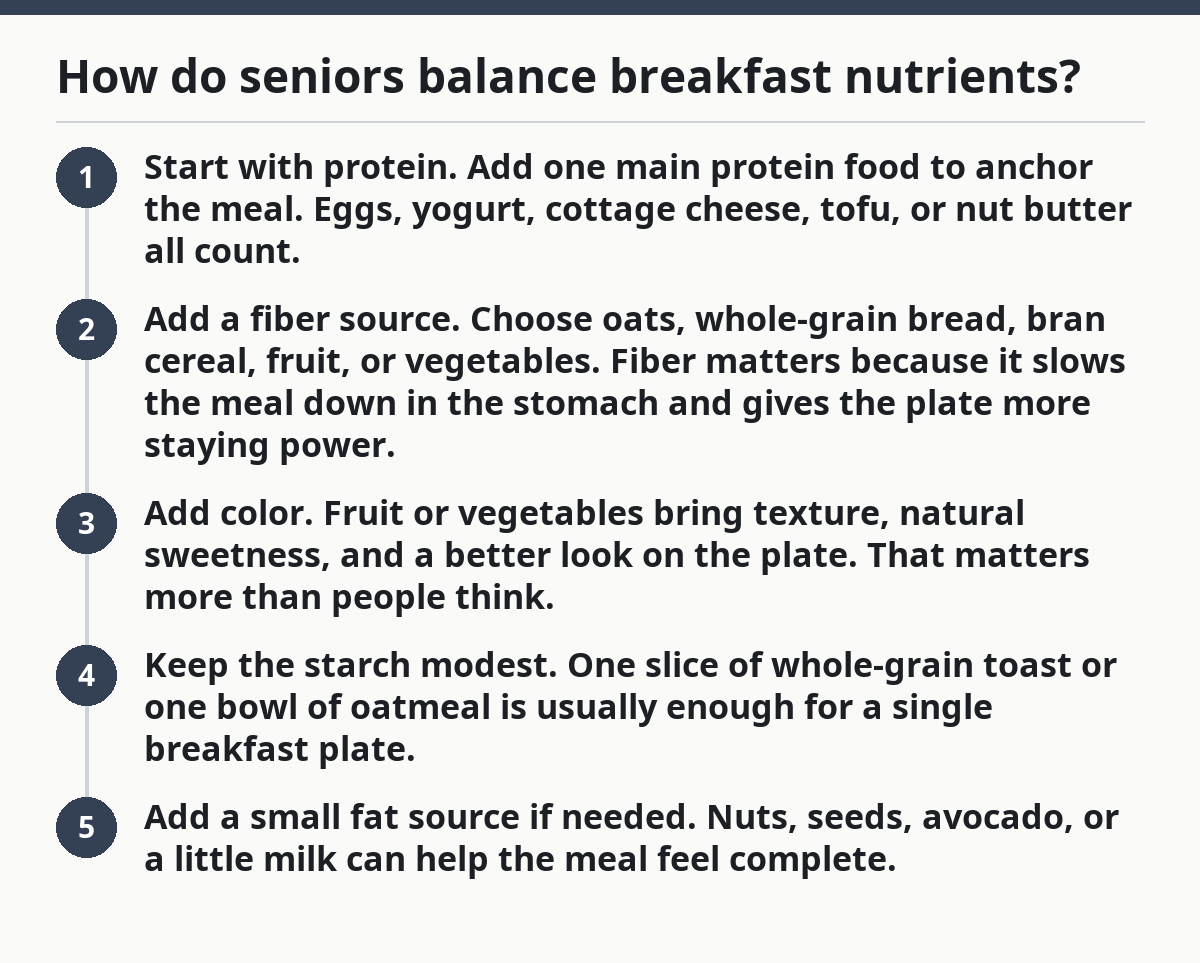
Use this simple build order:
- Start with protein. Add one main protein food to anchor the meal. Eggs, yogurt, cottage cheese, tofu, or nut butter all count.
- Add a fiber source. Choose oats, whole-grain bread, bran cereal, fruit, or vegetables. Fiber matters because it slows the meal down in the stomach and gives the plate more staying power.
- Add color. Fruit or vegetables bring texture, natural sweetness, and a better look on the plate. That matters more than people think.
- Keep the starch modest. One slice of whole-grain toast or one bowl of oatmeal is usually enough for a single breakfast plate.
- Add a small fat source if needed. Nuts, seeds, avocado, or a little milk can help the meal feel complete.
You do not need to weigh anything. A plate that follows this pattern is usually easier to repeat than one built from guesses and habits. In practical terms, that can mean one protein food, one grain, and one fruit at a single meal.
Which protein foods work best for a heart-healthy breakfast?

The best breakfast proteins are foods that are easy to chew, not heavily processed, and easy to pair with fruit, grains, or vegetables. Eggs, plain Greek yogurt, cottage cheese, tofu, beans, nut butter, and fish all fit that job in different ways.
Picture this: you want breakfast protein, but you also want something that won’t fight your teeth or your appetite. That narrows the field fast. For seniors, texture matters as much as nutrition. A hard, dry protein can be the reason breakfast gets skipped.
Here are practical choices and where each one fits:
- Eggs: Soft scrambled eggs are easy to chew and pair well with toast or vegetables.
- Greek yogurt: Plain yogurt gives a smooth texture and works well with fruit and oats.
- Cottage cheese: Good for a soft, spoonable plate with berries or sliced peaches.
- Tofu: Works in a soft scramble with spinach, mushrooms, or tomatoes.
- Nut butter: Easy on toast or mixed into oatmeal, but best in a thin spread.
- Beans: Mashed beans on toast can work if the texture feels right.
- Fish: Salmon or sardines can fit a savory plate, though the flavor is not for everyone.
A common mistake is chasing protein with sausage, bacon, or fried breakfast meats as the main event. Those foods are salty and often come with saturated fat. They can fit occasionally, but they should not be the base of the plate. The USDA and AHA both point readers toward more plant foods, fish, and low-sodium choices.
How much fruit, whole grains, and dairy belong on the plate?
A practical plate uses one serving of fruit, one serving of whole grains, and a modest dairy portion unless appetite is very small. The plate should look balanced, not crowded.
Picture this: you have a small plate, a bowl, and a senior-sized appetite that may not be as large as it used to be. The answer is not to pile on food. It is to choose the parts that matter most and keep the rest in proportion. Breakfast should be light enough to finish, not so tiny that it disappears in ten minutes.
Here’s a usable rule of thumb for one breakfast plate:
- Fruit: one piece, one cup of berries, or a half cup of sliced fruit
- Whole grains: one slice of whole-grain bread or one serving of oatmeal
- Dairy: one cup of milk or yogurt, or a smaller spoonable portion if appetite is low
- Nuts/seeds: a small sprinkle or a spoonful, not a heavy handful
- Vegetables: a few spoonfuls in eggs, on toast, or beside the main food
A plate built this way supports variety without overloading digestion. It also helps avoid the “all bread, no balance” trap. The exact portion can be smaller if chewing, appetite, or blood pressure concerns make a lighter meal a better fit. For related basics, the hub on heart-healthy breakfast foundations for seniors goes deeper on the overall pattern.
How do you make the plate easier to chew and swallow?
You make the plate easier to chew and swallow by choosing soft textures, moist foods, and smaller bites. That matters more with age, denture fit changes, dry mouth, or morning stiffness in the jaw.
Since chewability affects whether breakfast gets eaten, soft food can be just as useful as crunchy food, and often more realistic. The key is to keep the food heart-friendly without making it hard to eat.
Try these adjustments:
- Scramble eggs instead of frying them hard.
- Use cooked oats instead of dry cereal.
- Choose berries, banana slices, melon, or applesauce instead of tough raw fruit.
- Add plain yogurt or milk to soften oats or cereal.
- Chop nuts finely or use nut butter in a thin layer.
- Sauté vegetables until tender instead of serving them raw.
- Cut toast into small pieces and top it with a moist food like avocado or cottage cheese.
Texture changes are not a downgrade. They are part of making breakfast usable. A senior who can finish a soft plate is better served than someone staring at a “healthy” plate they cannot comfortably eat.
What mistakes make breakfast less heart-healthy?
The biggest mistakes are skipping protein, overloading refined grains, and turning breakfast into a salt-heavy meal. Those choices can make the meal less satisfying and harder on the heart pattern the plate is trying to build.
Here’s the catch: some breakfasts look normal but miss the mark completely. A buttered bagel, a muffin, or a bowl of sweet cereal may be easy to serve, but they do not build the same kind of plate. They lean on fast carbs and leave out the pieces that help the meal last.
Watch for these common problems:
- Only bread or pastry: This usually fades fast and leaves you hungry again.
- No protein: Without protein, the meal can feel empty even if it is large.
- Too much processed meat: Bacon and sausage can push sodium and saturated fat up fast.
- Too little fluid: Dry foods without milk, yogurt, or fruit can be hard to swallow.
- Huge portions: A plate that is too full often gets left half-eaten.
A better swap is simple. Use whole-grain toast instead of white toast, eggs or yogurt instead of pastries, and fruit instead of jam-heavy spreads. That shift keeps the breakfast plate heart-healthy without turning it into a project.
A simple breakfast plate formula you can use every day
A simple breakfast plate formula is protein plus fiber plus fruit, with whole grains or dairy to fill out the meal. That formula works because it is flexible, fast, and easy to repeat.
Picture this: you’re opening the fridge with no meal plan and no interest in cooking a full recipe. You still need breakfast that makes sense. The plate formula gives you a decision path in less than a minute.
Use this one-sentence template:
- 1 protein
- 1 fiber food
- 1 fruit or vegetable
- 1 whole grain or dairy food
- 1 small fat source if needed
Put that into real food and it becomes:
- Eggs + whole-grain toast + berries + yogurt
- Greek yogurt + oats + banana + chopped walnuts
- Cottage cheese + melon + whole-grain crackers + tomato slices
- Tofu scramble + whole-grain toast + sautéed spinach + orange slices
This is a plate, not a recipe contest. If the foods are soft, familiar, and balanced, the breakfast is doing its job. If one part is missing, fill that gap next time rather than trying to fix everything at once. For more ideas, you can also compare this pattern with the CDC’s heart-disease prevention guidance.
The best breakfast plate shape for most seniors
The best breakfast plate shape for most seniors is a balanced plate with one protein, one grain, one fruit, and one extra plant food, kept soft enough to eat easily. That shape is simple enough to repeat and flexible enough to fit different appetites.
The real win is consistency. A plate that follows the same pattern most mornings is easier to shop for, prep for, and chew. It also avoids the trap of making breakfast too complicated to keep up with. If a meal needs too much effort, it usually stops happening.
Use this as the final check:
- Is there a protein food on the plate?
- Is there a fiber-rich food?
- Is there fruit or vegetables?
- Is the grain whole, not refined?
- Is the texture comfortable to chew?
If the answer is yes to all five, the plate is in good shape. If not, adjust the missing piece next time.
What should be on a heart-healthy breakfast plate?
A heart-healthy breakfast plate should have protein, fruit, whole grains, and a small amount of dairy, nuts, or vegetables. That mix gives the meal balance, texture, and staying power.
For seniors, soft foods often work best: eggs, yogurt, oatmeal, berries, and tender vegetables are easy choices. The plate does not need to be large. It needs to be balanced enough to support energy and simple enough to finish. The NIH National Institute on Aging notes that healthy eating for older adults works best when meals are easy to prepare and enjoyable to eat.
How do seniors balance breakfast nutrients?
Seniors balance breakfast nutrients by pairing protein with fiber and then adding fruit, whole grains, and a small fat source if needed. That keeps the meal from being too heavy in bread or too light in protein.
A plain bowl of cereal or a pastry is usually not enough on its own. A better pattern is eggs with toast and fruit, or yogurt with oats and berries. The goal is a meal that feels complete without being hard to eat. The American Heart Association recommends limiting saturated fat and choosing more whole foods when possible.
What is a simple breakfast formula?
A simple breakfast formula is protein plus fiber plus fruit, with whole grains or dairy added to round out the plate. That formula works because it stays flexible and easy to repeat.
A few examples are eggs with toast and berries, yogurt with oats and banana, or cottage cheese with fruit and whole-grain crackers. The details can change, but the structure stays the same.
Drafted with AI; not yet reviewed by a person.