
Last updated: November 19, 2026
Quick Answer: For Heart-Healthy Dinner Ideas for Seniors With Cancer Treatment Side Effects, the most useful dinners are often 1 soft protein, 1 soft starch, and 1 mild fruit or vegetable served in small portions. Speak with a qualified clinician about your own situation, especially if swallowing, weight loss, nausea, or fluid limits are part of the picture, and see the NCI nutrition during treatment guidance and the American Heart Association’s heart-healthy eating guidance for background. The ideas below will help you choose foods that are easier to eat without drifting into a salty, heavy dinner.
Cancer treatment side effects can make dinner feel hard, and this page focuses on Heart-Healthy Dinner Ideas for Seniors With Cancer Treatment Side Effects that are gentle on taste, chewing, and the heart. The goal is not a perfect menu. It is a dinner that is soft, simple, and realistic.
Key takeaways
- Soft textures often work best when the mouth feels sore, dry, or tired.
- Protein matters at dinner because it helps keep meals from turning into empty calories.
- Mild seasonings, acid, and temperature changes can help when food tastes flat or metallic.
- Small plates beat big portions when appetite is low.
- Some dinner problems need professional guidance, not a kitchen fix.
Studies suggest there is some evidence behind this topic: 12 PubMed records match this query for 2016–2026; the 12 most relevant were read and every median, range and share below is computed across those records, and the figures below were computed on 2026-11-06 using the search heart[Title/Abstract] AND healthy[Title/Abstract] AND dinner[Title/Abstract] AND humans[MeSH Terms] in PubMed (NCBI), filtered to publication dates 2016–2026 and sorted by relevance. For context, PubMed (NCBI) returned 5 (41%) records tagged Randomized Controlled Trial and 1 (8%) tagged Review. The median study duration was 1 weeks across the abstract figures reported in this sample, PubMed (NCBI).
What makes a heart-healthy dinner during cancer treatment?
A heart-healthy dinner during cancer treatment is one that stays lower in saturated fat, lower in excess salt, and easier to eat when side effects change your appetite or mouth feel. For the safest approach, consult a qualified clinician or registered dietitian if swallowing, weight loss, nausea, or fluid limits are part of the picture, and use the NCI nutrition during treatment guidance as a starting point. Picture this: you’re standing at the fridge at 5:30 p.m., tired, hungry, and not sure what your stomach will tolerate tonight. The answer is not a perfect menu. It’s a dinner that is soft, simple, and realistic.
That means using foods like smooth soups, soft chicken, mashed potatoes, eggs, yogurt, and fruit in ways that fit the day. A meal does not have to be large to count. It just has to be steady enough to eat, and kind enough to the mouth, throat, and taste buds.
A plain baked potato with yogurt, soft chicken with rice, or a bowl of blended vegetable soup can fit that pattern. So can scrambled eggs at dinner, if that is what the body will accept. The American Heart Association’s general heart-healthy eating advice supports keeping saturated fat and sodium in check while building meals around simple foods, and cancer care teams often adapt that advice to symptoms.
- Choose foods that are soft, moist, and easy to break apart.
- Keep the flavor mild if nausea or taste changes are strong.
- Add protein first, because a meal of only crackers, toast, or fruit rarely holds up well.
- Keep sodium in mind by using herbs, citrus, onion powder, or garlic powder instead of salty sauces.
How do you build a dinner plate that is gentle and still useful?
You build it by pairing one soft protein, one easy starch, and one fruit or vegetable that does not fight the mouth. Since appetite and swallowing can change from day to day, a flexible pattern is often easier than a fixed recipe. Picture this: the spoon is in your hand, but chewing feels like work and nothing sounds right. The fix is not a fancy recipe. It is a plate with 2 to 3 small parts that are easy to finish.
Start with a protein that stays tender. Poached or baked fish, soft chicken, scrambled eggs, tofu, or Greek yogurt can work better than fried or crisp foods. Then add a starch that is easy to swallow, such as mashed potatoes, rice, noodles, or oatmeal-style savory grains if that sounds better at dinner. The NCI appetite-loss guidance also notes that small, frequent meals can help when eating feels difficult.
After that, add a soft vegetable or fruit. Applesauce, ripe bananas, canned peaches in juice, cooked carrots, or blended vegetable soup are common choices when raw textures feel rough. If mouth sores are a problem, cooler foods may sting less than hot foods.
-
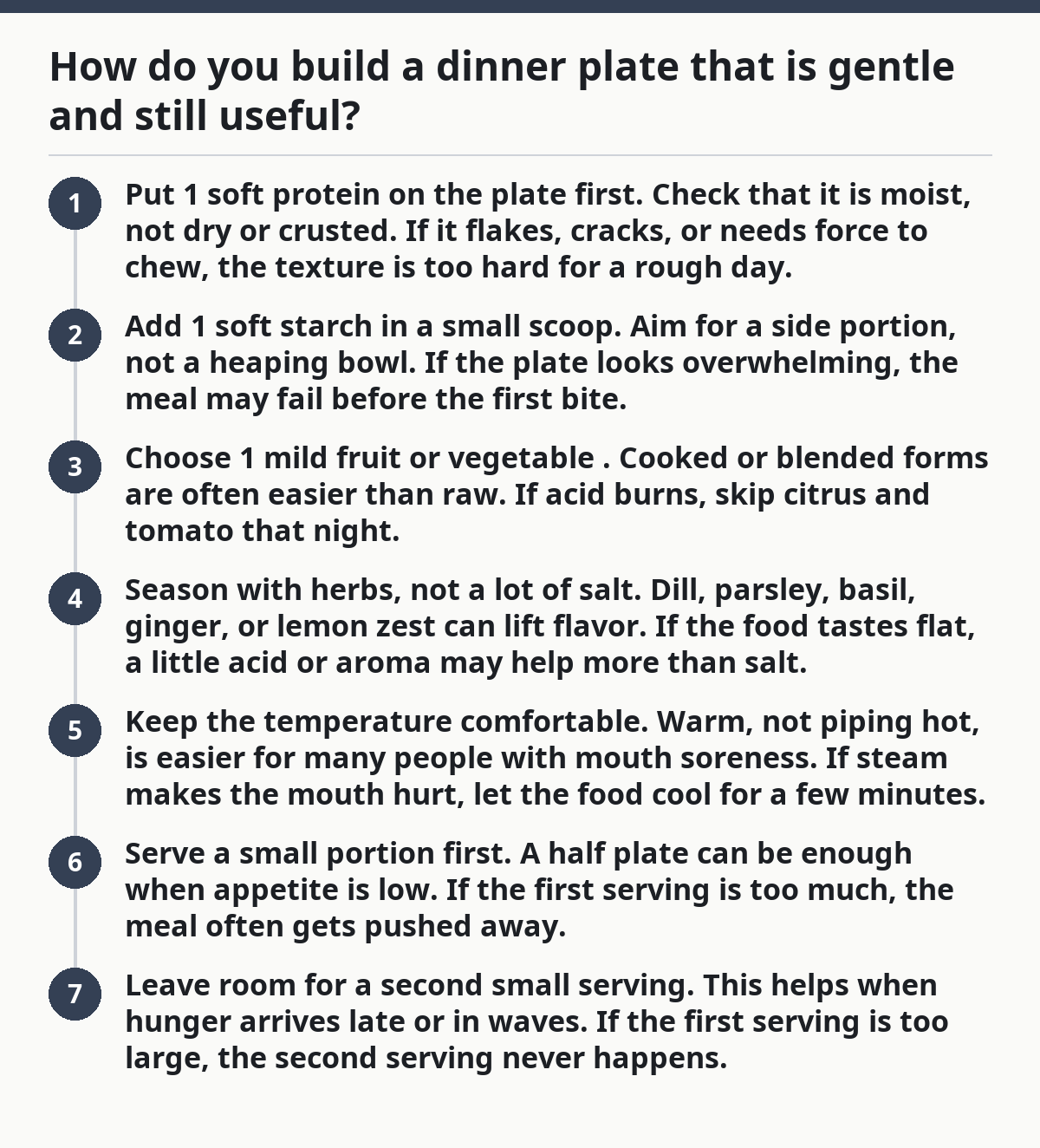
Put 1 soft protein on the plate first.
Check that it is moist, not dry or crusted.
If it flakes, cracks, or needs force to chew, the texture is too hard for a rough day. -
Add 1 soft starch in a small scoop.
Aim for a side portion, not a heaping bowl.
If the plate looks overwhelming, the meal may fail before the first bite. -
Choose 1 mild fruit or vegetable.
Cooked or blended forms are often easier than raw.
If acid burns, skip citrus and tomato that night. -
Season with herbs, not a lot of salt.
Dill, parsley, basil, ginger, or lemon zest can lift flavor.
If the food tastes flat, a little acid or aroma may help more than salt. -
Keep the temperature comfortable.
Warm, not piping hot, is easier for many people with mouth soreness.
If steam makes the mouth hurt, let the food cool for a few minutes. -
Serve a small portion first.
A half plate can be enough when appetite is low.
If the first serving is too much, the meal often gets pushed away. -
Leave room for a second small serving.
This helps when hunger arrives late or in waves.
If the first serving is too large, the second serving never happens.
Which soft dinner ideas actually fit this situation?
Soft dinner ideas work best when they are simple enough to repeat and gentle enough to eat on a rough day. Picture this: you need a meal that does not smell strong, does not take much chewing, and still feels like dinner. The best options are the ones that keep protein, moisture, and mild flavor in the same bowl, and that kind of balance is easier to manage when you keep the menu short.
Smooth vegetable soup with blended beans can be a strong base because it is easy to swallow and can carry protein. Soft chicken in broth, shredded very fine, can work with mashed potatoes or rice. Scrambled eggs with soft toast and cooked fruit is another plain option that many people can manage when taste is off.
Yogurt is useful when the appetite is low and a cold texture feels better than hot food. A bowl of plain yogurt with soft fruit, or yogurt stirred into mashed sweet potato, can add protein and creaminess. Egg dishes can also fit dinner if they stay moist and are not loaded with cheese or salt.
- Smooth soups: good when chewing hurts or a dry mouth makes swallowing hard.
- Soft chicken: helpful when you need protein but can’t handle a crust or grill marks.
- Mashed potatoes: useful as a soft base, especially with broth, yogurt, or olive oil instead of heavy gravy.
- Eggs: a simple dinner protein when taste is dull or meat sounds wrong.
- Yogurt: a cold, soft option that can calm a sore mouth for some people.
- Fruit: best when ripe, canned in juice, or cooked to a soft texture.
What do you do when taste changes make dinner seem unappealing?
You change the smell, texture, and seasoning before you change the food group. Picture this: a dish that used to taste fine now tastes metallic, bitter, or like nothing at all. That is common during treatment, and it can make even a good dinner look wrong, so it helps to adjust the meal rather than force it. The NCI mouth changes guidance describes taste and mouth changes as common treatment effects.
Cold or room-temperature foods may smell less intense than hot ones. A chilled yogurt bowl, soft chicken salad made with plain yogurt instead of mayo, or fruit with oats may go down better than a steaming plate. Some people find that ginger, mint, basil, dill, or a little acid helps when food tastes flat, but citrus can sting if the mouth is sore.
If meat tastes off, eggs, tofu, beans, or dairy can step in as protein. If everything tastes salty, use less salt and build flavor with garlic, onion, herbs, or a splash of vinegar in foods that tolerate it. If nothing sounds good, a small serving is still better than a full plate you cannot finish. The Academy of Nutrition and Dietetics also recommends adapting food and flavor to side effects instead of pushing through a single fixed meal.
- Try one change at a time: temperature, then seasoning, then texture.
- Keep strong odors away from the table if smell turns your stomach.
- Use plastic or bamboo utensils if metal leaves a bad taste in the mouth.
- Offer two choices, not five. Too many options can make dinner feel harder.
When should dinner ideas stop being a home fix?
Dinner ideas should stop being a home fix when eating becomes unsafe, impossible, or too hard to maintain. Picture this: you have a soft meal in front of you, but the body still refuses it or the act of swallowing feels wrong. That is not a meal-planning problem anymore.
Swallowing feels painful or unsafe: This can mean a serious swallowing problem — stop forcing solids and get qualified medical guidance.
You are losing weight without trying: This can signal intake is too low — ask a cancer care team or registered dietitian for a plan.
Mouth sores make even soft food hurt: The usual texture approach may fail — ask for treatment-specific mouth care advice.
Nausea keeps dinner from staying down: A meal plan alone may not be enough — speak with the care team about symptom control.
Food tastes like metal or ash every night: This can make standard dinners useless — request guidance on taste-change strategies that fit the treatment plan.
You have heart failure, kidney disease, or a fluid restriction: Some soups, yogurts, and mashed foods may need changes — get individualized direction before using them as defaults.
What mistakes do people make with these dinners?
The most common mistake is making dinner too dry. Picture this: a grilled chicken breast, plain rice, and raw vegetables sitting on the plate while the mouth already feels sore. That dinner may be “healthy” on paper and still fail in real life. Dry food is harder to chew, harder to swallow, and more likely to be left behind.
Another mistake is chasing flavor with salt-heavy sauces, deli meats, or canned soups that push sodium up fast. That can clash with a heart-healthy goal. A better move is to add moisture with broth, yogurt, olive oil, or sauce made from herbs and vegetables.
A third mistake is serving a large plate because “more calories” sounds helpful. Large portions can backfire when nausea or early fullness hits. Small, repeatable portions are easier to finish and easier to adjust later in the evening.
A fourth mistake is assuming the same texture works every day. Some nights call for eggs, some for soup, some for mashed potatoes and soft fruit. A dinner plan that only works on good days is not much of a plan.
- Dry food: leads to more chewing and less intake. Use sauces, broth, or moist cooking methods.
- Too much salt: can work against heart health. Use herbs and aromatics instead.
- Oversized plates: can overwhelm low appetite. Serve smaller portions first.
- One-texture meals only: can get old fast. Rotate soups, eggs, chicken, yogurt, and soft starches.
How does this fit into a larger dinner routine?
It fits best as a short list of fallback meals you can rotate across the week. Picture this: the clock is moving, energy is low, and you need a dinner that does not require a fresh decision every night. A small dinner routine keeps the pressure down and gives you a few safe choices.
One night can be smooth soup with soft bread. Another can be scrambled eggs with mashed potatoes and cooked fruit. Another can be soft chicken with rice and carrots cooked until tender. The point is not culinary variety for its own sake. The point is dependable food that respects a changing body.
The broader hub on senior heart-healthy dinner planning can help you organize those choices into a system, but this page stays focused on cancer-treatment side effects at dinner. If the routine starts to fail because of swallowing trouble, severe nausea, or weight loss, that is the point to bring in a qualified clinician or dietitian rather than forcing the same pattern harder.
What should seniors eat for dinner during cancer treatment?
Seniors should eat soft, protein-containing dinners that are easy to chew, easy to swallow, and mild enough to tolerate during side effects. Smooth soups, eggs, soft chicken, yogurt, mashed potatoes, and soft fruit are common starting points. The best dinner is the one that gets eaten without making symptoms worse.
How do you make dinner appealing when taste changes?
Dinner becomes more appealing when you change temperature, smell, and seasoning before you change the whole meal. Cold foods, mild herbs, ginger, and foods with a little moisture often work better than dry or strongly scented dishes. If metal taste is strong, eggs, yogurt, or bland starches may be easier than red meat.
What soft dinners help during treatment side effects?
Soft dinners help when chewing hurts, swallowing feels tiring, or appetite is low. Smooth soups, scrambled eggs, mashed potatoes, soft chicken, yogurt, and ripe or cooked fruit are common choices because they need little chewing and can be served in small portions. If swallowing feels unsafe, stop and get qualified medical advice.
Drafted with AI; not yet reviewed by a person.