Last updated: November 19, 2026
Frozen breakfast portions work best when you pack single-serving amounts, protect them from freezer burn, and label them for the right thawing method later.
Quick Answer: use small, flat portions in foil wraps, freezer bags, reusable containers, muffin tins, egg bakes, and oatmeal cups.
The steps below settle what to freeze, how to portion it, and how to thaw it without ending up with a wet, bland breakfast. This guide on How to Freeze Breakfast Portions for Seniors With Small Appetites focuses on portions that are easy to finish.
Key Takeaways
- Small appetites do better with half-cup to 1-cup portions than with family-size pans.
- Flat packages freeze faster and save space in a crowded freezer.
- Moisture is the enemy: air, steam, and loose lids all lead to ice crystals and soggy food.
- Egg bakes and oatmeal cups freeze well in muffin tins because the portions are already set.
- Label each portion with the food name, date, and reheating note so breakfast does not turn into guesswork.
- A freezer portion that reheats evenly is usually smaller than the one you’d serve fresh.
What frozen breakfast portions do best for small appetites
Frozen breakfast portions do best when each serving is small enough to feel manageable and easy to finish. Picture this: you’re filling a freezer for a senior who eats a little at a time, not a full plate, and you want breakfast to feel inviting instead of like a chore.
That means planning for single servings, not casserole leftovers. A 4-inch egg square, a muffin-tin oatmeal cup, or a half-bagel portion is easier to use than a full pan. The goal is not variety for its own sake. The goal is a breakfast that can be thawed, warmed, and eaten without waste.
A good frozen portion also needs the right texture after reheating. Eggs, cooked oats, and baked breakfast dishes usually hold up better than foods with a lot of fresh crunch. Fruit can work, but watery fruit tends to soften as it thaws. That trade-off matters when appetite is small and every bite counts.
Here’s the catch: large portions are not “more efficient” if half of them end up in the trash. For small appetites, smaller portions win because they stay appealing and easier to finish.
- Best fit: cooked egg bakes, oatmeal cups, breakfast burritos cut in half, and soft fruit blends.
- Poor fit: thin toast, crisp potatoes, and toppings that lose texture in the freezer.
- Common target size: 1 serving, not a two- or four-serving pan.
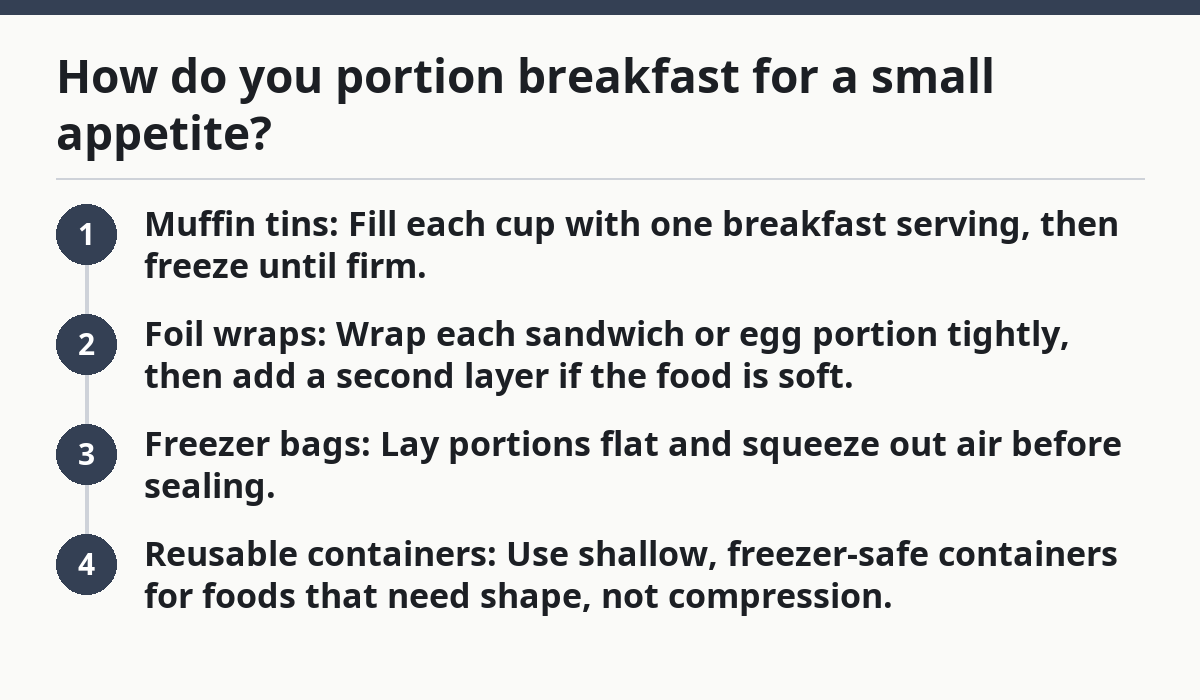
How do you portion breakfast for a small appetite?
You portion breakfast by building it around one person’s likely appetite and freezing it in half-cup to 1-cup amounts or in individual pieces. Picture this: you’re standing at the counter with a tray, and you want each piece to feel like a real breakfast, not a leftover scrap.
Start with the food itself. Egg bakes slice cleanly into squares. Oatmeal bakes fit neatly into muffin cups. Yogurt mixtures do better in small freezer containers, but only if the texture will still be acceptable after thawing. If you make breakfast sandwiches, freeze them one at a time in foil wraps or freezer bags so you can grab a single portion.
Portioning at the start keeps the freezer organized later. A tiny label beats a mystery container every time.
Use these portioning rules:
- Muffin tins: Fill each cup with one breakfast serving, then freeze until firm.
- Foil wraps: Wrap each sandwich or egg portion tightly, then add a second layer if the food is soft.
- Freezer bags: Lay portions flat and squeeze out air before sealing.
- Reusable containers: Use shallow, freezer-safe containers for foods that need shape, not compression.
Keep portions low and flat. A 1-inch-thick package thaws faster than a deep container, and that matters when breakfast needs to be ready in 10 to 15 minutes rather than an hour.
Step-by-step: freeze breakfast portions the right way
Freeze breakfast portions by cooling the food first, dividing it into one-serving packs, and sealing out air before the food goes into the freezer. Picture this: you’ve got a tray of egg bake, a batch of oatmeal cups, and a few freezer bags on the counter, and you want every pack to come out tasting like breakfast, not the freezer.
- Cool the food on a rack or counter until steam is gone, then move it to packaging.
- Portion the food into single servings, using a muffin tin, a scoop, or a knife for even pieces.
- Wrap the portions in foil or place them in reusable containers, depending on shape and moisture.
- Press out air from freezer bags before sealing them shut.
- Label each pack with the food name, date, and thawing note.
- Freeze the packs in a single layer until firm, then stack or file them.
- Reheat from thawed or frozen based on the food’s texture and your plan for the morning.
If you skip the cooling step, steam turns into ice and then soggy food. If you skip the air removal, freezer burn shows up fast. Both problems hit small portions harder because there is less food to hide the damage.
A food-safe, freezer-safe container matters here. Look for non-toxic, freezer-safe materials and lids that sit flat, not lids that bow under pressure. The container does not need to be fancy. It does need to hold its shape at 0°F freezer temperatures.
Which breakfast foods freeze best in single servings?
The best freezer foods for small breakfast portions are baked eggs, cooked oats, and soft breakfast breads that reheat without falling apart. Picture this: you open the freezer on a busy morning and pick one portion that can be warmed and eaten in the same bowl or wrapper.
Egg bakes freeze well because they are already set. Cut them into squares or bake them in a muffin tin for exact portions. Oatmeal cups work for the same reason, especially if the texture stays soft after reheating. Breakfast burritos can freeze well too, as long as they are wrapped tightly and not overloaded with watery fillings.
- Good freezer choices: egg bake, oatmeal cups, breakfast sandwiches, half burritos, soft muffins.
- Less reliable choices: fried eggs, crisp toast, juicy tomatoes, leafy greens.
- Use caution: yogurt mixtures can separate after freezing, and some fruit gets mushy.
Foods with a little moisture and structure freeze better than foods that depend on crispness. A senior with a small appetite is more likely to finish a soft, warm portion than a dry or rubbery one. That is why egg bakes and oatmeal cups show up in so many freezer plans for older adults.
I’d keep the portion size modest. A 3-ounce to 4-ounce egg portion or a small oat cup often works better than a full plate because it feels finishable.
How to protect breakfast portions from freezer burn and sogginess
You protect breakfast portions by wrapping them tightly, limiting air, and keeping wet and dry ingredients apart when possible. Picture this: you pull a breakfast pack from the freezer and it still looks like food instead of a frost-covered block, because the packaging did its job.
Freezer burn starts when air hits the surface. Moisture loss makes the food dry and leathery. Sogginess happens when steam gets trapped or wet toppings thaw into the base. The fix is simple, but it has to be done every time.
Use these protections:
- Foil wraps: Best for sandwiches, burrito halves, and flat egg portions.
- Freezer bags: Best for flat packs you can lay in a stack.
- Reusable containers: Best for foods that need shape and a hard lid.
- Double wrap: Good for soft foods or anything held longer than a few weeks.
Keep toppings separate when you can. A spoonful of fresh fruit, nut butter, or sauce can be packed in a small side container instead of frozen into the main portion. That keeps the base from turning watery.
Packaging is part of the recipe. A good oatmeal cup can still taste wrong if it picks up freezer odor. A plain label and a tight seal do more for quality than a fancy ingredient list.
How do you thaw breakfast portions safely?
You thaw breakfast portions by moving them to the refrigerator overnight or by reheating them directly from frozen if the food tolerates it. Picture this: you want breakfast ready by morning, not hanging out on the counter while you wait for it to soften.
The refrigerator is often the safest thawing spot for many breakfast portions. A container in the fridge overnight gives the food time to thaw evenly. Flat packs thaw faster than deep ones, and that helps on mornings when appetite is small and patience is smaller.
Use the method that matches the food:
- Egg bakes: thaw in the fridge, then warm in the oven or microwave.
- Oatmeal cups: thaw in the fridge or heat from frozen with a splash of water.
- Breakfast sandwiches: thaw wrapped, then unwrap and heat.
- Fruit add-ins: thaw separately so they do not soak the base.
If you use a microwave, warm in short bursts and let the food stand for a minute. That helps heat spread through the center. If the portion is still icy in the middle, keep heating in brief intervals instead of blasting it from the start.
A good rule for seniors with small appetites: reheat only what will be eaten. A second reheating usually hurts texture. Small portions save time here too.
What mistakes make frozen breakfasts less useful?
The biggest mistakes are freezing portions that are too large, packing in too much air, and choosing foods that turn watery or rubbery after thawing. Picture this: you did the prep work, but the breakfast still comes out unhelpful because the portion size and texture were wrong for the eater.
A too-large portion sounds efficient, yet it often means waste. A senior with a small appetite may stop halfway through a sandwich or casserole square. Then the rest sits around, and a reheated half-portion rarely tastes as good as the first pass.
Another common mistake is freezing food before it cools. Warm food creates condensation, and condensation becomes ice. That extra moisture is what gives you soggy tops and icy lids. A third mistake is forgetting the label. Without the date, older packs get lost, and the freezer turns into a stack of guesses.
Avoid these traps:
- Freezing family-size pans instead of single servings
- Sealing warm food in bags or containers
- Mixing crisp toppings into the main pack
- Using deep containers for shallow portions
- Skipping labels with date and contents
One bad breakfast pack can make the next one less appealing too.
How to build a simple portion plan for a week
Build a portion plan by deciding how many breakfast servings you want, then freezing them in a mix of muffin-tin cups, wrapped sandwiches, and shallow containers. Picture this: you open the freezer on Sunday and see a small row of breakfasts lined up by day, each one ready to go.
Start with the number of mornings you want to cover. Then make each item in a portion that matches a small appetite, not a full adult restaurant serving. A week’s plan might include four egg portions, two oatmeal cups, and one sandwich, all labeled and stacked flat. That mix gives variety without crowding the freezer.
Use a simple system:
- One shelf or bin for breakfasts only
- One label format: name, date, thawing note
- One portion size repeated across the batch
- One backup item for low-appetite days, such as a small oatmeal cup
This is where frozen breakfast portions earn their keep. They reduce morning decisions. They also support the larger breakfast system on the hub page for heart-healthy breakfast make-ahead systems for seniors, without forcing one recipe or one container style on every person.
The smartest plan is the one a tired adult can follow on a Tuesday morning. If the package takes two hands and a puzzle, it’s not a good fit.
What breakfasts freeze best in small portions?
Egg bakes, oatmeal cups, breakfast sandwiches, and soft muffins freeze best in small portions because they hold shape and reheat well. Foods with a lot of crunch or fresh moisture usually turn soft or watery after freezing, so they are a poorer match for a small appetite.
How do you thaw breakfast portions safely?
The safer method is to thaw breakfast portions in the refrigerator overnight, then reheat them until hot. Smaller, flatter packages thaw faster than deep containers, and microwave reheating works best in short bursts with a brief rest between bursts.
Can you freeze fruit and yogurt breakfasts?
You can freeze some fruit-based breakfasts, but yogurt often separates and soft fruit turns mushy after thawing. That makes the texture less appealing for many seniors with small appetites. If you want to use fruit, keep it separate from the base or freeze it only in recipes that are meant to be soft.
Drafted with AI; not yet reviewed by a person.