Last updated: November 19, 2026
Key Takeaways
- Treat soup as the center, then add one protein, one grain, and one fresh side.
- Keep sodium low by pairing soup with fiber-rich sides instead of salty extras.
- Soup feels more filling with protein and texture, not just more liquid.
- A side dish should add structure, not just more volume.
Soup can be a light meal, but it does not have to stay that way. How to Turn Soup into a Full Heart-Healthy Senior Dinner starts with a simple plate: add protein, a grain, and a vegetable side, and soup becomes a full heart-healthy senior dinner. The steps below show how to build a plate that feels complete without piling on salt or heavy extras. For older adults, that kind of balance can make one bowl work as dinner.
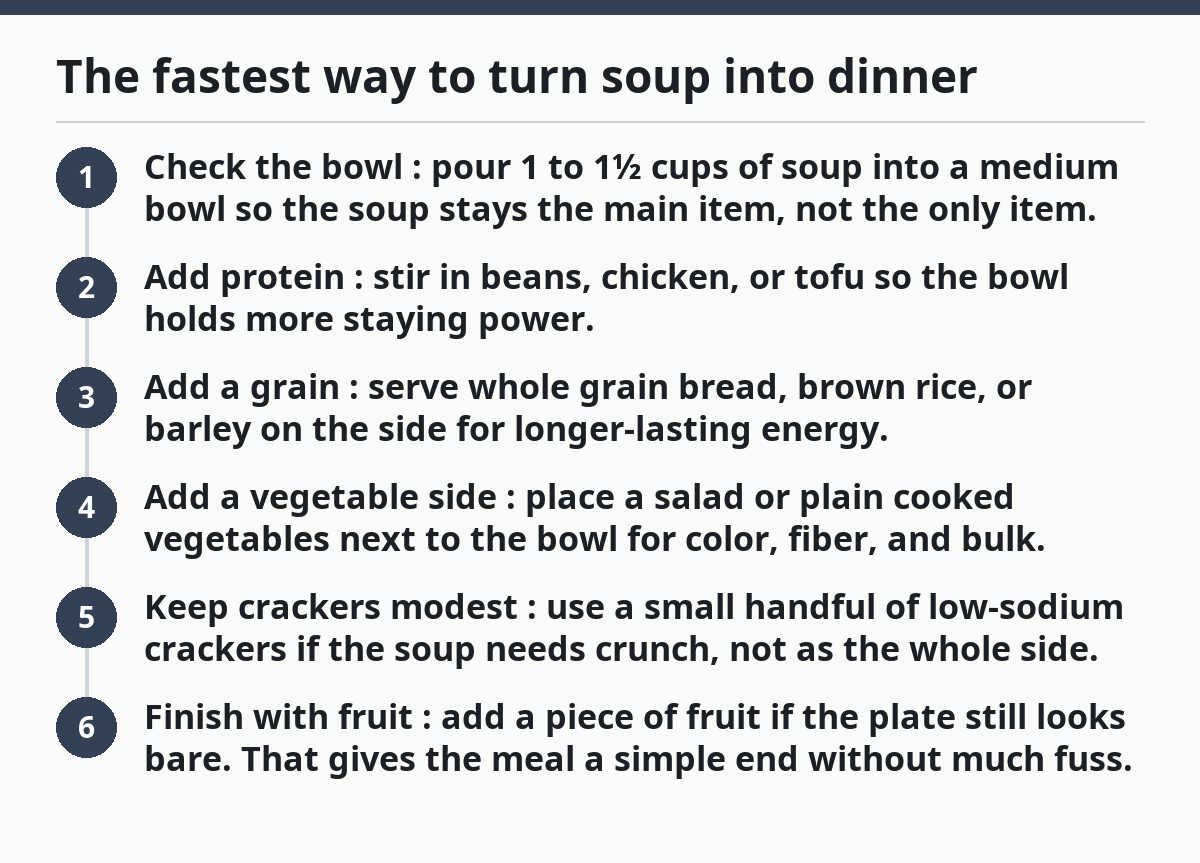
The fastest way to turn soup into dinner
If you already have soup on the table, the quickest next step is to build around it. Treat the soup as the center, then add one protein, one grain, and one fresh side. That is the whole job.
- Check the bowl: pour 1 to 1½ cups of soup into a medium bowl so the soup stays the main item, not the only item.
- Add protein: stir in beans, chicken, or tofu so the bowl holds more staying power.
- Add a grain: serve whole grain bread, brown rice, or barley on the side for longer-lasting energy.
- Add a vegetable side: place a salad or plain cooked vegetables next to the bowl for color, fiber, and bulk.
- Keep crackers modest: use a small handful of low-sodium crackers if the soup needs crunch, not as the whole side.
- Finish with fruit: add a piece of fruit if the plate still looks bare. That gives the meal a simple end without much fuss.
This can take about 10 minutes if the soup is already hot. It is a quick way to move from soup to dinner without making the meal heavy.
What makes a soup dinner heart-healthy?
A heart-healthy soup dinner keeps sodium in check, adds fiber, and avoids turning soup into a salt bomb with breaded sides. The soup itself can be simple, but the full plate needs balance, not just a big bowl.
A generic article often stops at “choose soup” and leaves out the rest. That misses the real problem: many senior diners need a meal that feels filling without relying on a lot of sodium, cream, or processed extras. Beans, chicken, and whole grains do more work here than crackers alone. The American Heart Association recommends limiting sodium, and the CDC says most Americans consume more than 3,400 mg a day, well above the 2,300 mg daily limit.
- Protein helps the meal last longer after dinner.
- Fiber from beans and grains slows the empty feeling that can show up an hour later.
- Fresh sides keep the plate from becoming too soft, too salty, or too small.
- Smaller portions protect the meal from turning heavy.
Here’s the catch: soup made with broth can still feel thin if the rest of the plate is absent. A bowl plus a side is not overkill. It’s the right structure.
How do I make soup filling without making it heavy?
Soup becomes filling when you add texture and protein, not just more liquid. A plain bowl of broth may warm the stomach for 20 minutes, but beans, chicken, and grains turn that bowl into a true meal.
Picture this: you’re serving soup to an older adult who gets full fast, but gets hungry again soon after dinner. The answer is to make every spoonful count. Thickening the meal with food, not salt, gives better staying power.
A few clean ways to do that:
- Add beans: white beans, lentils, or black beans blend well into vegetable soup and add fiber.
- Add chicken: shredded chicken gives the bowl a familiar protein without making it greasy.
- Add barley or brown rice: these grains hold shape and make the soup feel more like dinner.
- Add chopped vegetables: carrots, spinach, celery, and zucchini add bite and volume.
- Use a small swirl of olive oil only if the soup is too thin; a little goes a long way.
Do not rely on cheese, cream, or extra crackers to do the job. Those can crowd out better choices and make the meal feel heavier than it needs to be. A bowl that holds beans and chicken is more useful than one that only looks rich.
For a broader meal plan, the hub on Heart-Healthy Dinner Planning for Seniors With Special Diet Needs is the right place to start, then this page fills in the soup dinner part. The USDA MyPlate model also makes the same point: meals work best when protein, grains, and vegetables share the plate.
What should I serve with soup for a full plate?
Soup needs a side dish that adds structure, not noise. The cleanest pairings are whole grain bread, a simple salad, or a plain fruit serving, because each one fills a different gap.
Because the soup is already doing part of the work, the side should finish the meal without crowding it. A whole grain bread slice, a small salad, or plain crackers can fix that fast. The trick is choosing one or two sides, not three carb-heavy add-ons that make the meal feel crowded.
- Soup + whole grain bread + salad for the most balanced plate.
- Soup + crackers + fruit for a softer, lighter meal.
- Soup + chicken + bread when the soup itself is mostly vegetables.
- Soup + beans + salad when the soup needs fiber more than starch.
Keep the bread plain or lightly toasted. Skip buttery spreads if the goal is a heart-healthy dinner. A salad can be as simple as greens with cucumber and a light dressing. It does not need extras to do its job.
A lot of generic advice says “add a side,” then leaves the reader guessing. That is not enough. A side should make the soup feel like dinner, not turn the table into a snack tray. For a heart-healthy pattern, the American Heart Association is a useful source for choosing lighter sides and limiting sodium.
What portions make soup into a senior dinner?
Soup becomes a senior dinner when the soup is part of the meal, not the whole meal. For many seniors, 1 to 1½ cups of soup plus one or two sides is enough to feel satisfied without ending up too full.
Picture this: the appetite is smaller than it used to be, but dinner still needs to count. That is where portioning matters. A large bowl can crowd out the rest of the plate, while a small bowl may leave the meal feeling unfinished. A better middle ground is easier to finish and easier to balance.
Use this simple pattern:
- Soup: 1 to 1½ cups.
- Protein: a modest serving of beans or chicken in the soup, or on the side.
- Grain: one slice of whole grain bread or a small scoop of brown rice.
- Vegetable: one salad or one cup of cooked vegetables.
- Crunch: a small handful of crackers if needed.
This structure helps in two ways. First, it keeps sodium and calories from climbing too high just because the bowl is large. Second, it makes the meal easier to finish for someone with a smaller appetite. If chewing is hard, choose softer bread, tender vegetables, or a smoother soup texture instead of dry crackers. The National Institute on Aging recommends matching texture to chewing ability.
Not every soup needs the same add-ons. A bean soup may need less help than a thin broth with vegetables. The plate, not the recipe alone, decides whether dinner is complete.
Which soup add-ins work best for older adults?
The best add-ins for older adults are soft, easy to chew, and easy to digest. Beans, shredded chicken, soft vegetables, and whole grains are useful because they add substance without turning the meal into a chore.
Picture this: you want a bowl that feels kind to the mouth and still gives real nutrition. That means choosing add-ins that fit the person, not just the recipe. Texture matters as much as flavor here.
Good add-ins and why they work:
- Beans: easy to stir in, full of fiber, and helpful when the soup needs more body.
- Shredded chicken: soft enough for many diners and familiar in chicken vegetable soup.
- Barley: chewy, filling, and useful when the soup needs a sturdier feel.
- Brown rice: softer than barley when cooked well and easy to portion.
- Soft-cooked carrots or spinach: simple vegetables that blend into many broths.
- Whole grain bread: useful on the side when the soup is light.
The wrong add-in is the one that creates a new problem. Very hard crackers, heavy cream, and salty processed meats can make the meal less heart-healthy and harder to eat. If the soup already has beans and chicken, you may only need a salad and a slice of bread.
This is also where food comfort matters. An older adult may prefer plain flavors, small textures, and a bowl that does not feel fussy. That is fine. Dinner does not need drama.
Common mistakes that make soup feel like a snack
Soup feels like a snack when the plate has no protein, no grain, and no fresh side. That is the most common error, and it leaves the meal short on staying power.
Picture this: the soup tastes good, but the person is hungry again before bedtime. That usually means the meal had too little substance or too much salt, not that the soup was wrong. A few fixes solve most of it.
Common mistakes and the better move:
-
Mistake: soup only
Cost: hunger returns fast.
Better move: add beans, chicken, or another protein. -
Mistake: too many crackers
Cost: the meal gets dry and salty.
Better move: use crackers as a side, not the main filler. -
Mistake: no vegetable side
Cost: the plate feels empty and one-note.
Better move: add a salad or a cup of cooked vegetables. -
Mistake: oversized bowl
Cost: the rest of the meal gets pushed off the plate.
Better move: keep the soup at 1 to 1½ cups. -
Mistake: rich soup plus rich side
Cost: the dinner gets heavy fast.
Better move: balance a creamy soup with a plain side.
The truth is, soup is easiest to turn into dinner when the rest of the plate stays simple. That is what makes the meal practical on a weeknight and still heart-conscious.
How can seniors make soup into a complete dinner?
Seniors can make soup into a complete dinner by adding a protein, a grain, and a vegetable side. A bowl of soup on its own is often not enough to last through the evening, but soup with beans, whole grain bread, and a salad becomes a balanced plate.
Keep portions modest and the sides plain. A small bowl of soup with low-sodium crackers, or soup with chicken and cooked vegetables, can work just as well as a larger meal. The pattern is simple, and it is easy to repeat.
What should be added to soup for a heart-healthy meal?
Beans, chicken, whole grains, and vegetables are the best additions for a heart-healthy soup meal. They add fiber, protein, and structure without depending on salt or heavy cream.
The easiest upgrade is to pair the soup with whole grain bread or a simple salad, then keep crackers to a small side role. If the soup is already filling, add only one extra item and stop there. The American Heart Association and USDA MyPlate both support that kind of balanced plate.
Drafted with AI; not yet reviewed by a person.