Last updated: November 19, 2026
Key Takeaways
- Potatoes, cauliflower, and turnips are the most practical starting points for a soft mash with little effort.
- Warm olive oil, plain yogurt, or a little milk or broth can add creaminess without butter.
- Herbs, allium, citrus zest, and texture can add flavor without relying on salt.
- One starchy vegetable plus one lighter vegetable usually gives the smoothest result.
Mashed Vegetable Side Dishes for Seniors Without Butter are easy to make when you use naturally starchy vegetables, a little olive oil, and enough warm liquid to keep the mash soft. Quick Answer: a good senior-friendly mash usually needs 1 to 2 tablespoons of olive oil per pound of vegetables, plus 2 to 4 tablespoons of warm liquid if needed. The goal is a smooth, spoonable side that tastes full without becoming heavy, greasy, or hard to swallow.
Which mashed vegetables work best without butter?
Potatoes, cauliflower, and turnips are the most practical starting points because they mash into a soft texture with little effort. Potatoes give the most familiar body, cauliflower gives a lighter mash, and turnips add a mild peppery note that works well with herbs. For seniors who prefer gentle flavors and easy chewing, these three vegetables cover most of the need.
A good rule is to think in terms of texture first and flavor second. A medium potato, 1 head of cauliflower, or 2 to 3 turnips will each behave differently in the bowl, even before seasoning. Potatoes naturally thicken the mash, while cauliflower and turnips usually need a little help from warm liquid or a small amount of fat. That difference matters because a dry mash can feel pasty, while a wet one can turn gluey.
Therefore, the choices that hold up best are the ones that stay soft after mashing without turning stringy. Cooked carrots, parsnips, sweet potatoes, and rutabaga can join the mix, but they often work better when paired with a starch. A 50/50 potato-cauliflower mash, for example, gives a familiar texture with fewer heavy ingredients. Turnips mixed with potatoes can soften the sharper edge of turnips without losing body.
I would skip very watery vegetables as a base unless they are combined with something more substantial. They can make a mash that looks smooth but tastes thin after 2 or 3 bites. The same caution applies to fibrous vegetables if they are undercooked. A mash for seniors should stay soft, but it also needs enough structure to hold a spoon shape.
How do you make mashed vegetables creamy without butter?
Use warm olive oil, plain yogurt, or a small amount of milk or broth to build creaminess without butter. The trick is to add moisture in stages, not all at once, so the vegetables stay fluffy instead of becoming runny.
A simple method works well for most mashed vegetable side dishes:
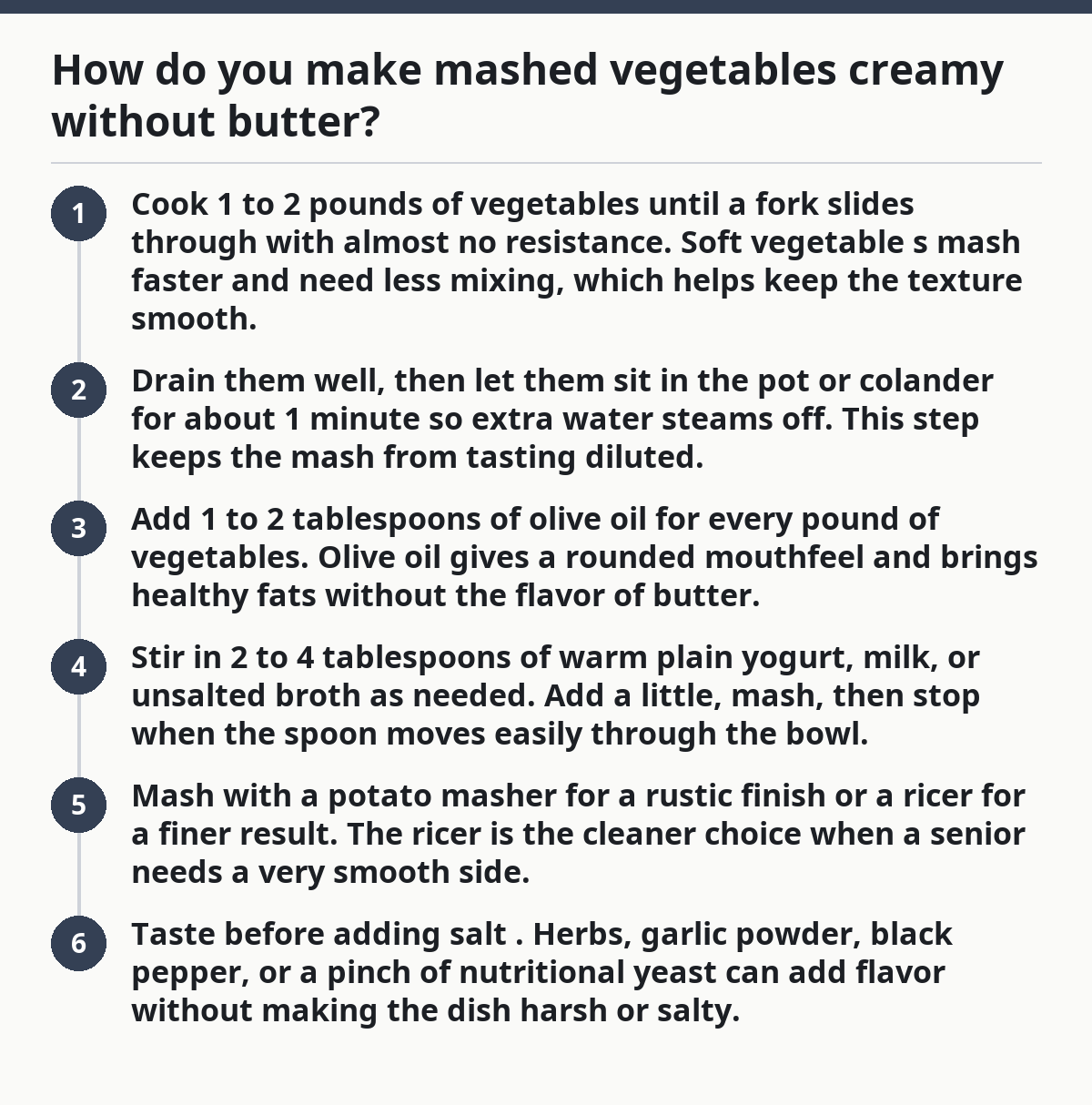
- Cook 1 to 2 pounds of vegetables until a fork slides through with almost no resistance. Soft vegetables mash faster and need less mixing, which helps keep the texture smooth.
- Drain them well, then let them sit in the pot or colander for about 1 minute so extra water steams off. This step keeps the mash from tasting diluted.
- Add 1 to 2 tablespoons of olive oil for every pound of vegetables. Olive oil gives a rounded mouthfeel and brings healthy fats without the flavor of butter.
- Stir in 2 to 4 tablespoons of warm plain yogurt, milk, or unsalted broth as needed. Add a little, mash, then stop when the spoon moves easily through the bowl.
- Mash with a potato masher for a rustic finish or a ricer for a finer result. The ricer is the cleaner choice when a senior needs a very smooth side.
- Taste before adding salt. Herbs, garlic powder, black pepper, or a pinch of nutritional yeast can add flavor without making the dish harsh or salty.
Plain yogurt is useful because it gives a soft, tangy finish that can stand in for some of butter’s richness. Keep the heat low when you add it, or it can separate. Olive oil is steadier and gives a silky result even in warm vegetables. If the mash starts to look shiny and greasy, the balance has gone too far; add 1 tablespoon more vegetables or a spoonful of warm broth to bring it back.
This is not the right method if you want a sharply buttery flavor. It also is not ideal for someone who dislikes tang from yogurt. In that case, olive oil and warm broth give the cleanest result.
What are the best low-sodium mashes for seniors?
For low-sodium Mashed Vegetable Side Dishes for Seniors Without Butter, herbs, allium, citrus zest, and texture can create flavor without depending on salt. A low-sodium mash still needs enough seasoning to taste like food, not like plain boiled vegetables.
For a potato mash, try olive oil, garlic powder, and chopped chives. For cauliflower, a spoonful of plain yogurt plus white pepper and a little parsley works well. Turnips take especially well to dill, thyme, or a small amount of mustard powder. These flavorings are gentle, and they do not require the salt level that many processed sides need.
A useful habit is to season in two rounds. Add some flavor before mashing, then taste and adjust at the end. That gives the vegetables time to carry the seasoning through the whole bowl. A pinch of acid, such as lemon juice, can brighten a mash just before serving. Use only a small amount, because too much acid can make the flavor sharp rather than pleasant.
Low-sodium mashes also benefit from temperature. Serve them hot, around the same warmth you would expect from freshly cooked potatoes, because warm food tastes fuller than lukewarm food. If the mash cools and starts to stiffen, stir in 1 to 2 tablespoons of warm broth or water and break it up with a fork or spatula.
A common mistake is to remove salt and remove all flavor with it. The result is a side dish that seniors may leave on the plate. The better move is to build a base with olive oil, yogurt, or a little broth, then finish with herbs and a light hand. The American Heart Association has general guidance on sodium reduction; that advice fits well here, but a person with medical restrictions should follow a clinician’s direction first. The American Heart Association and NIH both note that sodium reduction can support heart health. American Heart Association NIH Office of Dietary Supplements
Which vegetable combinations make the smoothest side dish?
The smoothest combinations usually pair one starchy vegetable with one lighter vegetable. Potato and cauliflower is the most flexible pairing, while potato and turnip gives more flavor and still mashes cleanly.
Potato-cauliflower mash is the easiest place to start because the potato supplies body and the cauliflower keeps the dish from feeling dense. A 2:1 potato-to-cauliflower ratio gives a classic texture, while a 1:1 mix makes a lighter side. If the cauliflower flavor seems too strong, a tablespoon of plain yogurt or olive oil softens it immediately.
Potato-turnip mash suits people who want a little more character. Turnips can turn sharp if they are undercooked, so they should be very soft before mashing. When cooked well, they blend into the potato and add a mild sweetness. Parsnips also work in this role, but they lean sweeter and can change the flavor more than expected.
For a softer, more nourishing side, I would also consider cauliflower with carrots or sweet potato with cauliflower. These combinations produce a smoother finish than a single vegetable alone, and they can reduce the amount of added fat needed for creaminess. The downside is that color and flavor become less predictable. A mash with sweet potato and cauliflower, for example, can taste pleasant but may be too sweet for some main dishes.
The key is to avoid combining vegetables with very different water levels unless one of them is starch-heavy. A watery mash can separate on the plate within 5 minutes, which looks unappetizing even if it tastes fine. If the bowl seems loose, set it over low heat for a minute or two and stir until the extra steam leaves the mixture. That small step can rescue the texture.
How do you keep mashed vegetables smooth, not gluey?
Stop mixing as soon as the vegetables look uniform, because overworking them turns starch into paste. Smooth and gluey are not the same thing, and a senior-friendly mash should be soft without becoming sticky.
The main tool choice matters. A potato masher gives a rustic texture, but it can leave small lumps in firmer vegetables. A food mill or ricer gives the cleanest, smoothest result, especially with potatoes. A blender or food processor should be avoided for most mashed vegetables because they can make the texture heavy and elastic in under a minute.
Moisture control matters just as much. If the vegetables are wet when they go into the bowl, the cook usually keeps stirring to fix the looseness, and that is when glue forms. Drain them well, then mash while they are still hot. If the mash seems stiff after 1 minute of stirring, add liquid 1 tablespoon at a time. That pace is slower, but it protects the texture.
The same rule applies to dairy substitutes and yogurt. A little plain yogurt can make a mash creamy; too much can thin the base and encourage extra mixing. If that happens, the fix is more vegetables, not more stirring. This is one of the few cases where patience really changes the result.
Another mistake is seasoning too late. When the mash tastes bland, people often keep stirring in salt, pepper, and liquid at the end. That can make the bowl cloudy and overworked. Start with gentle seasoning in the pot, then finish with a small amount on top right before serving. The surface flavor is enough if the base already tastes good.
What healthy fats can replace butter without making the mash heavy?
Olive oil is the most reliable butter replacement because it adds smoothness without weighing the mash down. A small amount of avocado oil can also work, but olive oil usually gives the best flavor in vegetable mashes.
Use 1 to 2 tablespoons per pound of vegetables as a starting point. That amount is enough to coat the starch and make the spoon glide through the bowl. If you add much more, the mash can start to feel oily instead of creamy. Seniors who want a lighter side often prefer the clean finish of olive oil over richer substitutes.
Plain yogurt is not a fat in the same way, but it brings a creamy texture that can reduce how much oil is needed. For a balanced mash, I would use olive oil for body and plain yogurt for softness. That combination is especially good with cauliflower, which can taste flat without some help. A spoon of yogurt also brightens potatoes and turnips without turning the dish into a sauce.
This is a good place to be honest about trade-offs. Olive oil gives flavor and healthy fats, but it does not taste like butter. Plain yogurt adds tang, which some people enjoy and others dislike. If the goal is to mimic the exact taste of butter, no substitute will do that perfectly. If the goal is a soft, appealing side dish that fits a heart-healthy pattern, the substitutes do the job well.
The most practical version is simple: one vegetable base, one healthy fat, and one gentle seasoning. That formula is easy to repeat for a weeknight meal and flexible enough to pair with chicken, fish, or beans.
A simple way to build a full plate around mashed vegetables
Mashed vegetable side dishes for seniors without butter work best when the plate stays soft, warm, and balanced. That means choosing a mash that fits the main dish and the person eating it.
For a lighter meal, a cauliflower-potato mash beside baked fish or shredded chicken is easy to chew and not too rich. For a more filling plate, turnip-potato mash with olive oil pairs well with meatloaf or lentils. If the meal needs color, a carrot or sweet potato mix can bring that without forcing a separate side. I would keep the portion modest, about 1/2 to 1 cup for a side serving, then adjust by appetite.
Texture should guide the whole plate. If the main dish is firm, the mash should be especially smooth. If the main dish is already soft, the mash can hold a little more texture. That is one reason potato-cauliflower mash is such a useful default: it can sit next to almost anything.
This article supports the broader heart-healthy soft vegetables and sides hub, but the practical takeaway here is narrower: use vegetables that mash easily, add creaminess with olive oil or plain yogurt, and keep the mixing gentle. That approach gives a side dish that seniors are more likely to finish, not push aside.
A mash without butter does not need to feel like a compromise. It only needs the right vegetable, enough moisture, and a steady hand.
What can replace butter in mashed vegetables?
Olive oil, plain yogurt, and a little warm broth are the most useful butter replacements in mashed vegetables. Olive oil gives the richest mouthfeel without dairy, while plain yogurt adds creaminess and a slight tang. Start with 1 tablespoon of oil per pound of vegetables and add more only if the mash still feels dry.
How do you make mashed vegetables creamy without salt?
Make them creamy with heat, moisture, and a smooth mashing tool, not with extra salt. Drain the vegetables well, then add warm olive oil, plain yogurt, or broth a tablespoon at a time. A ricer or food mill helps more than extra stirring, which can make the mash dense.
Which vegetables are easiest to mash for seniors?
Potatoes, cauliflower, and turnips are the easiest vegetables to mash for seniors. Potatoes give the softest, most familiar texture, cauliflower makes a lighter mash, and turnips soften nicely when fully cooked. A potato-cauliflower blend is often the gentlest place to start because it stays smooth without becoming heavy.
Drafted with AI; not yet reviewed by a person.