Last updated: November 19, 2026
Key Takeaways
- Small breakfast portions for seniors can be soft, simple, and heart-healthy.
- Shrink the serving, not the nutrition, so the meal still does useful work.
- Soft textures, mild flavors, and calorie-dense foods are often the easiest fit.
- Gentle morning options are usually warm, soft, or lightly sweet.
A senior with no appetite at breakfast needs a small-portioned breakfast that is easy to swallow, gentle on the stomach, and still heart-healthy. This guide to Heart-Healthy Breakfast Ideas for Seniors With No Appetite starts with a small first meal, not a full plate. The ideas below help you choose what to put on that plate, how much to serve, and what to skip when breakfast feels like a chore.
What a small-portioned breakfast should look like

A small-portioned breakfast for a senior with low appetite should be soft, simple, and heart-healthy. Picture this: you’re standing at the counter at 7 a.m., not hungry, and the sight of a full bowl makes you back away. The fix is not to force a big meal. It’s to build a tiny first meal that gives you a useful start without feeling heavy.
The first plate usually works best with one starch, one protein, and one fruit or dairy item. A slice of toast with nut butter and a few banana slices, or a half cup of yogurt with soft fruit, does the job better than a breakfast that tries to do everything at once.
- Keep the first serving modest: think 1 slice of toast, 1/2 banana, or 1/2 cup yogurt.
- Use soft textures if chewing feels tiring.
- Choose unsalted or low-salt foods when possible.
- Leave room to eat again later if your appetite picks up.
Here’s the catch: small does not mean skimpy. A tiny breakfast can still carry fiber, healthy fat, and protein. It just shouldn’t look like a diner order.
How do you make breakfast smaller but still nutritious?
You make breakfast smaller but still nutritious by shrinking the portion, not stripping out the useful parts. Picture this: you want enough food to take the edge off, but not so much that the meal feels like work. That means each bite should count.
The easiest way is to use starter portions and choose foods that bring more than one benefit. Nut butter gives calories and unsaturated fat. Yogurt gives protein and calcium. Banana gives quick energy and softness. Toast gives a simple base that does not need much chewing.
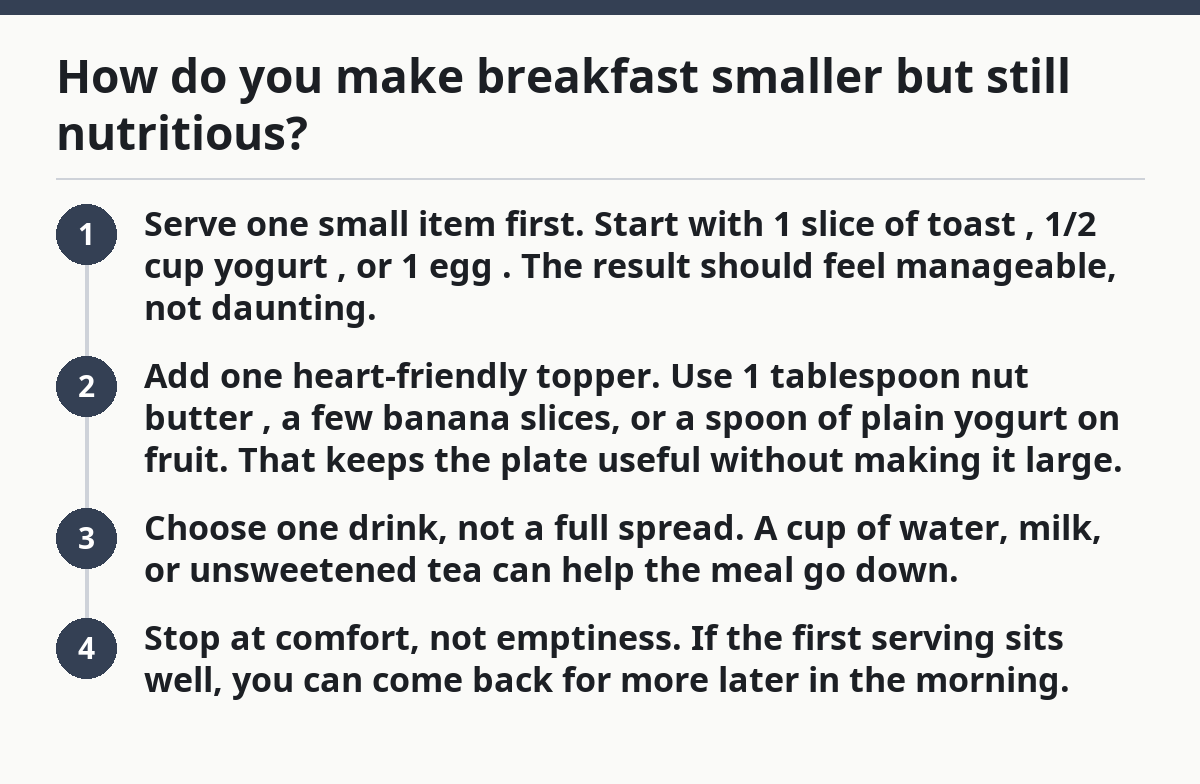
- Serve one small item first. Start with 1 slice of toast, 1/2 cup yogurt, or 1 egg. The result should feel manageable, not daunting.
- Add one heart-friendly topper. Use 1 tablespoon nut butter, a few banana slices, or a spoon of plain yogurt on fruit. That keeps the plate useful without making it large.
- Choose one drink, not a full spread. A cup of water, milk, or unsweetened tea can help the meal go down.
- Stop at comfort, not emptiness. If the first serving sits well, you can come back for more later in the morning.
This approach works with ordinary foods, not special recipes. It also fits days when medication, poor sleep, or dry mouth has made appetite weaker than usual.
Heart-healthy foods that work when appetite is low
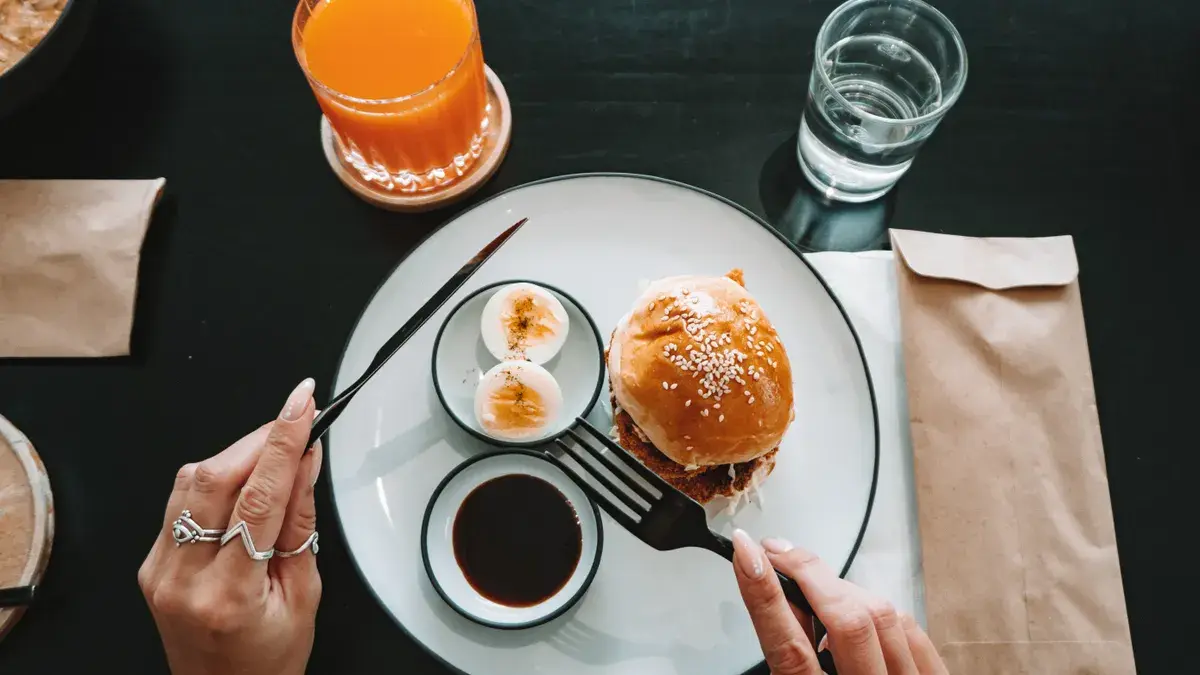
Heart-healthy foods that work when appetite is low are the ones with soft texture, mild flavor, and some calorie density. Picture this: you open the fridge and nothing sounds good. The answer is not a bigger menu. It’s a shorter list of foods that are easy to accept and useful for the heart.
A few staples do most of the work. Yogurt is easy to spoon and can be plain or lightly sweetened. Banana is soft and easy to mash. Nut butter spreads well on toast and adds satisfying fat. Eggs can be soft-scrambled or hard-boiled and mashed with a little olive oil. Toast gives a simple base that can carry all of these.
- Yogurt: Choose plain or low-sugar if possible. Add banana slices or a sprinkle of oats if appetite allows.
- Banana: Half a banana is often enough for a first serving.
- Nut butter: Use a thin spread on toast or crackers; peanut, almond, or cashew all work if tolerated.
- Eggs: A soft scramble is gentler than a dry one.
- Toast: Whole-grain toast brings more fiber than white toast, but plain toast is fine on rough mornings.
On the flip side, some heart-healthy foods are still poor fits for a no-appetite morning. Big bowls of bran cereal, rough raw fruit, or dry muffins can feel like too much chewing for too little reward.
Gentle breakfast options that do not feel heavy
Gentle breakfast options that do not feel heavy are usually soft, warm, or mildly sweet. Picture this: you’re trying to eat before pills or a morning walk, and your stomach wants only a few bites. A heavy meal can backfire. A gentle one can get eaten.
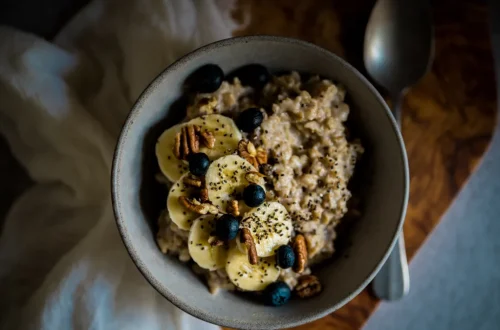
These options work well because they ask less of you. A slice of toast with 1 tablespoon of nut butter is easy to finish. A 1/2 cup bowl of yogurt with banana slices takes little effort. A soft egg on toast gives more staying power without a large volume. A few spoonfuls of oatmeal can also fit, though this page is focused on the foods you can build quickly from common pantry items.
Good gentle combos:
- Toast + nut butter
- Yogurt + banana
- Egg + toast
- Toast + mashed banana
- Yogurt + a spoon of nut butter if tolerated
A little cinnamon, a few banana slices, or a thin layer of nut butter can make the first bites easier without turning breakfast into a project.
A simple morning routine for low appetite
A simple morning routine for low appetite gives the body a chance to wake up before food hits the plate. Picture this: you wake up dry-mouthed, a little groggy, and not ready for a full breakfast. A routine of 5 to 10 minutes can be enough to make the first bites easier.
Start with a drink, then a small food, then a pause. Some seniors do better with a few sips of water or warm tea before eating. Others find that sitting by a window, walking to the kitchen, or taking morning medication with a small snack helps settle things.
- Begin with a drink. Take a few sips of water, milk, or unsweetened tea to wake up the mouth and throat. The goal is comfort, not volume.
- Serve one small food. Put out a single item such as a slice of toast, a half banana, or a small bowl of yogurt. A small plate looks easier than a full spread.
- Pair if needed. Add nut butter to toast or a soft egg if the first item feels too light. That gives more staying power without a large meal.
- Pause after a few bites. Stop and check how you feel after 2 to 3 minutes. If hunger stays low, save the rest for later instead of pushing through.
- Try again midmorning. A second small breakfast at 9 or 10 a.m. often works better than forcing a big 7 a.m. plate.
The truth is, appetite often comes in waves. A senior who cannot handle breakfast at sunrise may still eat well an hour later.
Common mistakes that make breakfast harder to eat
Common mistakes make breakfast harder to eat by increasing volume, dryness, or work. Picture this: the food is heart-healthy on paper, but the plate is too tall, too dry, or too bland to finish. That is how good intentions turn into skipped meals.
A big bowl of cereal can look sensible and still fail if chewing feels hard or milk makes the bowl too large. Dry toast with nothing on it can be too plain to bother with. A pile of cut fruit can be refreshing, but not if appetite is low and the texture feels cold and sharp. Even healthy foods need the right form.
- Too much at once: Costs appetite fast. Use a starter portion and add more only if wanted.
- Too dry: Costs comfort. Add yogurt, nut butter, or a soft egg.
- Too many choices: Costs energy. Pick one or two foods, not five.
- Too much salt: Costs heart friendliness. Choose unsalted nut butter and plain yogurt when possible.
Skip the oversized breakfast sandwich, the greasy meat-heavy plate, and any food that takes too much chewing on a rough morning. Those belong to a different appetite level.
How this fits into senior heart-healthy breakfast planning
This approach fits into senior heart-healthy breakfast planning by giving the morning a low-pressure starting point. Picture this: some days breakfast is a bowl of yogurt, some days it is toast and a banana, and some days it is just half of each. The pattern matters more than one perfect meal.
That hub should handle the broader routine, but this page fills the narrow problem of no appetite. The goal here is not to build the biggest breakfast. It is to keep the first meal small enough to eat and balanced enough to matter. A short list of repeatable foods makes that easier.
A practical rotation might look like this:
- Day 1: Toast + nut butter
- Day 2: Yogurt + banana
- Day 3: Egg + toast
- Day 4: Half banana + yogurt
- Day 5: Toast + mashed banana
None of these requires a special recipe, a long prep session, or a full appetite. They fit a senior who wants breakfast to be quiet, quick, and kind.
Heart-healthy breakfast ideas for seniors with no appetite
Heart-healthy breakfast ideas for seniors with no appetite should be built around small, soft, familiar foods. Picture this: you are not trying to win breakfast. You are trying to eat something useful before the day gets away from you.
A few dependable combinations do most of the work:
- Toast with nut butter and banana slices
- Plain yogurt with banana
- Soft egg on toast
- Half a banana with a few spoonfuls of yogurt
- Toast with a thin layer of nut butter and a sip of milk
Use the foods that feel easiest that day. Keep portions small. Add more only if the first bites go down well. If appetite stays poor for many days, or eating becomes painful, bring the problem to a healthcare professional.
What should a senior eat when they have no appetite in the morning?
A senior should eat a small, soft breakfast that is easy to finish, such as yogurt, toast with nut butter, banana, or a soft egg. The first goal is to get something heart-healthy into the body without turning breakfast into a chore.
Keep the portion modest, like 1 slice of toast or 1/2 cup yogurt. If that goes well, a second small snack later in the morning can help.
How do you make breakfast smaller but still nutritious?
Make breakfast smaller but still nutritious by using starter portions and foods that do more than one job. A slice of toast with nut butter gives carbs and healthy fat. Yogurt adds protein and calcium. Banana brings softness and quick energy.
Think in 1-item or 2-item meals, not large plates. That keeps the meal manageable and still useful.
What are easy morning foods when someone doesn’t feel like eating?
Easy morning foods are foods with little chewing and mild flavor, such as yogurt, banana, toast, nut butter, and eggs. These foods work because they are familiar, soft, and quick to serve.
A simple option is toast with nut butter or yogurt with banana. If the first serving feels too big, cut it in half and try again later.
Drafted with AI; not yet reviewed by a person.