Last updated: November 19, 2026
Key Takeaways
- A budget-friendly heart-healthy breakfast for seniors can be built from protein, fiber, and low-sodium foods.
- Low-cost staples to start with include oats, eggs, peanut butter, bananas, and canned fruit in juice.
- Pairing one protein, one fiber food, and one fruit helps a breakfast feel filling and use up leftovers.
- Simple breakfasts with short prep and pantry ingredients can stretch a grocery budget.
Cheap heart-healthy breakfast ideas for seniors should focus on low-cost protein, fiber, and fruit you can buy almost anywhere. Heart-Healthy Breakfast Ideas for Seniors on a Budget works best when it uses eggs, oats, peanut butter, bananas, and canned fruit in juice.
This guide settles what to buy, how to mix it, and which low-cost breakfasts are worth repeating. According to the USDA Food Plans, modest grocery budgets can still cover basic staples when meals stay simple and repeatable, and the American Heart Association recommends limiting sodium and added sugars in everyday meals. USDA Food Plans American Heart Association
What a cheap heart-healthy breakfast looks like for a senior
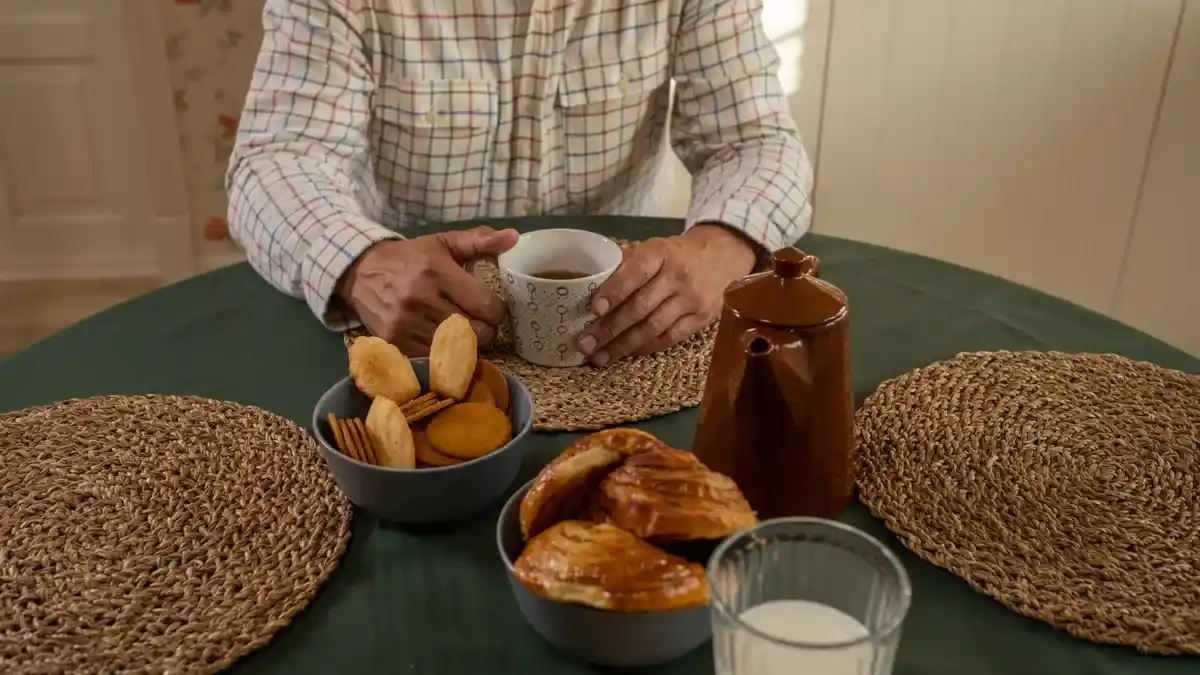
A cheap heart-healthy breakfast for seniors is one bowl, plate, or toast stack built from protein, fiber, and unsalted or low-sodium foods. That mix helps breakfast feel complete without leaning on bacon, pastries, or sugary cereal.
Because Heart-Healthy Breakfast Ideas for Seniors on a Budget need to stay simple, the goal is food that fills you up without draining the cart. Picture this: you’re standing in the kitchen with a small grocery list, a tight budget, and a morning that needs to stay simple. You want food that fills you up, not food that drains the cart. The target is a breakfast that is affordable, easy to chew, and not loaded with salt or added sugar.
The best building blocks are plain enough to keep costs down:
- Oats for fiber and bulk
- Eggs for low-cost protein
- Peanut butter for protein and healthy fat
- Bananas for cheap fruit
- Canned fruit in juice for shelf-stable fruit without syrup
A smart breakfast also keeps the prep short. If you need a skillet, a bowl, and 20 minutes every morning, the routine will slip. A better target is 5 to 10 minutes on most days, with leftovers or pantry items doing the heavy lifting.
The truth is, heart-healthy eating gets expensive when every meal depends on specialty products. Don’t start there. For more general meal-planning support, the heart-healthy breakfast planning hub can help you connect breakfast with the rest of the day.
The cheapest heart-healthy breakfast building blocks
The cheapest heart-healthy breakfast building blocks are oats, eggs, peanut butter, bananas, and canned fruit in juice. These foods show up in most budget kitchens because they store well, stretch across several meals, and work in simple combinations.
Since Heart-Healthy Breakfast Ideas for Seniors on a Budget depend on pantry staples, it helps to think in terms of foods that last. Picture this: you open the pantry and fridge and want breakfast without a separate shopping trip. You need foods that survive a week, not a day. That is where the budget wins.
Use this short list as the core:
- Old-fashioned oats: good for hot cereal or overnight oats. A 42-ounce canister usually lasts far longer than a box of single-serve packets.
- Eggs: fast on the stove or in the microwave, and easy to pair with toast or oats.
- Peanut butter: works on toast, crackers, or sliced banana. Choose a jar with no need for special prep.
- Bananas: inexpensive, soft, and useful when appetite is small.
- Canned fruit in juice: pears, peaches, or mixed fruit can stand in for pricier fresh fruit when produce is expensive or out of season.
- Plain yogurt if it fits your budget: useful for protein, but check the label because some cups carry a lot of added sugar.
Here’s the catch: cheap does not mean “buy the biggest box of anything.” A giant package only saves money if you’ll actually finish it. For a senior on a budget, food waste can wipe out the savings fast.
A useful rule is to buy foods that can appear in two or three breakfasts, not just one. Oats can be plain one day and mixed with banana the next. Eggs can be boiled, scrambled, or tucked into toast. Peanut butter can show up in a sandwich or in oatmeal.
How do you build a budget breakfast without extra waste?
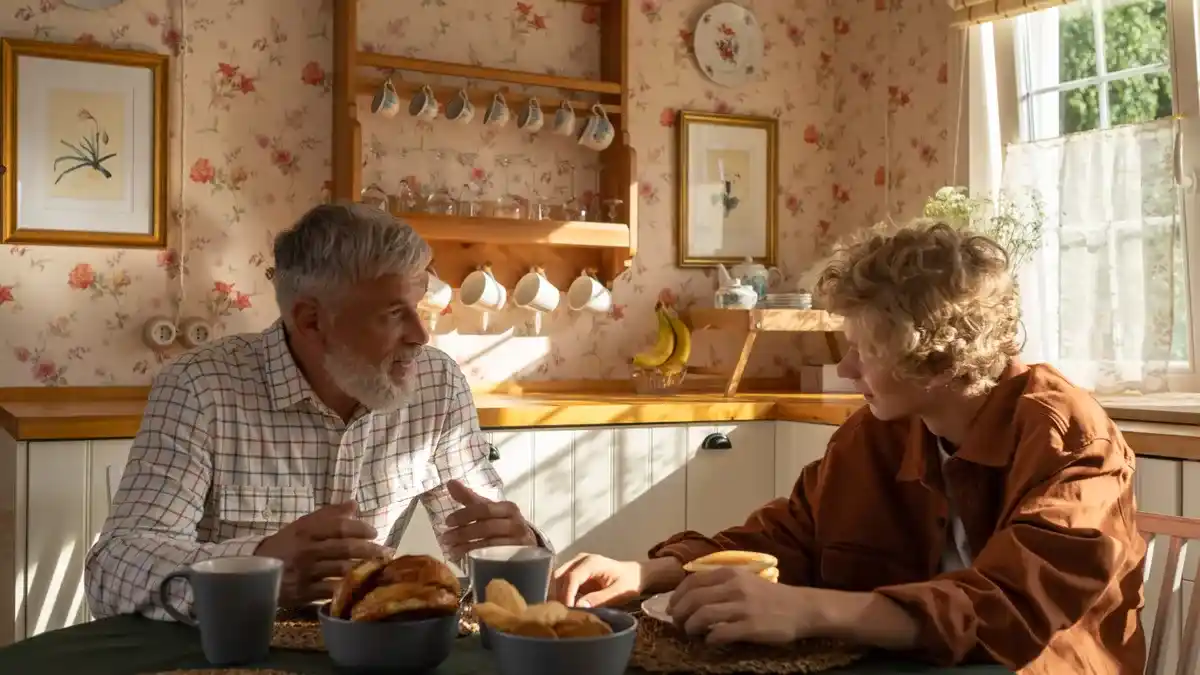
You build a budget breakfast by pairing one protein, one fiber food, and one fruit so the plate stays filling and the leftovers stay useful. That pattern keeps grocery spending lower because each item can play more than one role.
With Heart-Healthy Breakfast Ideas for Seniors on a Budget, the aim is to use what you buy before it goes bad. Picture this: you’ve got a loaf of bread, a carton of eggs, and a half-bag of oats. You don’t need a full recipe book. You need a repeatable system that uses what you buy before it goes bad. That is the real savings.
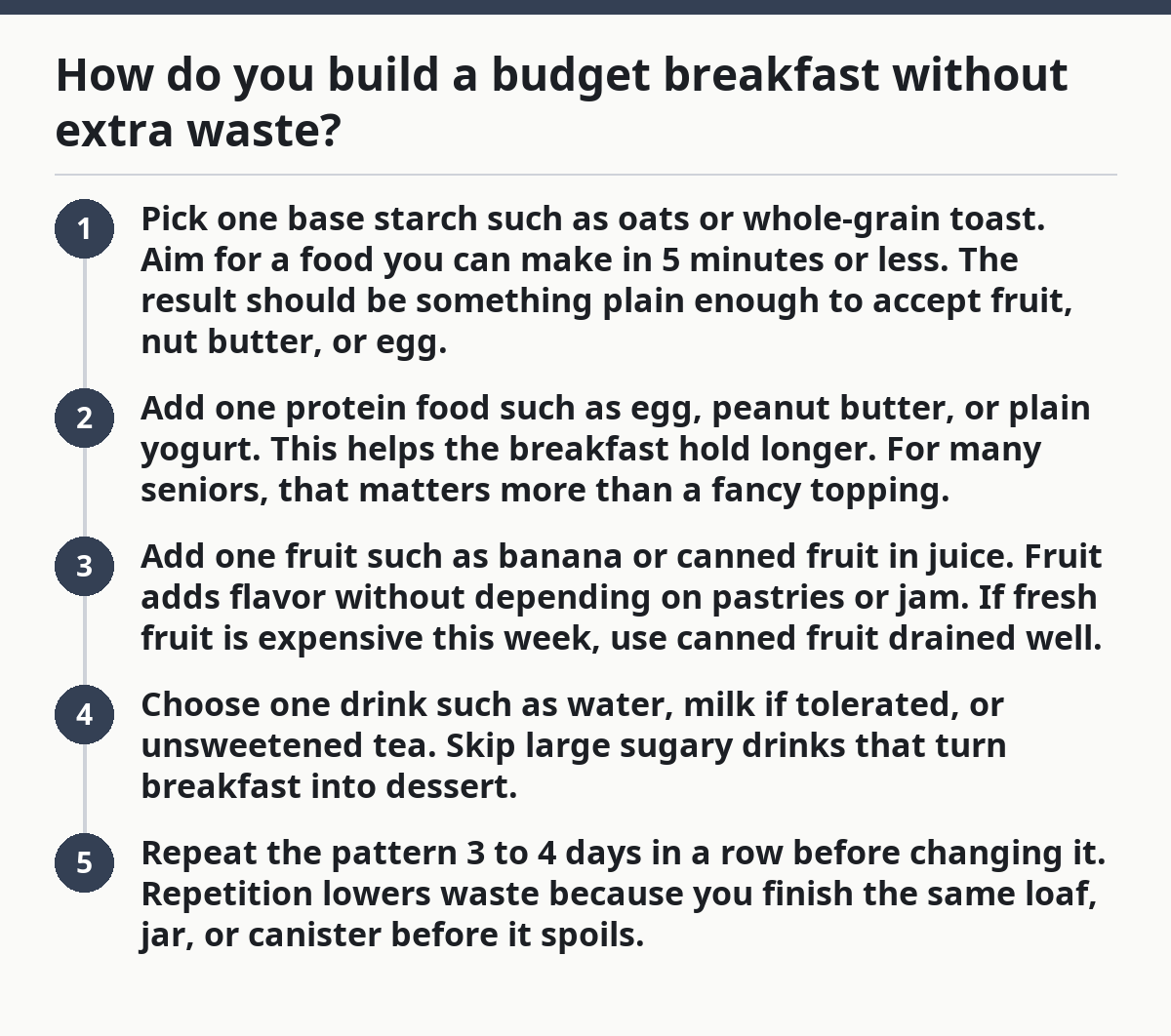
Use this simple routine:
-
Pick one base starch such as oats or whole-grain toast.
Aim for a food you can make in 5 minutes or less. The result should be something plain enough to accept fruit, nut butter, or egg. -
Add one protein food such as egg, peanut butter, or plain yogurt.
This helps the breakfast hold longer. For many seniors, that matters more than a fancy topping. -
Add one fruit such as banana or canned fruit in juice.
Fruit adds flavor without depending on pastries or jam. If fresh fruit is expensive this week, use canned fruit drained well. -
Choose one drink such as water, milk if tolerated, or unsweetened tea.
Skip large sugary drinks that turn breakfast into dessert. -
Repeat the pattern 3 to 4 days in a row before changing it.
Repetition lowers waste because you finish the same loaf, jar, or canister before it spoils.
This pattern works with both hot and cold breakfasts, so it fits more than one routine. It also makes shopping easier because you can buy fewer items and use them in different ways.
A plain example: oatmeal with banana and peanut butter. Another: scrambled egg on toast with a side of canned peaches in juice. Another: peanut butter toast with sliced banana and a boiled egg.
Affordable breakfast ideas seniors can make fast
Affordable breakfast ideas for seniors are the ones that use short prep, simple pans, and cheap ingredients already in the kitchen. The goal is not variety for its own sake; it’s a breakfast you can repeat without strain.
Because Heart-Healthy Breakfast Ideas for Seniors on a Budget should fit real mornings, the food also needs to be easy on energy and cleanup. Picture this: you’re tired in the morning, your hands may not want a hard cleanup, and standing at the stove for long is a bad deal. You need meals that fit the body you have today, not the one from 20 years ago. Fast matters.
Here are budget breakfast ideas that stay heart-conscious:
-
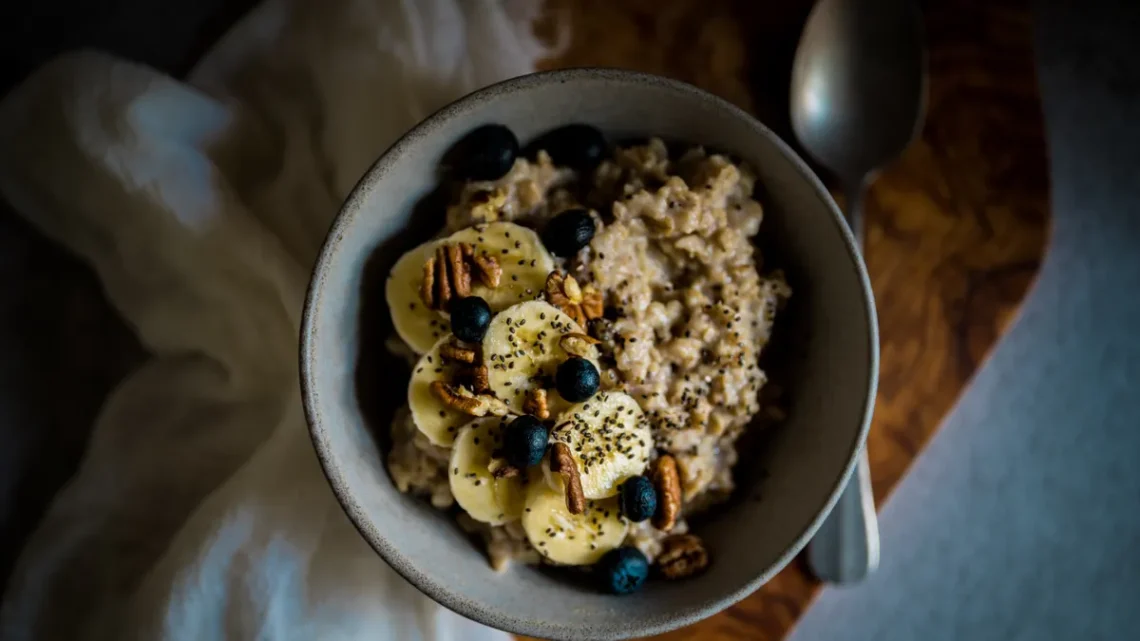
Oatmeal with banana and a spoon of peanut butter
Cook plain oats, then stir in sliced banana. Add peanut butter after cooking so it melts into the bowl. This gives you fiber and protein in one dish. -
Two-egg scramble with toast
Scramble eggs in a small pan and serve with whole-grain toast if it’s in budget. Use a light hand with salt, or skip it if the bread is already salty. -
Peanut butter toast with fruit
Toast bread, spread peanut butter thinly, and serve with banana or drained canned peaches. This works well on mornings when you don’t want to cook. -
Overnight oats
Mix oats with milk or yogurt in a container the night before. In the morning, add banana slices or canned fruit. This saves time and works well if standing too long is hard. -
Egg and fruit plate
Boil eggs ahead of time, then pair them with banana or canned fruit. It’s plain, but it gets breakfast on the table with almost no cleanup. -
Warm oats with cinnamon and chopped fruit
Cinnamon adds flavor without sugar. If you use canned fruit, drain it well so the bowl does not turn watery.
A cheap breakfast can still miss the mark if it is all starch. Toast alone is not enough for most older adults. Add protein, even if it’s just a single egg or a spoon of peanut butter. For more ideas on simple meal structure, see the senior breakfast planning guide.
Budget breakfast mistakes that cost more than they save
The biggest budget breakfast mistakes are buying convenience foods, wasting produce, and skipping protein. Each one looks harmless at the store and expensive by the end of the week.
When Heart-Healthy Breakfast Ideas for Seniors on a Budget go wrong, the problem is often food that seems cheap only at checkout. Picture this: you bought a box of breakfast pastries because they were easy, then needed a second snack an hour later. That is not a cheap breakfast, even if the shelf tag looked low. Short-term savings can turn into higher food spending.
Watch for these common problems:
-
Single-serve breakfast packs
They cost more per serving than bulk oats or a carton of eggs. They also run out fast, which means another trip to the store. -
Fresh fruit that spoils before you eat it
A bag of berries can be a poor buy if you only want fruit twice a week. Bananas and canned fruit in juice often waste less money. -
Sweetened yogurt and flavored oatmeal cups
These can carry a lot of added sugar and often cost more than plain versions. Plain oats plus fruit is usually the better deal. -
Skipping protein to save money
A piece of toast by itself may be cheap, but it often leaves you hungry. That can lead to extra snacks and more spending. -
Buying too many different ingredients
Ten “healthy” items that don’t work together is a bad pantry plan. Three or four flexible foods are better.
The better move is to build around items that can be used in more than one meal. A dozen eggs, a container of oats, a loaf of bread, and a jar of peanut butter can carry several breakfasts. That is the kind of budget planning that actually sticks.
For a bigger plan that connects breakfast to the rest of the day, the senior heart-healthy breakfast planning hub can help. This page stays focused on the cheap breakfast side of the job.
How to stretch one grocery trip across a whole week
You stretch one grocery trip across a whole week by buying repeatable ingredients and dividing them into breakfast roles before the week starts. That keeps costs lower and reduces the odds of food going bad in the fridge.
Because Heart-Healthy Breakfast Ideas for Seniors on a Budget work best when the shopping list is small, the trick is to assign each item a job. Picture this: you’re home from the store with a small haul and want it to last until the next shopping day. The smartest move is not more recipes. It’s a simple plan that tells each item where it belongs. That saves money and effort.
Use this basic weekly setup:
-
Oats: breakfast for 3 to 5 mornings
Make hot oatmeal or overnight oats. If the container is large, keep it sealed tight and dry. -
Eggs: breakfast for 2 to 4 mornings
Boil some ahead, scramble some fresh, or pair eggs with toast. Eggs are one of the easiest budget proteins to move around. -
Bananas: use within 2 to 4 days
Buy a few at different ripeness levels so they don’t all turn at once. -
Canned fruit in juice: backup fruit for days when fresh fruit runs out
Drain it before serving if the juice is too sweet or heavy. -
Peanut butter: long-lasting spread for toast, oats, or banana slices
A jar is easy to keep on hand and usually has a long pantry life when stored properly.
That approach also helps when appetite is small. You do not need a huge plate to make breakfast worthwhile. A small bowl of oats with fruit and peanut butter may be enough.
If chewing is an issue, choose softer textures. Oatmeal, scrambled eggs, banana, and drained canned fruit are gentler than dry toast alone. If you need texture changes for a medical reason, check with a clinician or dietitian who knows the full picture.
A simple 3-day budget breakfast plan
A simple 3-day budget breakfast plan can keep spending steady while giving you enough variety to avoid boredom. This kind of plan works best when the same foods show up in different forms.
For Heart-Healthy Breakfast Ideas for Seniors on a Budget, a short rotation can be enough to keep shopping simple and meals manageable. Picture this: the week is starting, the pantry is modest, and you want fewer decisions before coffee. A tiny plan beats a big one. Three days is enough to start.
Here’s a straightforward rotation:
Day 1: Oatmeal with banana
Cook plain oats, slice in banana, and add cinnamon if you have it. This is soft, cheap, and quick.
Day 2: Egg toast with canned fruit
Scramble or boil an egg, serve it on toast, and add drained canned peaches or pears. This gives you protein plus fruit without much cleanup.
Day 3: Peanut butter toast with banana
Spread peanut butter thinly on toast and top with banana slices. If you need more staying power, add a boiled egg on the side.
You can loop those three days again or swap the order. The point is not perfection. It is consistency that fits a budget and a regular kitchen.
Use this plan as a template:
- One oat breakfast
- One egg breakfast
- One peanut butter breakfast
That pattern keeps shopping short and gives your pantry a chance to do real work. It also lets you buy less and waste less, which is where a budget breakfast starts paying off.
What are inexpensive heart-healthy breakfasts for seniors?
Inexpensive heart-healthy breakfasts for seniors are usually built from oats, eggs, peanut butter, bananas, or canned fruit in juice. A bowl of oatmeal with fruit, egg toast, or peanut butter toast are all simple examples. The best choice is the one that gives protein and fiber without a lot of salt or added sugar.
How can seniors save money on breakfast foods?
Seniors can save money on breakfast foods by buying flexible staples and using them in more than one meal. Oats, eggs, bread, peanut butter, and bananas stretch farther than packaged breakfast items. It also helps to buy fruit that keeps well, like bananas or canned fruit in juice, so less money ends up in the trash.
What are cheap foods that still fit a heart-healthy diet?
Cheap foods that still fit a heart-healthy diet include oats, eggs, peanut butter, bananas, and canned fruit in juice. Plain yogurt and whole-grain bread can fit too if they are on sale and not overloaded with sugar or salt. A heart-healthy budget breakfast usually works best when it stays simple and low waste.
Drafted with AI; not yet reviewed by a person.