Last updated: November 19, 2026
Key Takeaways
- A binder changes density, moisture, and chew, not just structure.
- Egg is usually the most reliable binder because it sets as meat cooks.
- Oats make a soft binder that still holds shape well for a tender bite.
- Whole-wheat breadcrumbs give classic texture, while plain yogurt adds the most moisture among dairy binders.
Binding ingredients for the Best Binding Ingredients for Soft Heart-Healthy Meatloaf and Patties for Seniors are egg, oats, whole-wheat breadcrumbs, unsweetened applesauce, and plain yogurt; the best choice depends on how moist you need the mix and how much sodium you want to avoid.
Egg is often the safest all-around binder.
The table below shows which binder fits meatloaf, patties, and egg-free swaps without turning the dish dry.
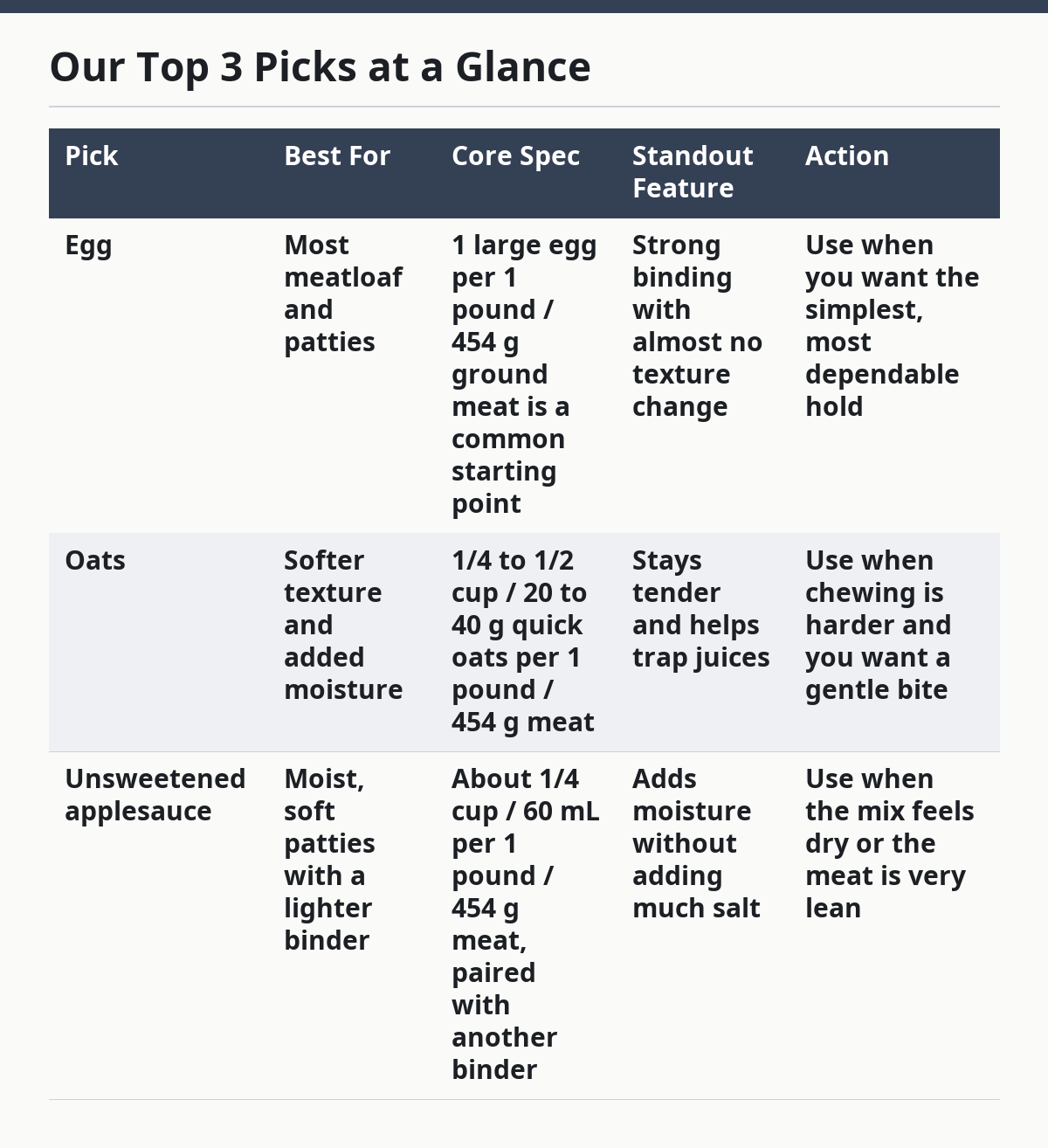
Our Top 3 Picks at a Glance
| Pick | Best For | Core Spec | Standout Feature | Action |
|---|---|---|---|---|
| Egg | Most meatloaf and patties | 1 large egg per 1 pound / 454 g ground meat is a common starting point | Strong binding with almost no texture change | Use when you want the simplest, most dependable hold |
| Oats | Softer texture and added moisture | 1/4 to 1/2 cup / 20 to 40 g quick oats per 1 pound / 454 g meat | Stays tender and helps trap juices | Use when chewing is harder and you want a gentle bite |
| Unsweetened applesauce | Moist, soft patties with a lighter binder | About 1/4 cup / 60 mL per 1 pound / 454 g meat, paired with another binder | Adds moisture without adding much salt | Use when the mix feels dry or the meat is very lean |
Which binding ingredients work best for soft heart-healthy meatloaf and patties for seniors?
The best binding ingredient for soft heart-healthy meatloaf and patties for seniors is egg, with oats and whole-wheat breadcrumbs close behind when you want a softer bite and more moisture retention. A binder is not just glue; it also changes how dense, dry, and easy-to-chew the final food feels.
Picture this: you’re mixing ground turkey, ground chicken, or lean beef in a bowl and want it to hold together without turning into a brick. The right binder keeps the shape, protects tenderness, and avoids a crumbly pan full of dry meat. A bad one does the opposite.
No contest.
For this kind of cooking, I rank the usual binders this way:
- Best all-around: egg
- Best for softness: oats
- Best for familiar loaf texture: whole-wheat breadcrumbs
- Best for extra moisture: unsweetened applesauce or plain yogurt
- Best egg-free backup: oats plus applesauce, or breadcrumbs plus yogurt
For heart-healthy cooking, the binder also has to fit the rest of the plate. That means low-sodium choices, no salty stuffing mixes, and no seasoned crumbs that hide a lot of salt. If a binder brings a lot of sodium, it works against the whole meal, even if the texture is good.
A dependable combo for seniors is:
- 1 pound / 454 g ground meat
- 1 egg
- 1/4 cup / 20 g quick oats or 1/3 cup / 25 g whole-wheat breadcrumbs
- 2 to 3 tablespoons / 30 to 45 mL unsweetened applesauce or plain yogurt
That mix gives structure and keeps the finished loaf or patty tender, not tight.
Egg: the most reliable binder for meatloaf and patties
Egg is the most reliable binder because it sets as the meat cooks and holds the mixture together without making it heavy. In a 9 x 5 inch loaf pan or in hand-shaped patties, it gives the cleanest structure with the fewest moving parts.
Picture this: you’re forming patties for a skillet and don’t want them to crack the second they hit the pan. Egg helps the meat hold its shape during turning, especially with lean ground turkey or ground chicken that has less natural fat. It also works well with lean beef when the mix needs extra support.
Simple and steady.
Use egg when you want:
- A firm but tender slice from meatloaf
- Patties that flip without breaking apart
- A binder that does not add noticeable flavor
- One ingredient you already have in the fridge
A good starting point is 1 large egg per 1 pound / 454 g of ground meat. If the mixture is very wet, add a little more dry binder instead of a second egg right away. Too much egg can make the texture rubbery after baking at 375°F / 190°C.
Here’s the catch: egg is not the best fit for someone who avoids eggs for allergy reasons or personal diet needs. In that case, the next best move is oats or breadcrumbs, with a moist ingredient like applesauce or yogurt to keep the mix soft. Egg-free does not mean dry.
For a senior-friendly result, beat the egg before adding it, then mix only until combined. Overmixing compresses the meat proteins and gives you a tougher slice. That matters more than people think.
Allergen note: egg is a common allergen. If egg is out, use oats, breadcrumbs, chia gel, or ground flax mixed with water as a replacement binder.
Oats: the softest binder that still holds shape
Oats are the softest binder that still holds shape, and they are a strong choice for seniors who need a tender bite. Quick oats and rolled oats both work, but quick oats blend in more smoothly and usually feel less chunky in the finished meatloaf or patty.
Picture this: you want the mixture to stay moist through baking, but you also want a texture that does not crumble in the fork. Oats absorb liquid, swell during cooking, and help the meat stay gentle instead of dense. They are a smart fit for ground turkey, ground chicken, and lean beef.
Good grip, softer bite.
Use oats like this:
- For each 1 pound / 454 g of meat, add 1/4 to 1/2 cup / 20 to 40 g quick oats.
- Let the mixture rest 5 to 10 minutes before shaping.
- Form loaf or patties with a light touch, not a packed one.
- Bake meatloaf at 375°F / 190°C until fully cooked, or pan-cook patties over medium heat until done.
That short rest matters. It gives the oats time to absorb moisture before the food goes in the oven or skillet. Without that pause, the mix can look loose and then tighten up unevenly during cooking.
Oats are also a good low-sodium choice, because plain oats bring no salty seasoning of their own. That makes them useful in heart-healthy cooking where salt control matters.
The downside is texture. Some people do not like the slight graininess of oats in meatloaf. If that is a problem, grind the oats a bit finer in a food processor, or switch to whole-wheat breadcrumbs for a smoother crumb.
Allergen note: oats are often processed in facilities that handle wheat. If gluten is a concern, look for certified gluten-free oats.
Whole-wheat breadcrumbs or yogurt: when you want structure with moisture
Whole-wheat breadcrumbs give the most classic meatloaf texture, while plain yogurt gives the moistest result among the dairy binders. Both can help senior meals stay soft, but they work in different ways.
Picture this: you’re trying to keep a loaf sliceable without making it dry at the edges. Whole-wheat breadcrumbs absorb meat juices and hold the shape, while plain yogurt adds moisture and a little tang. Used together, they can make a very tender result.
Better together.
Use whole-wheat breadcrumbs when you want:
- A firmer, familiar meatloaf crumb
- Better shape in baked loaves
- A low-cost binder that is easy to find
Use plain yogurt when you want:
- Extra tenderness in the mix
- A softer patty that stays moist
- A binder that also adds a mild dairy richness
A practical ratio is 1/3 cup / 25 g breadcrumbs or 2 to 3 tablespoons / 30 to 45 mL plain yogurt per 1 pound / 454 g of meat. If the mixture already feels wet, reduce the yogurt and add breadcrumbs instead. If it feels dry, do the reverse.
On the flip side, breadcrumbs alone can dry out the mix if the meat is very lean and there is not enough liquid in the bowl. Whole-wheat breadcrumbs are also higher in fiber than white crumbs, which is useful, but they can taste more earthy. Plain yogurt can curdle or separate if you use too much heat too fast, so mix it in evenly and avoid high heat searing.
Allergen note: whole-wheat breadcrumbs contain wheat and gluten. Plain yogurt contains milk. For a wheat-free option, use oats or certified gluten-free breadcrumbs. For a dairy-free version, use applesauce or a flax-and-water binder.
What binder is best for low-sodium ground meat recipes?
Oats are the best binder for low-sodium ground meat recipes because they hold moisture without bringing extra salt, and they do not need flavored seasoning packets to work. Egg is close behind, but oats give you more flexibility when sodium has to stay low across the whole meal.
Picture this: you’re building a soft loaf from scratch and every salted ingredient counts. Breadcrumbs from seasoned stuffing mix, bottled sauces, and processed binders can quietly raise sodium fast. Plain oats avoid that trap and still give solid body.
That’s the point.
If you need a very low-sodium path, use this formula:
- 1 pound / 454 g ground meat
- 1 egg or 1/4 to 1/2 cup / 20 to 40 g oats
- 2 to 3 tablespoons / 30 to 45 mL unsweetened applesauce or plain yogurt
- Plain herbs, onion, garlic, or pepper instead of salty blends
This is where a lot of generic advice gets it wrong. It talks about “healthy” binders but ignores the salt hiding in breadcrumbs, seasoning packets, and cheese. The binder itself may be fine, while the mix around it pushes sodium too high.
If you want the softest low-sodium result, the best combination is usually oats plus applesauce. If you want a firmer slice, use egg plus oats. If dairy is acceptable and you want more tenderness, plain yogurt plus breadcrumbs can work well, but check the sodium on the bread itself.
For a side-by-side fit:
- Softest: oats with applesauce
- Most dependable shape: egg with oats
- Closest to classic meatloaf texture: whole-wheat breadcrumbs with egg
- Best dairy-based moisture: plain yogurt with breadcrumbs
That gives you control without sending the loaf dry or salty.
How do I keep senior meat patties soft?
You keep senior meat patties soft by using a moist binder, mixing lightly, and cooking them gently instead of packing and blasting them with heat. The difference between tender and tough often comes from the hand that shapes them, not just the ingredient list.
Picture this: you press patties too tightly, then sear them hard in a pan because you want them “done fast.” The result is usually a dense disk. Soft patties need a looser mix and moderate heat.
Not a squeeze test.
Use this simple method:
- Choose a binder: egg, oats, breadcrumbs, or a mix.
- Add 2 to 3 tablespoons / 30 to 45 mL moisture from applesauce or plain yogurt if the meat is very lean.
- Mix just until the ingredients are combined.
- Shape patties about 3/4 inch / 2 cm thick so they cook through without drying out.
- Cook over medium heat, not high heat, or bake at 375°F / 190°C until done.
The result you want is a patty that holds together but still breaks cleanly with a fork. If the mix feels sticky, wet your hands with cool water instead of adding a lot more dry binder. If it feels crumbly, add a spoonful of applesauce or a little more egg mixture.
A common mistake is loading in too many breadcrumbs and expecting softness. That gives bulk, but not tenderness. Another mistake is using only lean meat with no moisture support. Lean ground turkey or lean beef can work well, but they need help from a binder that keeps the juices from cooking out.
For seniors with chewing trouble, patties often work better than a thick loaf because the portion is thinner and easier to cut. A patty can be soft, but only if the binder supports moisture instead of stealing it.
A simple binder formula that works in real kitchens
The best binder formula is the one that matches the meat, the texture goal, and the sodium target, and it usually starts with one egg or a measured dry binder plus a little moisture. That gives you a repeatable result instead of a guess.
Picture this: you open the fridge and want dinner to work the same way every time. A small, fixed formula removes the guesswork and keeps the texture steady from batch to batch.
That saves dinner.
Use this practical starting point for 1 pound / 454 g of ground meat:
- Egg-based: 1 egg + 1/4 cup / 20 g oats
- Softest version: 1/4 to 1/2 cup / 20 to 40 g oats + 2 tablespoons / 30 mL applesauce
- Classic loaf: 1 egg + 1/3 cup / 25 g whole-wheat breadcrumbs
- Dairy-soft version: 1 egg + 2 tablespoons / 30 mL plain yogurt + 2 tablespoons / 15 g breadcrumbs
Each one answers a different need. Egg gives dependable structure. Oats give softness. Breadcrumbs give a familiar slice. Applesauce and yogurt keep the final dish from drying out.
Use the same logic with ground turkey, ground chicken, or lean beef. Leaner meat needs more help from moisture. Fattier meat needs less. That is the whole trade-off in one line.
Drafted with AI; not yet reviewed by a person.