Last updated: October 30, 2026
Key Takeaways
- Soft egg dishes give more control over moisture, portion size, and texture than a skillet scramble.
- Use low heat, moisture, and short cook times, then stop before the eggs look fully firm.
- Soft egg bites are one of the easiest options because they are portioned already and stay moister than a pan of scrambled eggs.
- The easiest egg dishes to chew stay moist, hold a soft set, and avoid dry or rubbery bits.
Soft egg dishes are a good fit when chewing is harder than it used to be, but this is still a health topic, so speak with a qualified professional about your own swallowing, dental, or nutrition needs before changing the menu in a major way. This guide focuses on soft preparations that stay moist, portion well for one person or a batch, and go beyond the usual scrambled-eggs routine in Soft Egg Recipes for Seniors Beyond Scrambled Eggs.
Who this is for, and who should choose something else

This guide is for older adults who can swallow soft foods safely and want egg dishes that feel gentler than a firm omelet or dry fried egg. It also fits caregivers cooking for one person, because eggs are easy to portion into a single ramekin, muffin cup, or small bowl. The same idea helps with batch prep for 6 to 12 portions without forcing a whole pan to be reheated over and over.
It assumes the cook already knows basic stove or oven use and has common ingredients on hand: eggs, milk, cottage cheese, yogurt, and spinach. Those foods matter because they add moisture, protein, and a softer texture without turning the dish into something bulky. A custardy egg bake, for example, depends on a low oven and a gentle set, not a browned top and crisp edges.
The topic is not for every chewing or swallowing problem. If food sticks, causes coughing, or needs a very specific texture plan, the right next step is individualized advice from a clinician such as a registered dietitian or speech-language pathologist. Egg dishes can be adapted in many ways, but they are not one-size-fits-all. A dish that looks soft can still be too loose, too dry, or too mixed with bits for a person with a particular need.
A broader review of senior nutrition and soft-texture meal planning found a small evidence base rather than a large one, so practical kitchen rules still matter. For this topic, 258 PubMed records matched the broader subject for 2016–2026; the 100 most relevant were read and the figures below were computed from those records, with the search widened because the full subject had too little published on it. That sample included reviews, randomized controlled trials, systematic reviews, and an observational study on PubMed (NCBI), computed on 2026-10-22 using senior[Title/Abstract] AND soft[Title/Abstract] AND humans[MeSH Terms], with filters for PubMed, publication date, 2016–2026, sort by relevance, and a sample read of 100.
If you are building a broader menu, this page sits under the hub on senior soft-diet protein meals, where egg dishes can be paired with other soft protein ideas.
Why soft egg dishes work better than plain scrambled eggs
Soft egg dishes give you more control over moisture, portion size, and texture than a skillet scramble. That matters because “soft” does not always mean “runny,” and it does not always mean “dry enough to crumble.” The best options stay tender, hold together on a spoon, and can be made in 1 ramekin or in a muffin tin of 8 to 12 portions.
The most useful techniques are custardy eggs, egg bites, gentle baking, and chilled egg salad that is finely textured. “Custardy” means the egg proteins are set but still tender and glossy rather than tight and rubbery. The difference often comes down to a low oven, a water bath, or adding a soft dairy ingredient such as milk, cottage cheese, or yogurt. These ingredients do not automatically make a dish “healthier” in every sense, but they can make it easier to eat.
A generic article would stop at “cook the eggs low and slow.” That leaves out the practical part: what to choose when a person wants to chew less, when a single serving is better than a pan, or when reheating matters. Egg bites and baked cups are useful because they portion cleanly. A spoonable egg salad is useful because the egg whites can be chopped very fine and bound with just enough mayonnaise, yogurt, or mashed avocado to prevent dryness. Spinach works well when it is chopped small and squeezed dry; large wet leaves can make the texture slippery rather than soft.
The main trade-off is that very soft egg dishes can lose their appeal if they are overcooked even a little. Eggs go from tender to chalky fast, especially in the oven. That is why method matters more than recipe labels. A baked egg cup can be softer than a scramble, but only if it is removed while the center still has a slight wobble and then allowed to finish setting from residual heat.
For readers comparing methods, the NIH MedlinePlus eggs nutrition page and USDA FoodKeeper both support the basics of safe handling and storage, which matter as much as texture for older adults. See https://medlineplus.gov/ency/article/002400.htm and https://www.foodsafety.gov/keep-food-safe/foodkeeper-app.
How do you make eggs soft without drying them out?
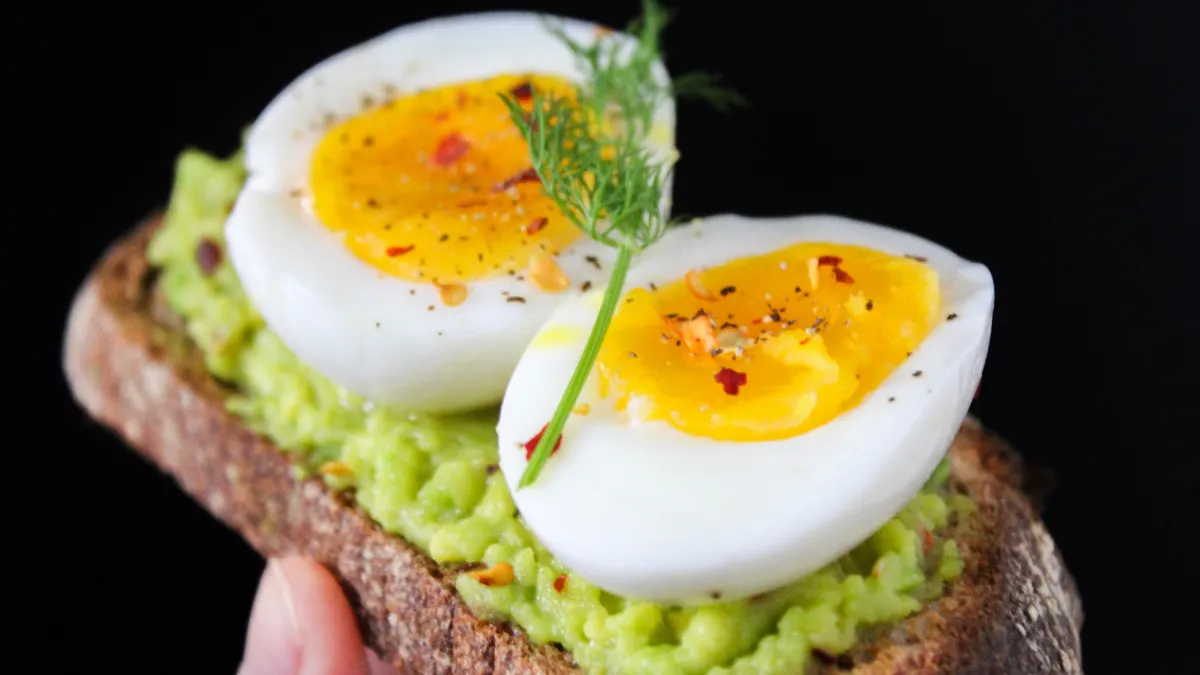
Use low heat, moisture, and short cook times, then stop before the eggs look fully firm. That is the simple rule behind most successful soft egg recipes for seniors beyond scrambled eggs.
- Start with a small, shallow vessel: Choose a 6-ounce ramekin, a standard muffin cup, or a 1-cup baking dish. The small size helps eggs set evenly in about 12 to 20 minutes, depending on the recipe. Verify that the dish is not crowded; if it is deeper than 1 inch, the center will lag and the edges may dry out. A problem sign is browned edges before the middle moves.
- Use 1 to 2 eggs for a single portion: Beat the eggs just until the yolks and whites are mixed. For a softer set, add a small amount of milk, cottage cheese, or yogurt rather than more egg. Verify that the mixture looks smooth, not foamy. A problem sign is a thick foam layer, which can bake into a spongy top.
- Keep the oven moderate, not hot: Bake in a 300°F to 325°F oven for custardy eggs, or use low stovetop heat with a covered pan. Verify that the surface trembles slightly in the center when you nudge the dish. A problem sign is a puffed top with visible browning, which usually means the eggs are already overcooking.
- Choose add-ins that do not bring extra water: If using spinach, cook it first and squeeze it dry; chop it finely before folding it in. If using cottage cheese, use a small curd variety if texture is a concern. Verify that the mixture is moist, not watery. A problem sign is liquid pooling at the bottom of the cup after baking.
- Stop early and rest briefly: Pull the dish when the center is still slightly loose, then let it sit for 2 to 5 minutes. Carryover heat finishes the set without drying the surface. Verify that the eggs finish as tender, not wet. A problem sign is a fully firm center in the oven, because it will usually end up dry on the plate.
- For egg bites, portion before baking: Divide the mixture into a muffin tin so each piece is about the same size. This helps them cook evenly and makes reheating simpler later. Verify that each cup is filled only about two-thirds full. A problem sign is overflow, which gives you a crusty rim and a dense center.
- For egg salad, chop and bind lightly: Mash or chop the hard-cooked eggs until the pieces are very small, then mix with a spoonful of yogurt or mayonnaise and enough seasoning to bring out flavor. Verify that the mixture holds together but still spreads easily on soft bread or can be eaten from a bowl. A problem sign is dry chunks that separate from the binder.
A good result looks moist, pale, and tender. It should not need sharp teeth to get through it, and it should not leave a dry, rubbery aftertaste. If you are making a batch, cool it promptly and refrigerate it in shallow containers so the texture does not keep cooking from trapped heat.
Soft egg bites with cottage cheese, yogurt, or spinach
Soft egg bites are one of the easiest options because they are portioned already and hold moisture better than a pan of scrambled eggs. They also work well with cottage cheese or yogurt, which adds body without making the dish heavy. Spinach can be folded in for color and a little vegetable content, as long as it is cooked and squeezed dry first.
A basic approach uses eggs plus a soft dairy ingredient in a blender or bowl, then bakes the mixture in a greased muffin tin. A blender makes the texture smoother, while hand-whisking leaves a slightly more layered bite. Neither method is wrong; the choice depends on whether a person prefers a uniform custard or a more obvious egg texture. If a smoother texture is the goal, blend until the mixture looks even and no curdled bits remain.
The practical benefit is that muffin cups make portioning simple for one person or a caregiver. One cup can be breakfast, two cups can be a larger meal, and the rest can be refrigerated for later. Reheat gently so the edges do not toughen. A microwave works if used in short bursts, but an oven or toaster oven at low heat preserves texture better.
The honest limitation is that egg bites can become rubbery if the oven runs too hot or if too much extra egg is used without enough moisture. They also do not suit everyone who wants a pure spoon-soft texture, because even a tender muffin cup still asks for a bit more chewing than a silky baked custard. If chewing is the main issue, a spoonable custard or very finely chopped egg salad may be the better choice.
For seasoning, keep salt modest and rely on herbs, pepper, onion powder, chives, or a little grated cheese if sodium is not a concern. This page is not the place for a heart-healthy breakfast casserole; those belong on a different page. Here, the goal is simple: soft, moist, easy to portion, and easy to recognize as food.
What egg dishes are easiest for seniors to chew?
The easiest egg dishes to chew are the ones that stay moist, hold a soft set, and do not create dry or rubbery bits. That usually means baked custard-style eggs, tender egg bites, and finely chopped egg salad rather than browned fried eggs or a dry omelet.
Soft baked eggs in a ramekin are often easier than skillet eggs because the heat is gentler and the portion is smaller. A custardy bake made with eggs and a little milk can stay spoon-tender when it is removed before the center fully firms. Egg bites are a close second because they are already portioned into small pieces and can include cottage cheese or spinach without creating a coarse texture. Egg salad can be very easy to chew if the eggs are chopped finely and the binder keeps the mixture from crumbling.
The main thing to avoid is a texture mismatch. A dish can be technically “soft” and still be unpleasant if it has dry edges, large chunks of white, or stringy spinach. A better standard is whether the food compresses easily between tongue and palate without much effort. That is why tiny portions matter: a 2-inch egg bite or a 6-ounce ramekin is easier to manage than a large, uneven bake.
A common mistake is to assume all soft egg dishes work the same way. They do not. A creamy egg salad is chilled and spoonable; a custard is warm and delicate; a muffin-cup egg bite is firmer but still tender. The right choice depends on the person’s chewing ability, whether warm food is preferred, and whether the meal needs to travel or be reheated later.
The mistakes that make soft eggs turn dry or hard
The most common mistake is cooking eggs as if color equals doneness. On eggs, color can fool you. A pale top does not mean the center is tender, and a browned edge often means the dish already crossed into dry territory. The fix is to watch for a slight wobble and remove the dish early, especially in a 300°F to 325°F oven.
Another error is using too much heat. High heat sets the outer layer quickly and squeezes out moisture before the center is ready. That gives you a tough border and a soft middle, which is the opposite of what most seniors want. Lower heat and a longer gentle bake work better for custardy eggs and egg bites.
A third mistake is leaving watery vegetables in the mixture. Spinach, mushrooms, and tomatoes can make the dish soggy if they are not cooked down first. The result is a loose custard with pockets of liquid. The fix is to cook and drain vegetables before folding them in, then keep the add-in amount modest.
A fourth mistake is overmixing. Beating eggs into a high foam traps air, which can make the finished texture spongy instead of tender. It can also collapse on cooling. A few brisk stirs are enough for most soft egg recipes.
A fifth mistake is making egg salad too dry. If the eggs are chopped coarsely and the binder is stingy, the result feels chalky. A small amount of yogurt or mayonnaise, plus very fine chopping, solves that. The dish should cling lightly to a spoon, not fall apart in dry shards.
When does the standard approach need to change?
The standard approach needs to change when swallowing, digestion, sodium limits, or food temperature become the real issue instead of texture alone. Soft egg dishes are flexible, but not every version belongs on every plate.
Frequent coughing or throat clearing with soft foods: This can mean the texture is still too risky for that person — stop improvising and get individualized swallowing guidance before serving egg dishes in the usual way.
Need for very low sodium: Many egg recipes rely on cheese, cured meats, or salted seasoning for flavor — consult a professional about a safe low-sodium plan, use plain eggs, herbs, and low-sodium fillings, and keep the cheese light or skip it if advised.
Poor tolerance for dairy: Milk, yogurt, and cottage cheese can improve softness, but they are not neutral for everyone — switch to an egg-and-vegetable custard without dairy if needed, or get tailored advice.
Chopped pieces are hard to manage: Egg salad with bits of white, onion, or spinach may be too busy in texture — move toward a smooth baked custard or very fine mash instead of a chunky mixture.
Reheating is required for later meals: Eggs can dry out fast in
Make soft eggs easier to use in everyday meals
Because the same egg base can serve breakfast, lunch, or a snack, soft egg recipes for seniors beyond scrambled eggs work best when the cook plans for leftovers. A 6-portion muffin tin, for example, gives one or two servings now and a few later. That keeps the cooking effort lower than making a fresh pan each time.
When a meal needs to travel, use a lidded container that keeps the eggs from bouncing around. A compact ramekin or a small divided box helps preserve the shape, and the food will hold better if it is not packed against wet fruit or a warm soup. If a person prefers breakfast later in the day, pre-portioning the food means the texture is already set before reheating.
For a fuller plate, pair the eggs with another soft item that does not fight the texture, such as toast that has been softened with a spread, oatmeal, or a mild fruit purée. The goal is not to build a complicated menu. It is to make soft eggs easy to eat without creating extra work or extra chewing.
A simple way to choose the right egg dish
Because no single texture works for everyone, the simplest decision tree is to match the dish to the person’s main limitation. If the issue is chewing, choose a custardy bake or a smooth egg bite. If the issue is portion control, use muffin cups or ramekins. If the issue is dry mouth, keep the recipe moist and avoid overbaking. If the issue is very specific swallowing guidance, follow that plan first and treat recipes as secondary.
That approach keeps Soft Egg Recipes for Seniors Beyond Scrambled Eggs useful without pretending that every soft egg dish is interchangeable. It also gives the cook a clear rule: softer does not always mean better, and firmer does not always mean safer. The best dish is the one that stays moist, is easy to manage, and fits the person sitting at the table.
For more background, the Cleveland Clinic overview of dysphagia and the NIH MedlinePlus page on eggs are useful starting points for readers who want to check the health side before they try a new recipe. See https://my.clevelandclinic.org/health/diseases/17790-dysphagia and https://medlineplus.gov/ency/article/002400.htm.
Drafted with AI; not yet reviewed by a person.