
Last updated: November 19, 2026
Key Takeaways
- A balanced lunch box usually starts with one protein, one fruit, one vegetable, and one grain.
- For seniors, packing means one main food group per compartment, then checking salt, texture, and ease of eating.
- Protein helps the meal feel complete and keeps the box from becoming bread plus fruit.
- The best fruits and vegetables for a senior lunch box are the ones that travel well, need little prep, and stay easy to eat.
A heart-healthy lunch box for seniors starts with lean protein, high-fiber plants, and a modest grain portion in a container that is easy to open. This guide to How to Build a Heart-Healthy Lunch Box for Seniors gives a simple formula for a real lunch, not a perfect menu.
Build the lunch box around the main question
Picture this: you’re standing at the counter with a sandwich, a yogurt cup, an apple, and a few crackers, and you want the lunch box to feel balanced without getting fussy. A good heart-healthy lunch box uses one protein, one fruit, one vegetable, and one grain as the base.
Because the lunch box itself sets the limits, a 3-compartment container keeps the parts separated, helps portion control, and makes the food look fuller without piling on salt or heavy sauces.
- Protein: tuna, chicken, egg, tofu, or plain yogurt
- Fruit: apple, pear, berries, orange slices, or melon
- Vegetable: carrots, cucumbers, cherry tomatoes, celery, or peppers
- Grain: whole-grain bread, whole-grain crackers, or a small wrap
The truth is, a senior lunch box fails when it turns into one giant starch-heavy meal. Sandwiches are fine. So are crackers. They just need company.
How do you pack a heart-healthy lunch box for seniors?
A heart-healthy lunch box for seniors is packed by filling each compartment with one main food group, then checking salt, texture, and ease of eating. The goal is a lunch that is simple to chew, easy to open, and not overloaded with sodium.
Start with the container first. A 4-compartment lunch box or a bento-style box gives each food its own space and keeps softer foods from crushing crisp ones. That matters for seniors who eat slowly, have weaker grip strength, or dislike a mixed-up lunch.
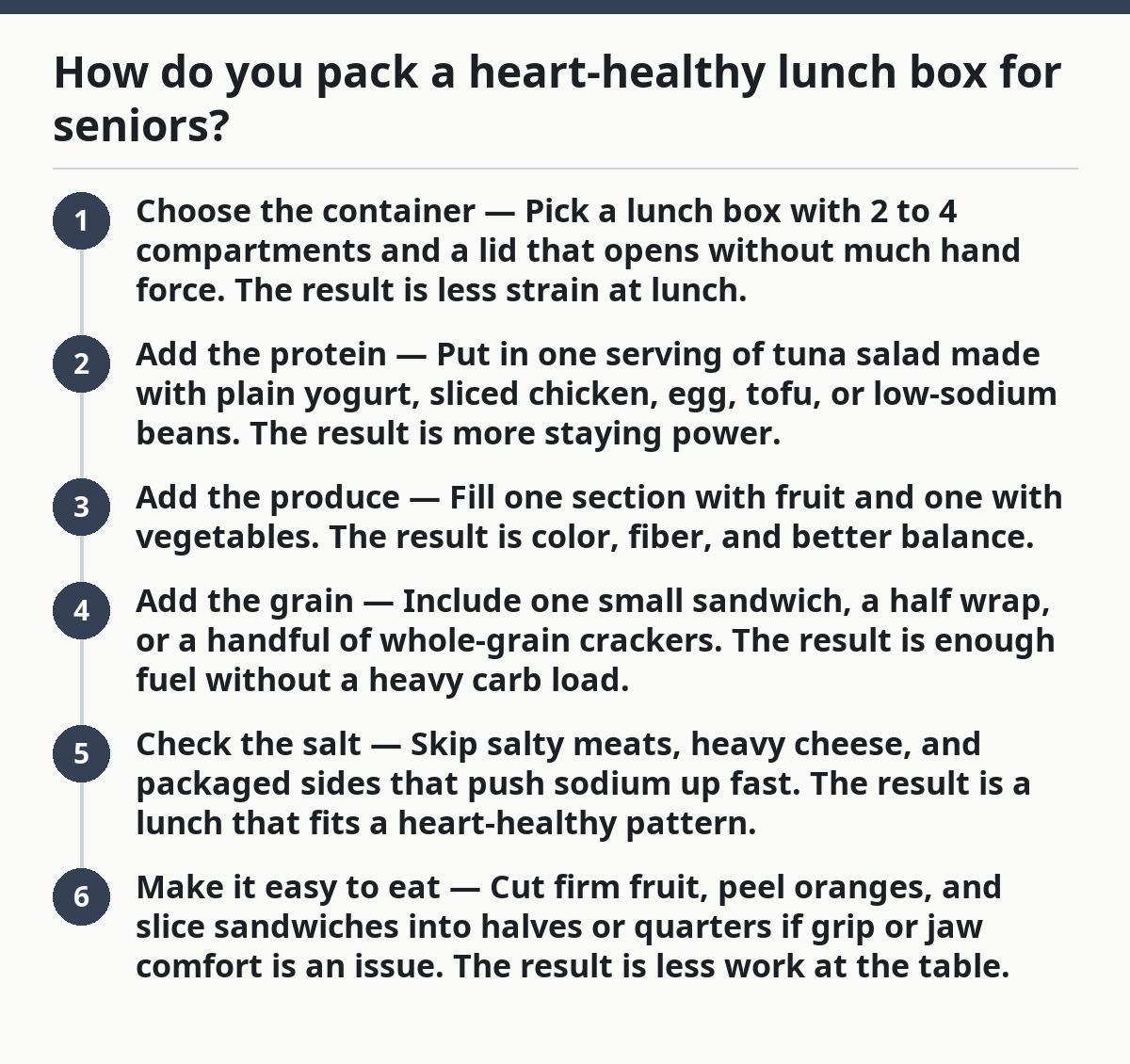
- Choose the container — Pick a lunch box with 2 to 4 compartments and a lid that opens without much hand force. The result is less strain at lunch.
- Add the protein — Put in one serving of tuna salad made with plain yogurt, sliced chicken, egg, tofu, or low-sodium beans. The result is more staying power.
- Add the produce — Fill one section with fruit and one with vegetables. The result is color, fiber, and better balance.
- Add the grain — Include one small sandwich, a half wrap, or a handful of whole-grain crackers. The result is enough fuel without a heavy carb load.
- Check the salt — Skip salty meats, heavy cheese, and packaged sides that push sodium up fast. The result is a lunch that fits a heart-healthy pattern.
- Make it easy to eat — Cut firm fruit, peel oranges, and slice sandwiches into halves or quarters if grip or jaw comfort is an issue. The result is less work at the table.
Here’s the catch: a lunch box can look healthy and still be too salty. Deli meats, cheese spreads, pickles, and seasoned crackers stack sodium fast, even when the box looks tidy.
What foods belong in the protein slot?
Protein belongs in the lunch box because it helps the meal feel complete and keeps the box from becoming bread plus fruit. For seniors, the best picks are foods that are easy to chew, easy to portion, and lower in sodium than processed lunch meats.
Good choices include egg salad with plain yogurt, low-sodium tuna, leftover chicken, tofu cubes, hummus, and plain Greek yogurt in a separate cup. A sandwich with sliced chicken on whole-grain bread works well too, as long as the filling is not piled with salty sauces.
Keep the serving practical. A single small sandwich, half a wrap, or one cup-sized yogurt container is usually enough for lunch. A giant portion can crowd out fruit and vegetables, while a tiny portion leaves the lunch box feeling thin.
- Better than deli ham: roasted chicken, egg, tuna, tofu
- Better than creamy salty spreads: plain yogurt, hummus, avocado
- Better than extra cheese: a second vegetable or fruit portion
On the flip side, smoked meats and very salty canned fillings are weak fits for a heart-healthy lunch box. They can make the whole meal feel heavy, and they drag the sodium count up before the fruit even gets touched.
Which fruits and vegetables work best?
The best fruits and vegetables for a senior lunch box are the ones that travel well, need little prep, and stay easy to eat. Crisp, bite-sized produce beats slippery or messy produce in most cases.
For a practical lunch, apples, pears, berries, grapes cut in half, orange segments, cucumber sticks, baby carrots, bell pepper strips, and cherry tomatoes all fit the job. These foods add fiber, color, and volume without making the box feel dense. A fruit-and-vegetable mix also helps the lunch feel finished, not like a snack tray.
A good rule is to make the produce part of the lunch box as visible as the sandwich. If it is hidden under the grain, it often gets skipped. If it is front and center, it gets eaten.
Since some produce works better with a dip, use a small cup if you need one. Plain yogurt dip, hummus, or mashed avocado can make vegetables more appealing without turning the meal into a salty side dish.
- Choose produce that can be eaten with fingers or a fork
- Cut hard fruit into thin slices or wedges
- Avoid big, messy pieces that soak the rest of the lunch
- Keep dried fruit small, since it concentrates sugar and can stick to teeth
This is also the section that makes a lunch box look generous without adding much salt.
How much grain does the lunch box need?
The lunch box needs a small grain portion, not a pile of bread or crackers. A heart-healthy lunch for seniors works best when the grain section supports the meal instead of taking it over.
Choose whole-grain bread, a small whole-wheat wrap, brown rice in a side cup, or a modest portion of whole-grain crackers. A sandwich can carry the grain and protein in one item, which is handy when appetite is smaller or hand strength is limited.
The trap is oversized starch. A giant roll, a double sandwich, or a large box of crackers can crowd out produce and protein. That makes the lunch look filling while missing the balance that helps the meal feel steady.
Use this simple check:
- One sandwich or half wrap for the grain and protein base
- One fruit portion
- One vegetable portion
- One small add-on like yogurt or a few crackers if there is room
A heart-healthy lunch box does not need a large grain section to work. It needs enough grain to make the meal satisfying, then enough room left for the parts that carry fiber and color.
Container compartments matter more than most people think
Container compartments matter because they shape how much food gets packed and how easy it is to eat. A lunch box with 2, 3, or 4 compartments makes it easier to keep salty foods, soft foods, and crisp foods from mixing into a soggy mess.
A good container also helps with grip and opening. Seniors with arthritis, reduced hand strength, or stiff fingers often do better with wider latches, lighter lids, and containers that do not require a tight twist. Non-toxic, food-safe plastic or stainless steel is a practical choice.
The wrong container can ruin a good lunch. A hard-to-open lid can make someone skip the protein cup. A tiny compartment can force oversized portions. A deep single tub can turn a neat lunch into a bowl of mixed mush.
Use these container features as your checklist:
- Wide opening for easy access
- Secure but not stiff latch
- Separate sections for wet and dry foods
- Flat shape that fits a fridge shelf or cooler bag
- Smooth interior that wipes clean easily
Not every lunch box is a good fit for every hand. A box that looks sleek online can be a bad choice if the latch takes too much force or the compartments are too shallow for real food. If grip, arthritis, or swallowing problems are part of the picture, it is sensible to check with a health professional or dietitian before choosing a container.
Common mistakes that make the lunch less heart-healthy
Common mistakes make the lunch box look packed while pushing sodium, saturated fat, or sugar higher than needed. Most of them come from convenience foods that seem harmless at first glance.
The biggest one is using deli meats as the main protein every day. That can raise sodium fast. Another is filling the box with crackers and bread while leaving out vegetables. A third is using sweet yogurt as the protein anchor, then adding juice and cookies on the side.
Here is the fix list:
- Swap deli meat for egg, chicken, tuna, tofu, or plain yogurt
- Swap chips for carrots, cucumber, or peppers
- Swap sweet yogurt for plain yogurt with fruit
- Swap a big grain portion for a smaller one with more produce
A soft lunch can be just as heart-friendly as a crisp one, but texture has to match the eater. If chewing is a problem, softer fruit, egg salad, yogurt, and tender chicken are better than raw apples and thick crusts.
A simple 5-part lunch box formula you can repeat
A simple formula helps when you pack lunch more than once a week. Build the box the same way each time: protein, fruit, vegetable, grain, and one small extra if needed.
Think of it like a lunch box grid. One section gets a sandwich or protein cup. One gets fruit. One gets vegetables. One gets crackers, a half wrap, or another small grain. If there is a fifth space, fill it with plain yogurt or a small dip.
The formula works because it keeps the meal from drifting toward one food group. It also makes shopping easier. You only need a few recurring items: bread, fruit, vegetables, protein, and a container with enough sections to hold them.
Linking this lunch box to the larger meal plan matters too. For more full meal ideas and ingredient combinations, see the hub on heart-healthy lunch recipes for seniors. That page handles the recipe side; this one stays with assembly. For broader nutrition guidance, the American Heart Association is a useful external reference on sodium and heart health.
- Repeat the same structure with different foods
- Keep the grain modest
- Keep the protein visible
- Keep salt low
- Keep the box easy to open
A lunch box built this way is plain, portable, and honest. That is the point.
What should go in a heart-healthy lunch box for seniors?
A heart-healthy lunch box for seniors should include a lean protein, a fruit, a vegetable, and a modest whole-grain item. A sandwich, yogurt, crackers, and cut produce fit well when the salt stays low. The best box is easy to open and simple to eat.
How do you balance a senior lunch box without using much salt?
You balance it by making protein, fruit, vegetables, and grain all show up in the box, then skipping salty meats, heavy cheese, and packaged sides. Plain yogurt, chicken, egg, tuna, beans, and whole grains do the job without leaning hard on sodium. Texture matters too, because easier foods get eaten.
Drafted with AI; not yet reviewed by a person.