Last updated: October 22, 2026
Key Takeaways
- Use a tight-lidded pot, 1 to 2 inches of water, a steamer basket, and evenly cut vegetables.
- Boil the water first and keep the vegetables above the waterline for even steaming.
- Broccoli florets, cauliflower florets, and thin green beans soften faster than thick carrots.
- A soft low-sodium diet can mean different textures for different people.
Steamed vegetables can fit a soft low-sodium diet when they are cooked until they yield easily to a fork, served plain or with a low-salt garnish, and matched to the person’s chewing and swallowing needs. This article on how to steam vegetables for a soft low-sodium diet starts with the basics and stays focused on that goal. Before you start, speak with a qualified professional about the diet itself if there is any swallowing difficulty, weight loss, or a medical reason for sodium restriction.
Who this method is for, and who should use something else

This method is for someone who needs vegetables that are tender, moist, and easy to chew without adding salt. It works best for people who can manage soft solids but do not need a fully puréed texture. Steamed vegetables are a good fit when the goal is to keep food recognizable, not soupy, and not crisp.
It assumes the reader has a pot with a lid, a steamer basket, a cutting board, and a knife. A collapsible stainless-steel basket or a bamboo steamer both work. A 2-quart to 4-quart saucepan is enough for a small batch, and a heatproof plate or bowl helps if the vegetables need to cool before serving. The basic method does not require broth, bouillon, or salted seasoning blends.
This is not the right approach for someone who needs a fully smooth texture because of a swallowing plan that calls for purées or thickened foods. It is also not the right answer if the vegetables are being cooked for a person who cannot manage skins, seeds, or fibrous strings. In those cases, the texture needs to change, not just the seasoning. A speech-language pathologist or other qualified clinician is the right person to guide that decision.
For a broader framework, this page fits within the larger set of low-sodium cooking methods for seniors.
What do I need before I start steaming?
You need a pot with a tight lid, 1 to 2 inches of water, a steamer basket, and vegetables cut to a size that will cook evenly. A medium carrot coin takes longer than a thin carrot slice; a broccoli floret cooks faster than a dense chunk of stem. Uneven cutting is one of the main reasons steaming fails.
Set out a knife, peeler, colander, tongs, and a fork. If the vegetables will be served with a little flavor, keep lemon, unsalted butter, olive oil, or herbs nearby. Lemon is especially useful because it adds brightness without sodium. It does not make the dish low-sodium by itself; it only helps the vegetables taste less flat.
Choose vegetables that soften well with steam: carrots, green beans, broccoli, and cauliflower are all common choices. Green beans work well when trimmed and cooked until limp-tender. Carrots need a little more time if they are thick. Cauliflower and broccoli become soft when the florets are small enough for steam to reach the center. Very large florets trap heat poorly and stay firm in the middle.
Wash the vegetables first. Peel carrots if the skin is thick or bitter. Trim tough ends from green beans. Remove thick broccoli stalks or peel and slice them if they will be used. The goal is even cooking, not just cleanliness. A bowl of mixed sizes will finish unevenly, with some pieces soft and others still resistant in the center.
How do you steam vegetables so they are soft but not mushy?
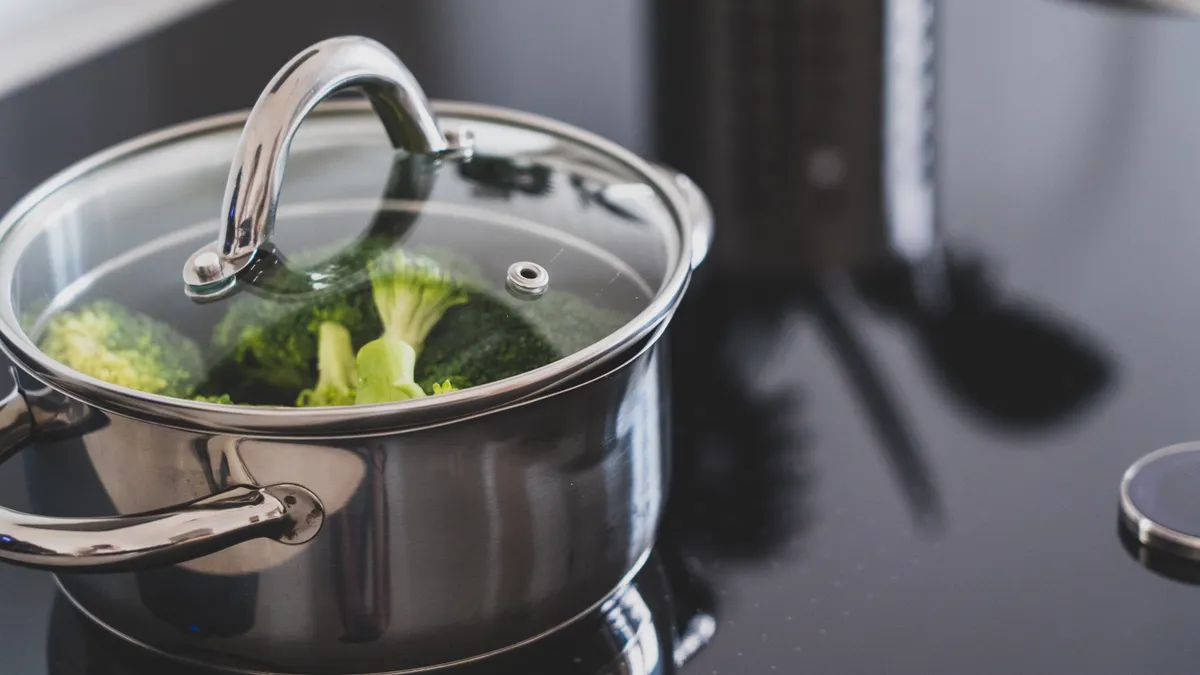
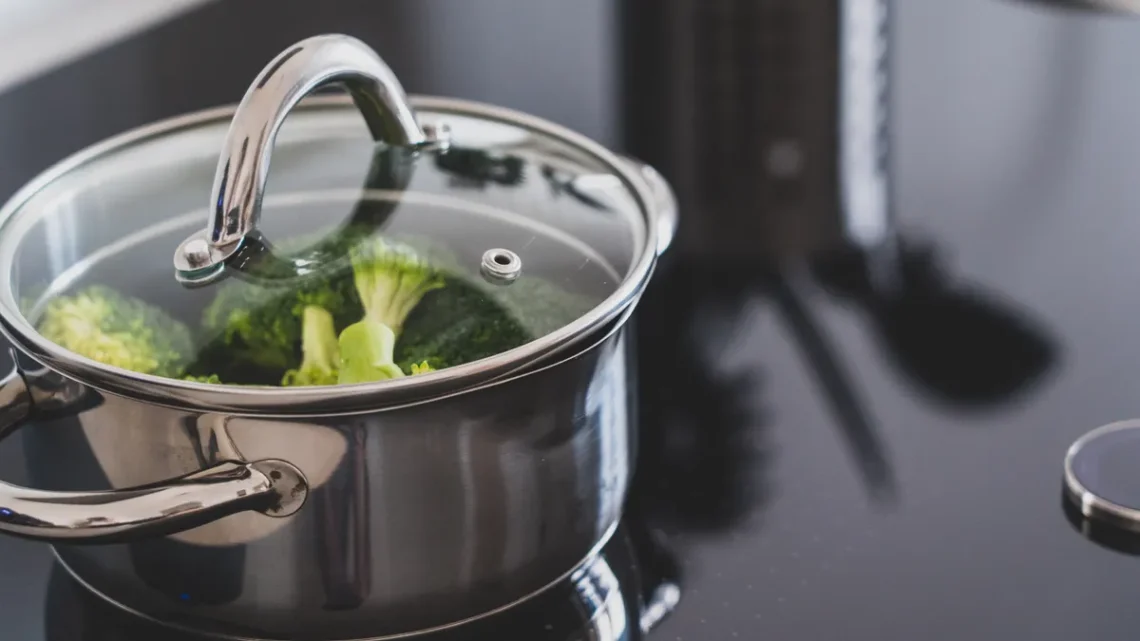
Start with boiling water, a basket that keeps the vegetables above the waterline, and pieces cut for even cooking. Steam works by hot vapor, not by submerging food, so the vegetables should sit in the basket, not in the water. If the water touches them, the texture often turns watery at the edges before the center is tender.
-
Fill the pot with 1 to 2 inches of water and bring it to a boil. The water should come close to the basket bottom without touching it. If the basket sits in water, the vegetables are being boiled, not steamed, and the texture may turn uneven.
-
Prepare the vegetables in uniform pieces. Cut carrots into 1/4-inch coins or half-moons, broccoli into small florets, cauliflower into similar-size florets, and green beans into 2-inch lengths if that suits the dish. The pieces should look similar in size; if one piece is much thicker, it will still be firm when the others are soft.
-
Place the vegetables in the basket in a single layer if possible. A light mound is acceptable, but a packed basket slows steam flow. If the pile is dense, the top pieces may stay underdone while the bottom pieces soften first.
-
Cover the pot tightly and reduce the heat to maintain a steady steam. A lid that fits well traps heat and moisture. If steam escapes heavily around the lid, the pot may need a tighter cover or a slightly lower flame to keep the water from boiling off too fast.
-
Steam until a fork slides in with little resistance. For many small broccoli or cauliflower florets, that may be a short cooking time; carrots usually need longer. Do not rely only on appearance. A vegetable can look bright and still be too firm for a soft diet. If the fork meets a hard center, keep cooking in 1- to 2-minute checks.
-
Check for the right softness by pressing gently with the back of a fork or spoon. The vegetable should compress easily without falling apart. If it turns to mush when touched, it has gone too far for a soft-texture plate and may need less time next round.
-
Remove the vegetables promptly and let excess moisture drain. Spread them on a plate or return them briefly to the empty basket with the heat off. If they sit in condensed water under the lid, they can turn soggy. Sogginess is not the same as softness; it usually tastes dull and looks waterlogged.
-
Season lightly after steaming, not before. A squeeze of lemon, a drizzle of olive oil, or a small amount of unsalted butter can improve flavor without adding sodium. If the vegetables taste flat even with lemon, the answer is usually more acid or herb flavor, not salt.
A good result looks soft, moist, and easy to mash lightly with a fork, while still holding a shape. If the vegetables fall apart into shreds, the steaming went too long. If they resist a fork in the center, they need more time.
Which vegetables steam to a soft texture quickly?
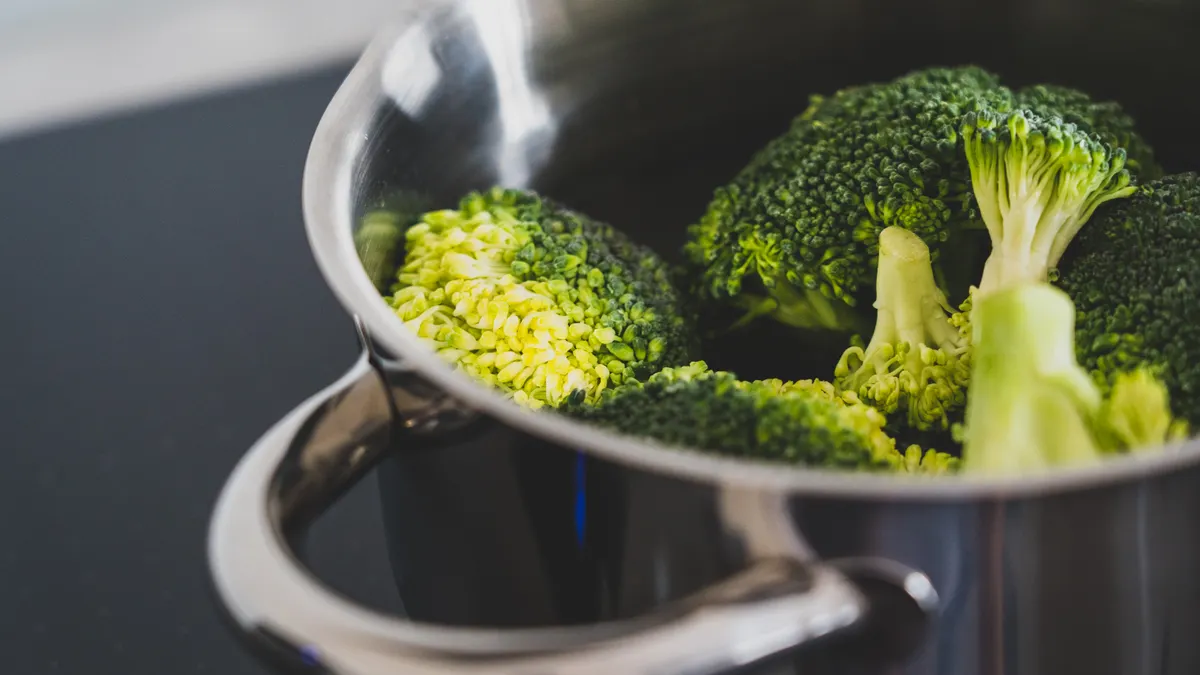
Broccoli florets, cauliflower florets, and thin green beans soften faster than thick carrots. The reason is simple: steam reaches the center sooner when the pieces are small and less dense. A basket of broccoli florets cut to about 1-inch clusters will usually finish sooner than carrots cut into thick rounds. Green beans are often among the quickest if they are trimmed and left whole or cut into 2-inch pieces.
Carrots are the most forgiving choice when the goal is a soft vegetable with a mild flavor, but they need more time than broccoli or cauliflower. Thick carrots can stay firm in the middle even when the outside looks done. Slicing them thinner helps. If the reader wants a dish that finishes in one basket at one time, carrots can be added first, then broccoli or cauliflower later.
Cauliflower softens into a very tender texture when the florets are small and the stems are trimmed. Broccoli stems can be steamed too, but they should be peeled and sliced because the outer layer is fibrous. The stem is often wasted when it does not need to be; once peeled, it steams into a soft, mild piece that fits well on a low-sodium plate.
When should I stop using the basic steaming method?
Stop and use a different texture when the vegetables are still too firm after a reasonable steaming time, when the person needs food that is smooth rather than soft, or when the vegetables do not match the swallowing plan. A soft low-sodium diet is not one texture for everyone.
Signs of chewing fatigue or choking risk: This means the soft texture may still be too challenging — stop and follow the diet guidance from a qualified professional instead of simply cooking longer.
The vegetables need to be swallowed without chewing: This means steaming is the wrong tool — move to a puréed or otherwise prescribed texture rather than trying to force soft vegetables to fit.
Fibrous pieces remain tough after steaming: This means the cut was too large or the vegetable choice was poor for this method — trim, slice thinner, or choose a softer vegetable.
The vegetables are turning watery and collapsing: This means the pieces are overcooked — shorten the steaming time next round and check earlier.
The person cannot tolerate skins, seeds, or stringy bits: This means the prepared vegetable still has hard-to-manage parts — peel, seed, or switch to a smoother preparation that matches the diet plan.
The meal plan allows very little salt but the food tastes unpleasant without it: This means the issue is flavor balance, not texture — use lemon, herbs, or a small amount of fat rather than adding salt by habit.
What are the most common mistakes with steamed vegetables?
The most common mistake is cutting vegetables into mixed sizes. A basket with 1/2-inch carrots and 1-inch carrots will finish unevenly, which leaves some pieces tough and others overcooked. The fix is to cut everything in similar dimensions before the pot goes on the stove.
Another mistake is overcrowding the basket. When vegetables are packed too tightly, steam cannot circulate and the top layer may stay firmer than the bottom. The correction is to steam in two batches or use a larger basket. A single layer is ideal when the goal is even softness.
A third mistake is starting the timer too late. People often wait until the vegetables look “close” before checking. That usually leads to overcooking because carryover heat keeps softening them after the burner is off. Check early, then check again in 1- to 2-minute intervals.
A fourth mistake is adding salt or salty seasoning blends out of habit. On a low-sodium diet, that defeats the purpose of the method. The better alternative is lemon juice, zest, garlic-infused oil, dill, parsley, or a small pat of unsalted butter. These change the taste without loading the dish with sodium.
A fifth mistake is steaming vegetables until they look glossy and assume they are done. Shine is not tenderness. A fork test is more reliable. If the fork catches in the center, the vegetable needs more time.
A sixth mistake is forgetting that some vegetables need prep before steaming. Broccoli stems, cauliflower cores, and thick carrot ends can stay firm unless trimmed or sliced. Skipping that step costs texture and makes the plate harder to eat.
How do you add flavor to steamed vegetables without salt?
Lemon is the simplest low-sodium finish because it sharpens flavor and makes vegetables taste brighter. A squeeze added after steaming works better than boiling lemon juice with the vegetables, which can flatten the flavor. Lemon zest also gives more aroma than juice alone, especially on broccoli and cauliflower.
A small amount of fat helps too. Unsalted butter, olive oil, or a mild herb oil gives steamed vegetables a softer mouthfeel, which can be useful on a soft diet. The amount is a culinary choice, not a medical one; the key point is that the flavor should come from fat, acid, herbs, or aromatics rather than salt.
Fresh herbs such as dill, parsley, thyme, or chives can be added after steaming or finely chopped into a finishing drizzle. Garlic powder can work if it is unsalted and the person tolerates it. For a very gentle plate, keep the seasoning simple: lemon, olive oil, and a pinch of pepper if allowed by the diet plan.
For a soft low-sodium meal, plain steamed vegetables can sit beside mashed potatoes, soft grains, or tender protein. The vegetables do not need to be the star. They need to be soft, moist, and acceptable to eat. That standard is practical, not fancy.
How do I know the vegetables are soft enough?
They are soft enough when a fork goes in with little resistance and the piece keeps its shape instead of springing back. That is the clearest home test. The texture should be tender enough to mash lightly with the side of a fork, but not so soft that it dissolves as soon as it is touched.
Carrots usually need the most checking because their density varies by width and age. Broccoli and cauliflower can go from crisp to soft quickly once the steam gets into the center, so they should be checked sooner than people expect. Green beans should be tender and bend easily, without a raw snap in the middle.
If the vegetables will be served to someone with a medically prescribed soft diet, the texture should stay within the plan and be as soft as needed for that person. That usually means checking a sample piece from the middle of the basket, not just the edge. Edge pieces cook first and can give a false sense of doneness.
FAQ
How long should vegetables be steamed for seniors?
The right steaming time depends on cut size, vegetable type, and the texture the diet allows. Small broccoli or cauliflower florets soften faster than thick carrot slices, and green beans usually fall somewhere in between. A fork test is more reliable than a fixed clock because the same vegetable can cook at different speeds depending on how it is cut.
Which vegetables steam to a soft texture quickly?
Broccoli florets, cauliflower florets, and trimmed green beans usually soften faster than carrots. Small pieces cook more evenly and need less time in the steamer basket. Dense vegetables, thick stalks, and large chunks take longer and are more likely to stay firm in the center if they are not cut down first.
How do you add flavor to steamed vegetables without salt?
Lemon, herbs, and a small amount of unsalted fat are the simplest options. A squeeze of lemon after steaming brightens broccoli, cauliflower, carrots, and green beans without sodium. Olive oil, unsalted butter, parsley, dill, or chives can round out the flavor. If a food still tastes flat, the answer is usually acid or aroma, not more salt.
Drafted with AI; not yet reviewed by a person.