Last updated: November 19, 2026
Quick Answer: 4 practical breakfast recipes cover most make-ahead heart-healthy breakfast needs for seniors and caregivers. Make-Ahead Heart-Healthy Breakfast Recipes for Seniors should be easy to portion, simple to reheat, and gentle on sodium and saturated fat. The most useful options are foods that hold up in the refrigerator or freezer for 3 to 4 days, travel well in freezer containers, and can be warmed in a microwave without drying out.
Key Takeaways
- A make-ahead breakfast for seniors should stay soft, taste good after chilling, and be easy to eat.
- I build a week of breakfasts by choosing 2 base recipes, dividing them into single portions, and setting aside one refrigerator portion plus one freezer backup for each person.
- Muffins, egg bites, overnight oats, and baked oatmeal are practical make-ahead heart-healthy breakfast recipes for seniors because they reheat well.
- I store breakfast meal prep in the refrigerator for 3 to 4 days and reheat only the portion I need in the microwave or oven.
What makes a good make-ahead breakfast for seniors?
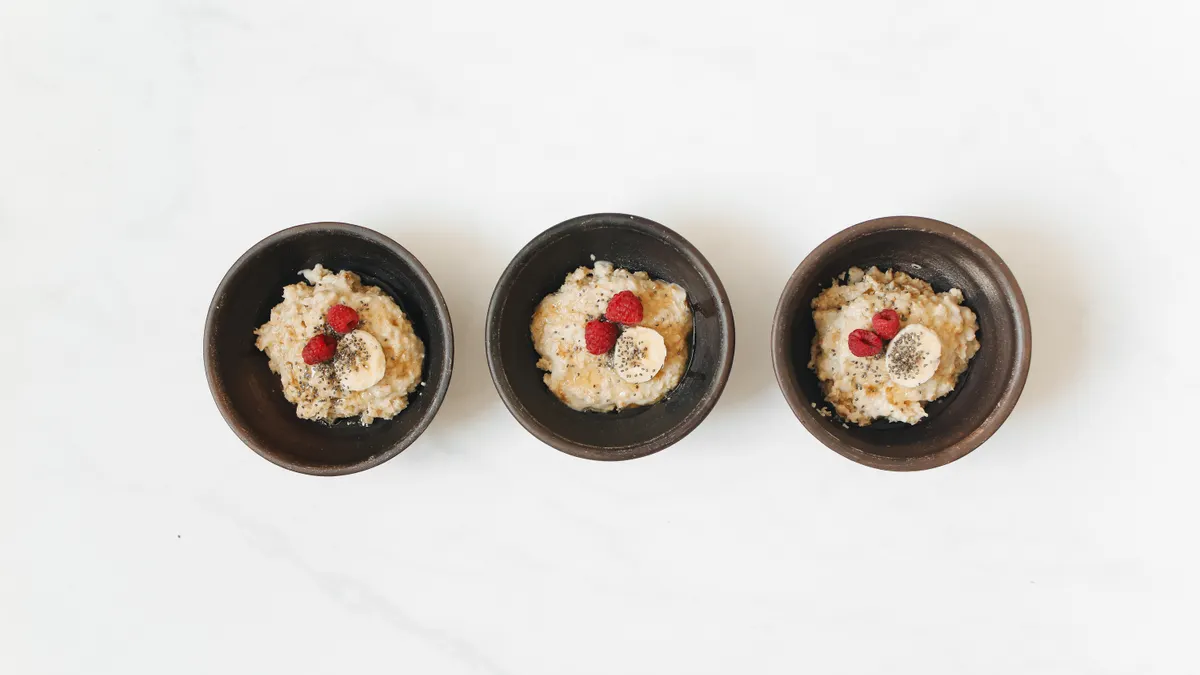
A good make-ahead breakfast for seniors is one that stays soft, tastes good after chilling, and does not need much work at the table. That usually means muffins, egg bites, baked oats, and overnight oats with fruit, nuts, or seeds, all packed in single servings. For more meal-prep ideas, the senior meal planning guide and soft foods for seniors pages can help.
The heart-healthy part is about the ingredients and the portion size. I would favor oats, fruit, plain yogurt, eggs, beans, nuts, seeds, and whole grains, then keep butter, heavy cream, processed meat, and salty cheese to a minimum. If a recipe depends on bacon, sausage, or a thick blanket of cheese to taste good, it is usually not the right fit for this job.
This kind of breakfast is especially useful when mornings are hard. A caregiver can prep 4 to 6 breakfasts at once, label the containers, and keep the next few mornings calm. That matters more than making something fancy.
One trade-off is texture. Food that tastes best fresh, like toast with a crisp edge or fried eggs with runny yolks, usually loses something in the fridge. I would skip those recipes here. They are not bad foods; they are just poor make-ahead choices.
For a broader list of ideas, the hub on heart-healthy breakfast recipes for seniors belongs one step up from this page.
How do I build a week of breakfasts without wasting food?
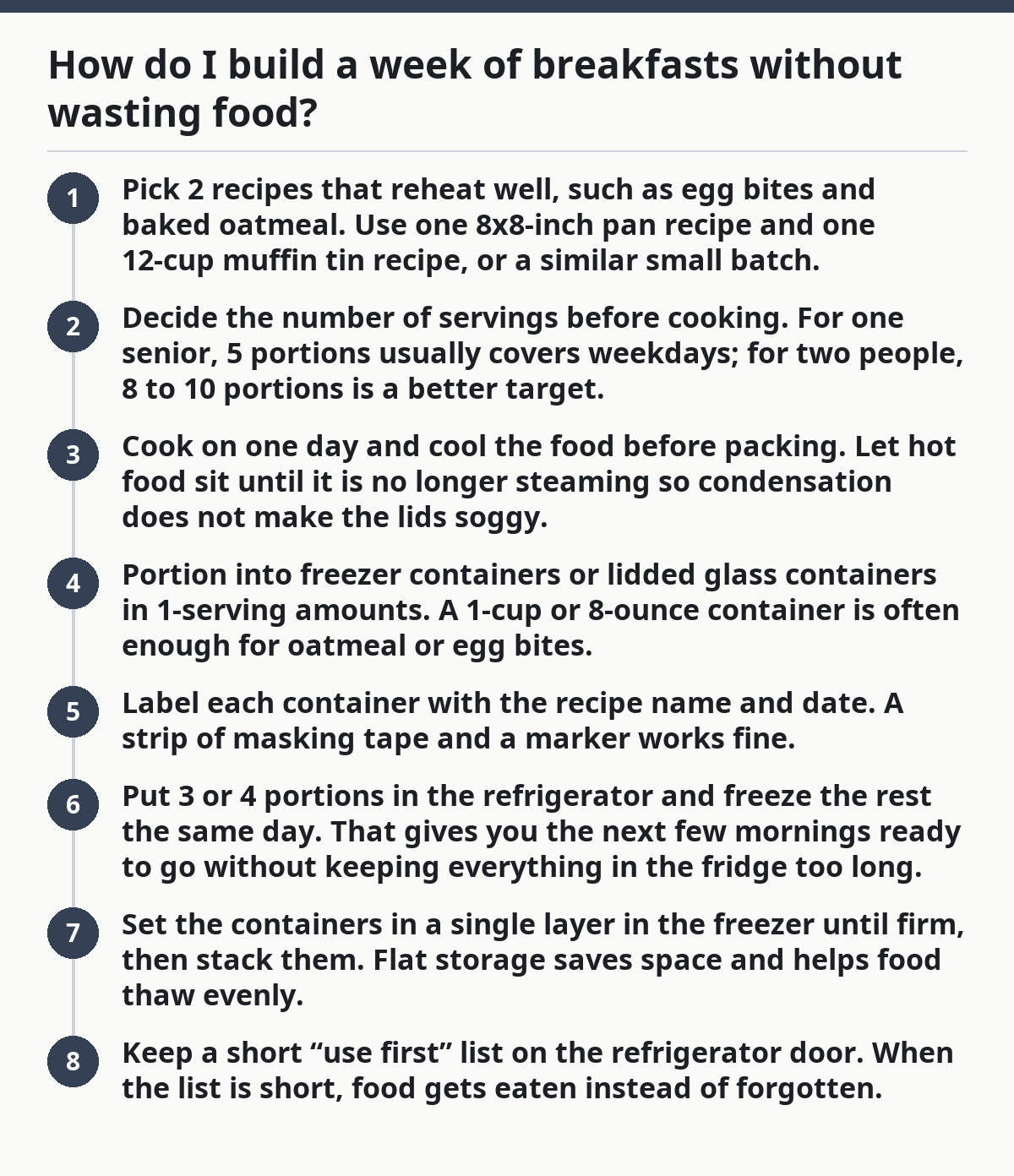
I build a week of breakfasts by choosing 2 base recipes, dividing them into single portions, and setting aside one refrigerator portion plus one freezer backup for each person. That keeps the plan realistic and cuts down on spoilage.
Here is the simplest system:
- Pick 2 recipes that reheat well, such as egg bites and baked oatmeal. Use one 8×8-inch pan recipe and one 12-cup muffin tin recipe, or a similar small batch.
- Decide the number of servings before cooking. For one senior, 5 portions usually covers weekdays; for two people, 8 to 10 portions is a better target.
- Cook on one day and cool the food before packing. Let hot food sit until it is no longer steaming so condensation does not make the lids soggy.
- Portion into freezer containers or lidded glass containers in 1-serving amounts. A 1-cup or 8-ounce container is often enough for oatmeal or egg bites.
- Label each container with the recipe name and date. A strip of masking tape and a marker works fine.
- Put 3 or 4 portions in the refrigerator and freeze the rest the same day. That gives you the next few mornings ready to go without keeping everything in the fridge too long.
- Set the containers in a single layer in the freezer until firm, then stack them. Flat storage saves space and helps food thaw evenly.
- Keep a short “use first” list on the refrigerator door. When the list is short, food gets eaten instead of forgotten.
A caregiver does not need a complicated meal-prep block to make this work. Thirty to 45 minutes of active prep can set up several breakfasts if the recipe choices are sensible. The mistake is cooking too much variety at once. Four different recipes sound generous, but they create more labeling, more guesswork, and more leftovers that linger past their best window.
Make-Ahead Heart-Healthy Breakfast Recipes for Seniors That Actually Hold Up
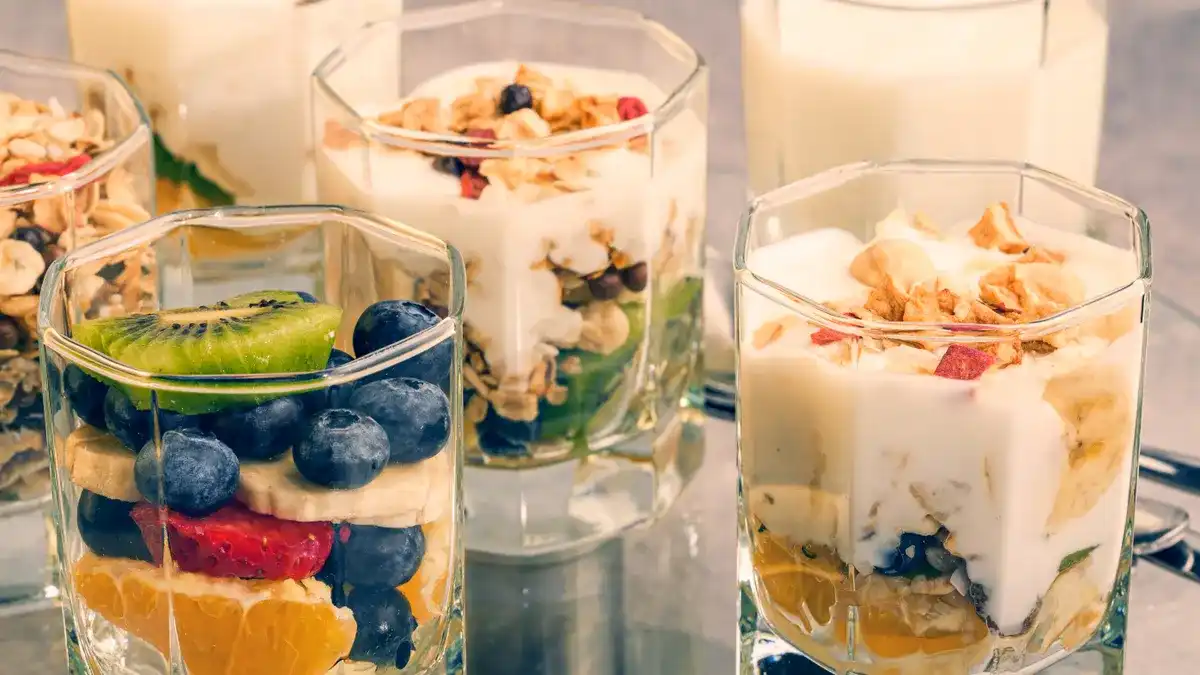
The most reliable Make-Ahead Heart-Healthy Breakfast Recipes for Seniors are muffins, egg bites, overnight oats, and baked oatmeal because they stay edible after chilling and reheat cleanly. I would start with those four before trying anything more delicate.
Muffins
Use whole-grain flour, oats, grated apple, berries, zucchini, or mashed banana for moisture. A muffin tin makes the portioning easy: 1 muffin can be a light breakfast, while 2 muffins can replace a larger bowl of cereal. Keep the sugar modest and skip glazes or streusel toppings that turn sticky in storage.
Muffins work well for freezer breakfasts because they thaw fast and do not need a fork. Their drawback is that they can become dry if overbaked. Pull them when a toothpick comes out with a few moist crumbs, not when they are browned hard all over.
Egg bites
Egg bites are one of the easiest options for seniors who want protein without much chewing. Bake them in a mini muffin pan or a standard muffin tin, ideally with chopped spinach, tomatoes, mushrooms, or a small amount of low-sodium cheese. They usually reheat well in 20 to 40 seconds in a microwave, depending on size and power.
The downside is rubberiness if they are overcooked. Bake just until set. If they puff and then collapse a little, that is normal.
Overnight oats
Overnight oats are a strong make-ahead choice for a cold breakfast. Mix rolled oats with milk or unsweetened fortified soy milk, then add chia seeds, cinnamon, berries, or diced pear. A 1-cup jar or container is a sensible single serving.
They are not ideal for someone who dislikes cold breakfasts or needs a more traditional warm meal. They also need enough liquid; otherwise, they turn gluey. If the mixture is thick the next morning, stir in a spoonful or two of milk.
Baked oatmeal
Baked oatmeal sits between a casserole and a soft bar, which makes it easier for many seniors to chew than a crisp granola bar. It can be cut into squares and packed in 6 or 8 portions from one pan.
This is the recipe I would reach for when I want something that feels filling but not heavy. The caution is that it can dry out on the edges, so cover the pan while it cools and store portions with a little fruit on the side if possible.
For a practical source on heart-smart ingredients, the American Heart Association has guidance on building meals with more fiber and less saturated fat, and the National Institute on Aging has nutrition advice for older adults.
How should I store and reheat breakfast meal prep safely?
I store breakfast meal prep in the refrigerator for 3 to 4 days and reheat only the portion I need in the microwave or oven. That keeps texture better than warming the whole batch every morning.
Use shallow containers so food cools quickly and thaws evenly. Glass containers with tight lids are useful for fridge storage, while freezer containers or freezer bags work better for items that will sit longer. For eggs, oats, and muffins, I like portions that are easy to grab with one hand and open without a fight.
A few practical rules help more than fancy equipment:
- Cool food before sealing it. Hot food in a closed container sweats and softens bread, muffins, and toppings.
- Freeze extras the same day if you will not use them within 4 days.
- Thaw overnight in the refrigerator when possible. That makes reheating more even.
- Reheat until the food is hot throughout, then let it stand for a minute. Microwaves have hot spots, so a brief rest helps the heat spread.
- Stir overnight oats after chilling. The top layer often thickens more than the bottom.
For the microwave, use a lower power setting if food gets tough quickly. A 50% or 70% setting for a longer time often works better than a high-power blast. Egg bites can go from tender to rubbery in seconds, so I would start with 20 to 30 seconds, then add more if needed. Muffins usually need only a short warm-up, while baked oatmeal can take longer if it was chilled solid.
A real drawback here is food safety confusion. If a container smells off, has visible mold, or sat in the refrigerator much longer than 4 days, toss it. No breakfast is worth risking a sick day.
What should caregivers portion first when mornings are rushed?
Caregivers should portion the most fragile foods first and save the sturdiest foods for later in the week. That means soft fruit, yogurt-based toppings, and any fresh add-ons go into the first 1 to 2 days, while muffins, baked oatmeal, and frozen egg bites can cover the rest.
The easiest way to do this is with a simple order of operations:
- Make the main breakfast base in 5 to 10 portions.
- Divide the food into 1-serving containers right away.
- Put the best-textured servings in the refrigerator for the next 2 mornings.
- Freeze the remaining servings in freezer containers.
- Add a side item only if it is practical: a banana, a small apple, or a carton of unsweetened yogurt.
- Keep a written note of who gets what, especially if one person needs lower sodium or softer textures.
This is the point where meal prep either helps or becomes another chore. If the caregiver has to remember which container belongs to which person, the system is too complicated. Color-coded lids, sticky notes, or initials on tape can save a lot of back-and-forth.
I would not use this approach for someone who needs a very strict therapeutic diet without guidance. If a senior has diabetes, kidney disease, swallowing problems, or a doctor’s specific diet order, the recipe needs to match that plan. The make-ahead method still helps, but the ingredients and textures may need professional input.
The National Institute on Aging has practical food and nutrition guidance for older adults, and the American Heart Association is a useful reference for heart-healthy ingredient choices.
Which common mistakes make these breakfasts less healthy or less useful?
The most common mistakes are too much sodium, too much sugar, and recipes that get soggy before breakfast. Those mistakes cost taste, texture, and often the whole point of meal prep.
Salt is the first trap. Packaged sausage, salty cheese, canned soup in savory bakes, and seasoning blends can push sodium up fast. If a recipe already tastes complete before you add extra salt, that is usually enough. Use herbs, pepper, cinnamon, vanilla, citrus zest, or unsalted nuts instead.
Sugar is the second trap. Sweet muffins can turn into dessert in disguise if the batter leans heavily on sugar, icing, or sweetened yogurt. Fruit helps, but fruit should not be covered up by a sugar load that wipes out the benefit.
The third trap is bad packaging. A loose lid in the refrigerator leads to dry edges and fridge odors. A too-small container crushes muffins and egg bites. A container that is much too large leaves too much air around the food and speeds up staleness. For single servings, use a container that fits the portion closely.
The fourth trap is ignoring the person who will eat it. A recipe that needs a knife, a lot of chewing, or a long standing time at the stove may be fine on paper and useless in real life. For many seniors, the quickest breakfast is the one that can be warmed in the microwave in under 2 minutes and eaten from a bowl or plate without extra effort.
What is the easiest heart-healthy breakfast to reheat?
Egg bites are the easiest heart-healthy breakfast to reheat because they warm fast in the microwave and keep their shape in the refrigerator or freezer. They usually need only 20 to 40 seconds if refrigerated, or a little longer if frozen and thawed first.
That said, “easiest” is not the same as “best for everyone.” A person who dislikes eggs will not stick with egg bites for long. In that case, baked oatmeal is the next easiest choice because it reheats well in a microwave-safe bowl and can be topped with fruit after warming.
If I had to choose a single backup breakfast for a caregiver’s freezer, I would pick egg bites first and baked oatmeal second. Muffins come in close behind, especially for someone who wants food that can be eaten with one hand and no utensils.
The best part of this system is not the recipe itself. It is the repeatable routine: cook once, portion clearly, refrigerate 3 to 4 days’ worth, freeze the rest, and reheat only what will be eaten. That is what makes a breakfast plan sustainable.
What breakfast recipes can be made ahead for seniors?
Muffins, egg bites, overnight oats, and baked oatmeal are the most practical make-ahead choices for seniors. They store well, portion cleanly, and can be adjusted for softer textures and lower sodium. If the recipe needs a fork, a microwave, and a 1-serving container, it usually fits this job.
How long can breakfast meal prep last in the fridge?
Most breakfast meal prep keeps well in the refrigerator for 3 to 4 days. After that, quality drops and the risk of spoilage rises. I would freeze any extra portions the same day you cook them, especially egg-based dishes and grain dishes that will not be eaten by day four.
What is the easiest heart-healthy breakfast to reheat?
Egg bites are usually the easiest to reheat. They go from fridge to microwave in under a minute and hold their shape well. If someone prefers a softer, more filling option, baked oatmeal is the next simplest choice because it reheats evenly in a bowl.
Drafted with AI; not yet reviewed by a person.