Last updated: November 19, 2026
Quick Answer: A heart-healthy lunch for seniors with arthritis is easiest to manage when it is soft, compact, and packed in a wide, easy-open container. This guide on How to Make Heart-Healthy Lunches Easier to Eat for Seniors With Arthritis focuses on foods, containers, and prep steps that lower hand strain.
Key Takeaways
- Easy lunch foods stay on a fork, fit in one bite, and need little grip.
- Breaking lunch prep into 5- to 10-minute steps can reduce hand strain.
- Wide mouths, light lids, and easy closures are usually simpler to open.
- One-handed lunches work best when the food holds together and does not spill.
Easy-to-handle lunch foods: what to put on the plate first
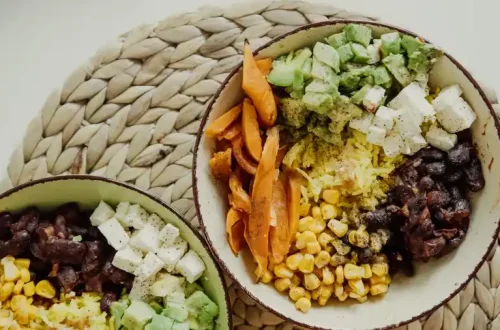
Easy-to-handle lunch foods are the ones that stay put on a fork, fit in one bite, and do not need much grip. Picture this: you’re trying to eat lunch at the table with stiff fingers, sore thumbs, and a plate that keeps sliding. The answer is to build the meal around fork-friendly foods, wraps, finger foods, soft fruit, and plated meals that hold together without a fight.
The lunch works best when the base is soft enough to bite through without falling apart. Think cooked vegetables, beans, tender fish, egg salad, yogurt-based chicken salad, avocado, or soft fruit such as ripe melon, peeled peach slices, or berries. These foods need less cutting and less pinching. A small sandwich or wrap can work too, as long as it is cut into easy-to-grab sections and not overfilled.
Keep the plate simple. One protein, one soft fruit or vegetable, and one starch is enough. A whole-grain wrap with tuna salad, sliced cucumber, and berries is easier to manage than a piled-high deli sub. That matters because large, loose fillings slide out of the bread and force extra hand work.
What usually goes wrong? Dry chicken breast, crumbly crackers, and stringy vegetables. They make the meal harder to spear, scoop, and swallow in neat bites. Swap them for moist, compact foods instead.
- Best shapes: wedges, thick slices, or bite-size pieces
- Best textures: soft, moist, and cohesive
- Best tools: a fork, spoon, or wide-grip cutlery
For a broader plan that fits this page’s focus, the hub on [heart-healthy lunch strategies for seniors] can help with the bigger lunch routine.
How can seniors with arthritis prepare lunch more easily?
Seniors with arthritis can prepare lunch more easily by cutting the work into short, 5- to 10-minute steps and using tools that do not demand a hard pinch. Picture yourself at the counter with a cutting board that slips, a jar that won’t budge, and fingers that do not want to bend. The fix is non-slip prep, simple tools, and ingredients that reduce chopping.
Start with a stable setup. Put a damp towel or non-slip mat under the cutting board so it does not skate across the counter. Use a chef’s knife with a thicker handle if possible, and keep a bench scraper nearby to move chopped food without using fingertips. If a lid is the problem, choose containers with easy-open lids instead of tight snap tops.
Here’s the catch: prep gets harder when every ingredient needs fine hand work. That is why pre-washed greens, canned beans, rotisserie chicken, pouch tuna, and pre-sliced fruit can be a smart shortcut. They cut the number of grips, twists, and repeated cuts.
A simple routine helps more than fancy recipes.
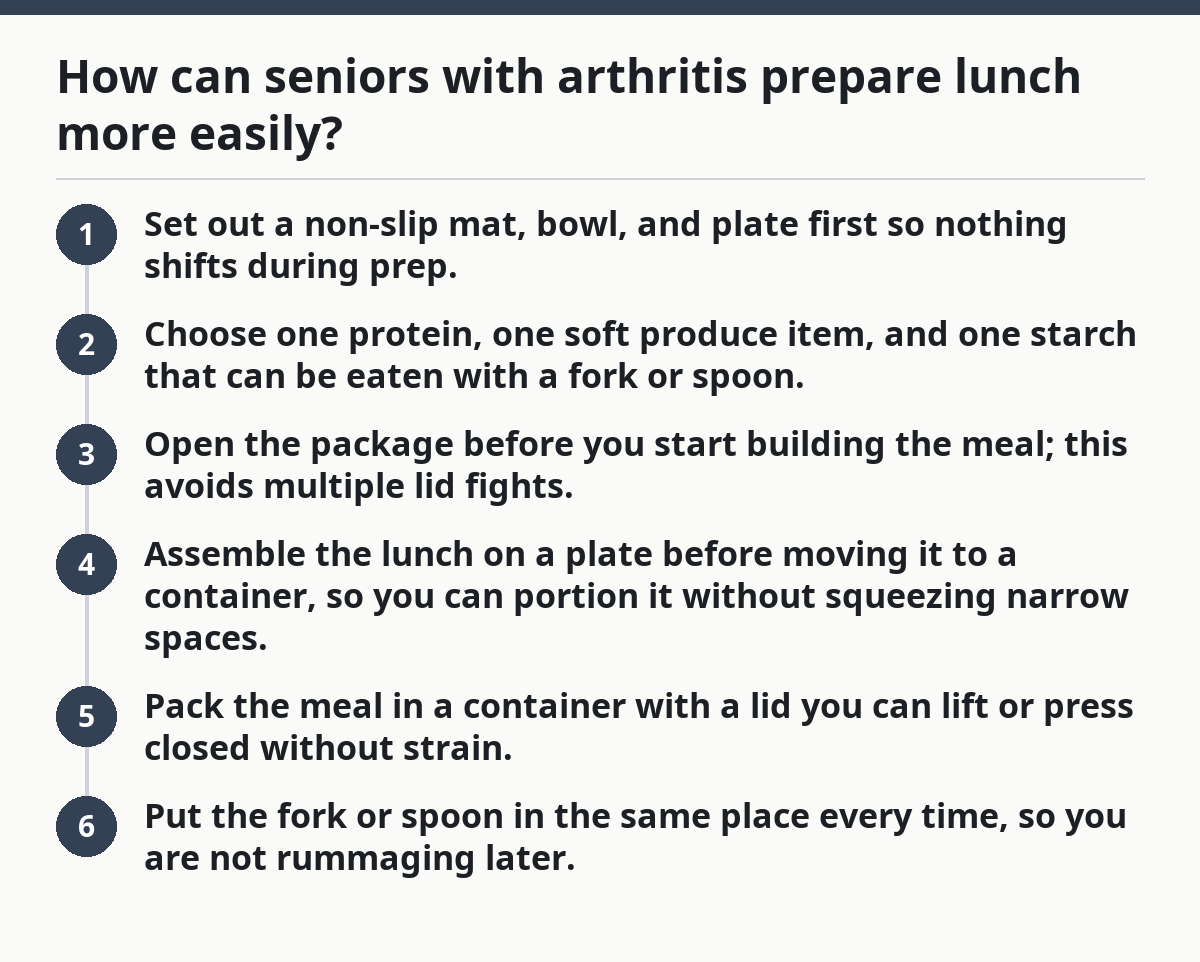
- Set out a non-slip mat, bowl, and plate first so nothing shifts during prep.
- Choose one protein, one soft produce item, and one starch that can be eaten with a fork or spoon.
- Open the package before you start building the meal; this avoids multiple lid fights.
- Assemble the lunch on a plate before moving it to a container, so you can portion it without squeezing narrow spaces.
- Pack the meal in a container with a lid you can lift or press closed without strain.
- Put the fork or spoon in the same place every time, so you are not rummaging later.
That routine works because it reduces the number of hand jobs in the kitchen. It also keeps the food in shapes that are easier to eat later. A lunch made in 10 minutes and packed in one easy-open container is usually better than a “healthier” lunch that leaves your hands sore before noon.
What kind of containers are easiest to open and use?
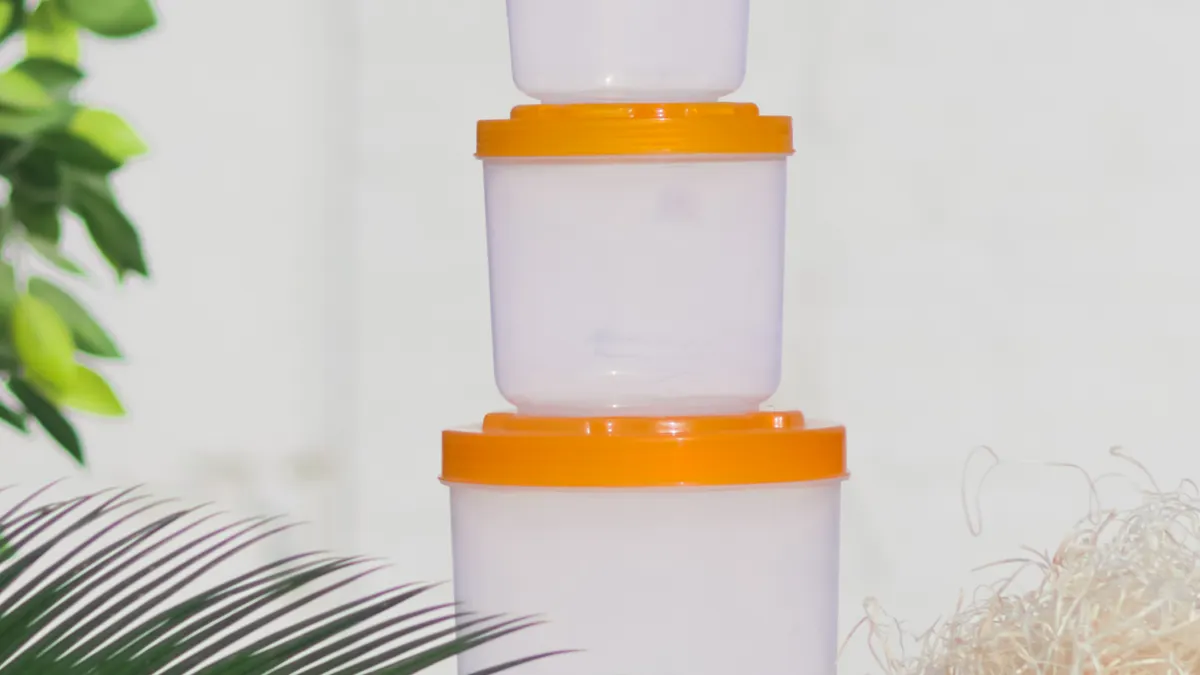
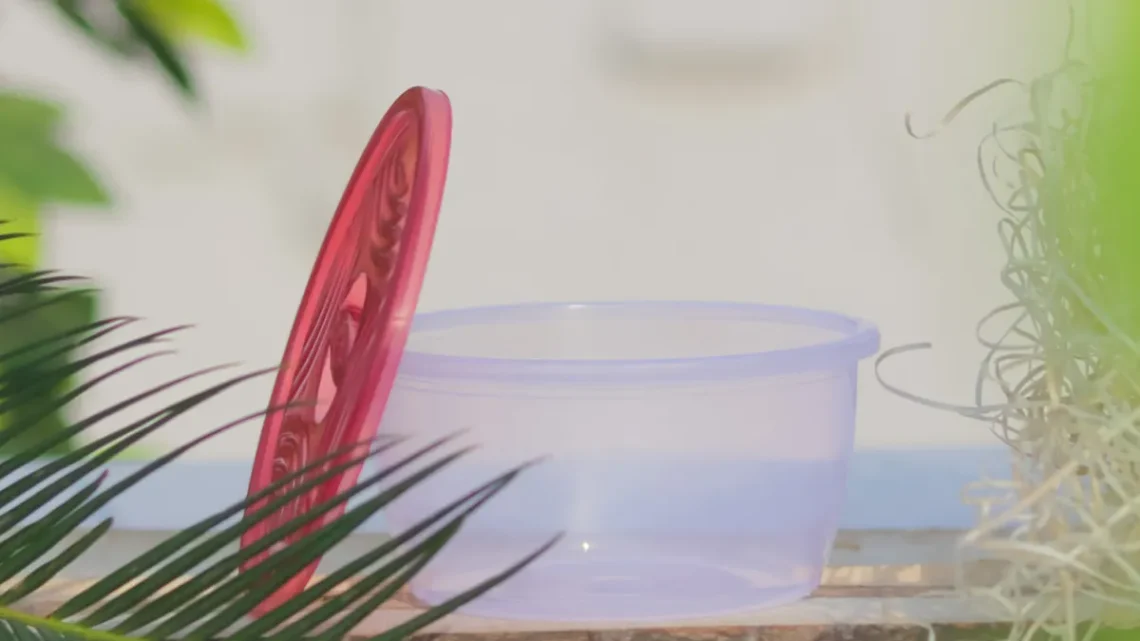
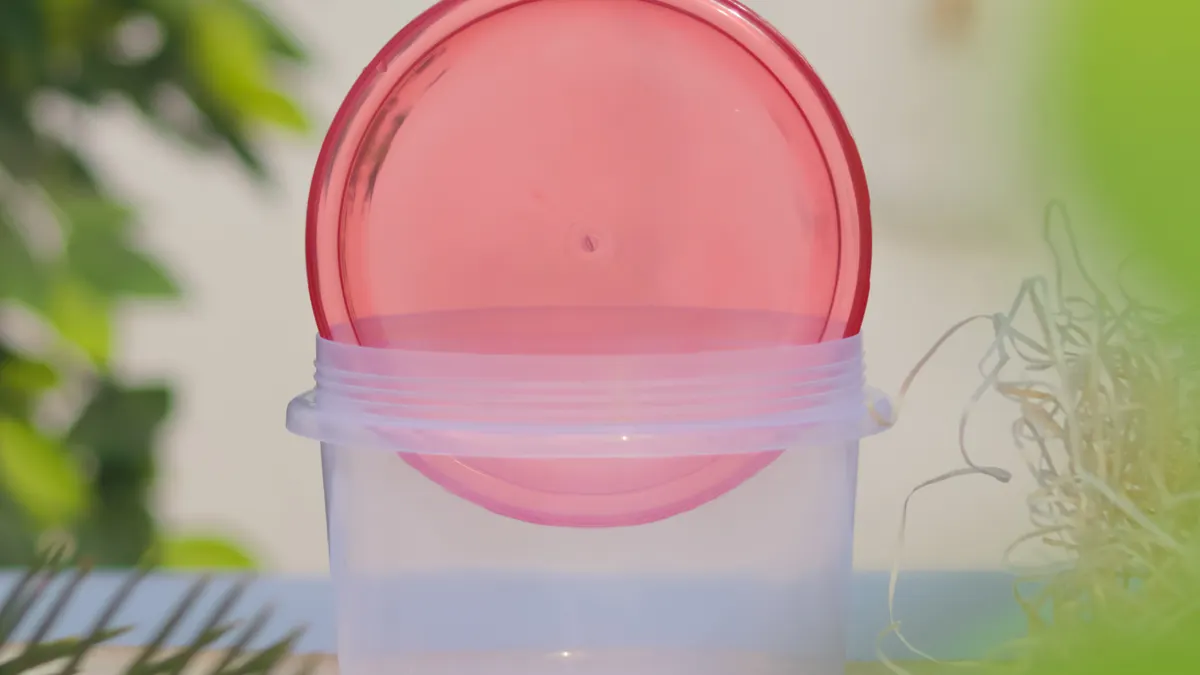
The easiest containers to use are the ones with wide mouths, light lids, and closures you can manage without a hard twist. Picture yourself opening lunch at a clinic waiting room, in a car, or at a kitchen table where your grip is already tired. A container that opens in one motion beats a tight jar every time.
Look for containers with easy-open lids that do not require strong thumb pressure. Wide, shallow containers are easier than deep ones because the food is easier to reach with a fork or spoon. Clear sides help too; you can see what is inside before you start fishing around with stiff fingers.
Avoid narrow screw-top jars for lunch unless the food absolutely needs one. They are a poor fit for arthritic hands because they demand twist force and often slip when wet. Snap lids can also be a problem if they need several corners pressed down at once. A lid that is hard to align is a lid that wastes energy.
The best lunch containers for this job usually have these traits:
- A lid that lifts, flips, or presses on without much force
- A wide opening for a spoon, fork, or small tongs
- A shape that fits one portion without crowding
- A material that is light enough to lift with one hand
If lunch needs reheating, a microwave-safe container can help, but the lid should still be easy to remove. A container that looks sleek but takes two strong hands to open is the wrong tool for this problem.
A better fit for many seniors: a wide, lightweight container with a simple lid and a fork-friendly meal inside. A worse fit: small jars, tall containers, and tight vacuum-style seals that turn lunch into a grip test.
Heart-healthy lunches that are easier to eat one-handed
Heart-healthy lunches that are easier to eat one-handed are the ones that hold together and do not spill apart when you lift them. Picture this: one hand is busy steadying a plate or walker, and the other has to do all the work. In that setup, a tidy plated meal is often easier than a messy bowl.
Choose foods that cling to themselves. Thick bean spread, flaky salmon mixed with yogurt, hummus, mashed avocado, soft scrambled egg, and tender grains can all work well because they stay on a spoon or fork. A wrap cut into halves or quarters can also help, since the filling is enclosed and the pieces are smaller.
The goal is not perfection. The goal is a lunch that can be eaten with one hand, a fork, or a spoon without chasing ingredients around the plate. That means fewer loose leaves, fewer slippery slices, and fewer foods that crumble at first contact.
Use this simple rule: if the food slides, scatter it less. If it crumbles, bind it with a spread. If it needs cutting, cut it before serving.
- Good one-hand picks: tuna salad, egg salad, cottage cheese with fruit, soft-cooked vegetables
- Good add-ons: ripe avocado, hummus, soft pears, canned peaches in juice
- Better serving style: on a plate, not in a deep bowl full of mixed textures
A fork-friendly lunch can still be heart-conscious. Choose lower-sodium fillings when possible and keep sauces light. That keeps the meal easier on the hands without turning it into a heavy, salty lunch.
What should the cutlery do for arthritic hands?
The cutlery should be easy to grip, stable in the hand, and sized so the wrist does not have to work extra hard. Picture yourself trying to spear a piece of soft fruit with a thin handle that slips the moment your fingers tighten. The right cutlery turns lunch from a grip problem into a meal.
Look for handles that are thicker than standard flatware. A larger handle can reduce the pinch needed to hold the fork or spoon. Some people do better with built-up handles, while others simply need a lighter utensil that does not force the wrist into an odd angle. The point is control, not style.
Sporks can help when the lunch includes both soft solids and spoonable food. A spoon with a shallow bowl may be better than a deep one for foods like beans, chopped egg, or fruit pieces. Serrated knives are not always necessary if the lunch is already cut into small pieces before serving.
The best cutlery match depends on the food. A fork works for plated meals with soft vegetables and fish. A spoon works for yogurt bowls, bean salads, and fruit. A small sandwich often needs no knife at all if it is already quartered.
Common mistakes are easy to spot:
- Thin metal handles that dig into the fingers
- Heavy utensils that tire the hand after a few bites
- Long knives that are awkward on a small plate
- Smooth handles that slip when hands are dry or sore
A simple set is usually enough: one fork, one spoon, and a knife only when the food truly needs it. That keeps the lunch kit light and the hand work lower.
What foods are easiest to eat with limited hand strength?
The easiest foods to eat with limited hand strength are moist, soft, and compact enough to stay on the utensil. Picture a lunch plate that does not require peeling, pulling, or a lot of chasing. That is the sweet spot for finger foods, soft fruit, and fork-friendly foods that need little force.
Soft fruit is one of the most useful choices. Banana slices, melon, ripe pear, peaches, and berries are easy to lift with a spoon or fork. If the fruit is slippery, use a shallow bowl or serve it beside the main plate instead of mixing it into the meal.
Protein should be tender and tidy. Flaked salmon, canned tuna mixed with a soft spread, egg salad, tofu cubes, and shredded chicken bound with yogurt or avocado are easier than dry slices of meat. Beans also work well when they are thick enough to stay on the fork.
A few foods look harmless but are rough on arthritic hands:
- Loose salad greens that slide off the fork
- Dry crackers that break before you can lift them
- Stringy meats that need repeated cutting
- Tiny seeds or nuts that scatter across the table
The best workaround is simple assembly. Put the hard-to-control food into a wrap, mash it into a spread, or serve it on a plate with a spoon-friendly side. A lunch that stays together is easier to finish, and that matters more than a pretty presentation.
For a heart-health angle, keep the focus on lean protein, fruit, vegetables, and lower-sodium fillings. If a lunch is easy to eat but loaded with salt, it misses the point.
The common mistakes that make lunch harder than it should be
The most common mistakes are choosing foods and containers that need too much grip, twist, or cleanup. Picture a lunch that looks healthy on paper but turns into a daily struggle with lids, crumbs, and dropped bites. The fix is not more willpower. It is better design.
One mistake is overstuffing wraps or sandwiches. The filling falls out, the wrap tears, and the hands have to keep squeezing to hold everything together. A smaller wrap, cut in half, is usually easier to manage than a giant roll.
Another mistake is mixing too many textures in one bowl. A salad with leafy greens, hard nuts, slippery fruit, and loose grains can be hard to control with arthritis. A plated meal with separate sections is often easier. That is especially true when one hand is weaker than the other.
A third mistake is using containers that are too tight or too deep. If the lid takes real force to open, or the food is buried in the bottom, lunch becomes a task before it becomes a meal. A shallow, easy-open container is the better fit.
- Don’t use tall jars for lunch portions
- Don’t rely on tiny pieces that scatter
- Don’t send out food that needs lots of cutting at the table
- Do keep the meal soft, compact, and easy to lift
The best part? A few small changes—cutting food ahead of time, choosing the right lid, and using thicker cutlery—usually make the biggest difference.
A simple lunch setup that saves hand strain
A simple lunch setup saves hand strain by keeping the food, tools, and container choices consistent every day. Picture the same plate, the same fork, and the same easy-open lid showing up at lunch. That routine lowers the mental load and the hand work at the same time.
A practical setup might look like this: a shallow plate, one fork, one spoon, a non-slip mat, and a container that opens without a fight. Add one wrap or plated meal, one soft fruit, and one moist protein. That is enough for a heart-conscious lunch that is easier to eat.
Keep the setup close to the body and within easy reach. Reaching far across a table can be as tiring as opening a stubborn lid. A 2-foot reach zone is easier to manage than a crowded counter, especially when hand joints are already sore.
If lunch is packed ahead, put the utensils with it. That avoids last-minute searching and keeps the whole meal in one place. Small changes like this matter because they cut the number of steps between “I’m hungry” and “I’m eating.”
For more lunch planning ideas beyond handling, the hub on [heart-healthy lunch strategies for seniors] is the right place to go next. This page stays focused on the hands, the plate, and the container.
What lunches are easier to handle with arthritis?
Lunches that are soft, compact, and easy to lift are easier to handle with arthritis. A plated meal with tender fish, beans, soft vegetables, and ripe fruit usually beats a messy sandwich or a salad with lots of loose pieces. Small wraps, quartered sandwiches, and spoon-friendly foods also work well because they need less pinching and cutting.
How can seniors with arthritis prepare lunch more easily?
Seniors with arthritis can prepare lunch more easily by using non-slip mats, pre-cut ingredients, and containers that open without much force. Set out the plate and utensils first, then build the meal in short steps. Choosing foods that need little chopping—like canned beans, pre-washed greens, and soft fruit—cuts strain fast.
Drafted with AI; not yet reviewed by a person.