Last updated: November 19, 2026
Key Takeaways
- Choose store brands, bulk oats, eggs, plain yogurt, and frozen fruit for the best use of each dollar.
- Compare price by ounce or unit, not just the front label.
- The most useful label shows the food, the amount, and whether sugar or sodium was added.
- A 1-week cart saves more than a random cart because every item has a purpose.
Heart-healthy breakfast grocery shopping on a senior budget comes down to buying a few low-cost staples, reading the front and back of the package, and skipping the pricey extras. This guide to How to Shop for Heart-Healthy Breakfast Ingredients on a Senior Budget shows how to fill a breakfast cart without wasting money. It focuses on low-cost foods, unit prices, and plain ingredients.
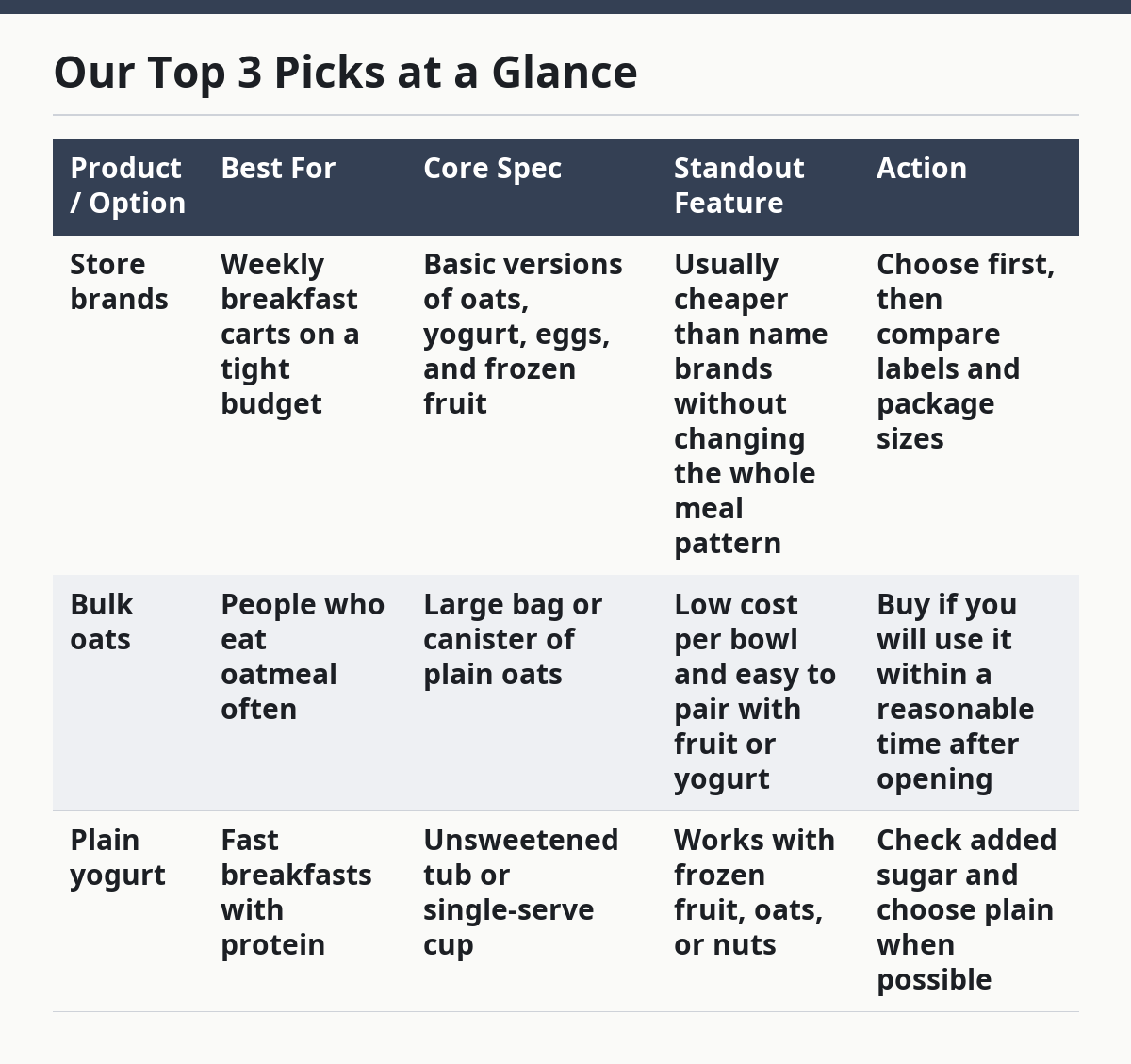
Our Top 3 Picks at a Glance
-
1 Best Overall: Store brands, because they cover the most breakfast bases for the least cash.
-
2 Best Budget Pick: Bulk oats, because they stretch across many mornings.
-
3 Best Heavy-Duty / Upgrade Pick: Plain yogurt, because it adds protein and works with fruit or oats.
| Product / Option | Best For | Core Spec | Standout Feature | Action |
|---|---|---|---|---|
| Store brands | Weekly breakfast carts on a tight budget | Basic versions of oats, yogurt, eggs, and frozen fruit | Usually cheaper than name brands without changing the whole meal pattern | Choose first, then compare labels and package sizes |
| Bulk oats | People who eat oatmeal often | Large bag or canister of plain oats | Low cost per bowl and easy to pair with fruit or yogurt | Buy if you will use it within a reasonable time after opening |
| Plain yogurt | Fast breakfasts with protein | Unsweetened tub or single-serve cup | Works with frozen fruit, oats, or nuts | Check added sugar and choose plain when possible |
Start with the cheapest foods that do the most work
Picture this: you’re in the cereal aisle with a short list, a fixed amount of money, and no room for food that sounds healthy but sits untouched in the fridge. Start with store brands, bulk oats, eggs, plain yogurt, and frozen fruit; they do the most work for the fewest dollars.
That mix covers hot breakfasts, cold breakfasts, and quick backups. It also keeps you from buying six half-used boxes when three solid items would do the job.
-
Pick store brands first for oats, milk, yogurt, and frozen fruit.
The store label often lowers the price without changing the basic food. If the package says plain oats, plain yogurt, or no-sugar-added fruit, that is usually enough. -
Buy bulk oats when you eat oatmeal more than once a week.
A larger bag usually costs less per serving than small flavored packs. Plain oats also take less cupboard space than a stack of single-use cups. -
Choose eggs when you need a flexible protein.
A carton of eggs can cover toast, oatmeal sides, or a quick scramble. If egg prices are high at your store, compare the cost of a dozen with plain yogurt before you walk out. -
Use plain yogurt for fast breakfasts that need protein.
Plain yogurt works better than flavored kinds because you control the sweetness. If you need dairy-free food, swap in an unsweetened soy or other plain alternative with similar uses. -
Add frozen fruit for fiber and flavor without waste.
Frozen fruit lasts longer than fresh berries and often costs less per usable cup. It also works well in oatmeal, yogurt, or a microwave mug bowl.
This list keeps breakfast shopping short. You are not building a fancy pantry here. You are buying ingredients that still make sense at the end of the month.
How do I read breakfast aisles without overspending?
You spend less when you compare the price by ounce or by unit, not by the sticker on the front. That one habit helps you avoid paying more for a smaller package.
Picture this: you’re staring at two containers of oats, one small and one large, and both claim to be a bargain. The lower shelf price is not always the lower-cost buy, so check the unit price and the ingredient list before you put it in the cart.
- Look for the unit price on the shelf tag. It may show cost per ounce, pound, or quart.
- Choose the package that gives you the most food for the money, not the most packaging.
- Put flavored versions back if plain works. A maple or fruit version often costs more and can bring extra sugar you do not need.
- Compare store brands against name brands with the same food inside.
- Skip boxes that sell convenience in tiny portions unless you truly need them.
Now, you might be wondering about package size. Bigger is not always smarter. If a 42-ounce bag of oats sits unopened for months, the savings disappear when part of it goes stale. Buy the size you can finish in a sensible time, and use tight lids or clips after opening.
Here is the catch: a low shelf price can still hide a poor deal if the package is full of air or sweeteners. Plain oats, plain yogurt, eggs, and frozen fruit tend to be easier to judge because the ingredient list stays short.
What store labels matter most for heart-healthy breakfast shopping?
The label that matters most is the one that tells you what the food actually is, how much is inside, and whether sugar or sodium has been added. That means you do not need every label detail to shop well.
Picture this: you’re holding a yogurt cup and trying to decide in 20 seconds whether it belongs in your cart. Start with the front of the package, then turn it around for the ingredient list and the numbers that matter to your budget.
- Plain beats flavored for yogurt in most cases. Plain yogurt gives you control over sweetness, and fruit can add flavor later.
- No-sugar-added frozen fruit is a strong pick when available. If the bag lists only fruit, that is even easier.
- Quick oats and old-fashioned oats both work, but plain versions are easier to budget for than flavored packets.
- Eggs have one job at the shelf: give you a low-prep protein that can fit many breakfasts.
- If a product has a long ingredient list full of sweeteners or syrups, move on unless you already know you want that style.
A common mistake is buying “breakfast” foods with a health halo and a high price. Granola cups, fruit yogurt with dessert-level sweetness, and single-serve oatmeal packets often cost more than plain ingredients and do less for the cart.
The truth is, the label does not have to be perfect. It only has to tell you enough to avoid paying extra for sugar, syrup, or a tiny portion. If the package looks confusing, plain yogurt and bulk oats are often the safest fallback.
Build a 1-week breakfast cart without waste
A simple 1-week cart is cheaper than a random cart because each item has a job. That stops overbuying and keeps the fridge from turning into a science project.
Picture this: you’re planning seven mornings and want breakfast ingredients that still look good on day six. Use a short list built around 2 to 4 core foods and one backup item, then buy only what you can store and finish with confidence.
-
Start with oats as the base grain.
One bag can cover several mornings. If you like oatmeal, this is the anchor item that gives the best stretch. -
Add eggs or yogurt for protein.
Eggs work well for people who cook in 5 to 10 minutes. Plain yogurt works for people who need something cold and fast. -
Choose one fruit option, usually frozen fruit.
Frozen berries, peaches, or mixed fruit can move between oatmeal and yogurt. That keeps the cart from filling up with fruit that spoils in 2 days. -
Keep one backup like whole-grain toast or another plain grain.
A backup keeps you from making a second store trip when you run out of one item early. -
Match the cart to your storage space.
If the freezer is small, do not buy multiple bags of frozen fruit. If the fridge is crowded, choose shelf-stable oats over extra dairy.
This is also where a lot of shoppers go wrong. They buy six separate breakfast items that each look healthy, then none of them gets finished. One tub of yogurt, one bag of oats, one dozen eggs, and one bag of frozen fruit often does more than a messy pile of “good choices.”
Which breakfast ingredients give the best value?
The best value usually comes from oats, eggs, plain yogurt, and frozen fruit because each one can show up in more than one breakfast. Value is not just cheap; it is food you actually use.
Picture this: you’re comparing items by what they can do across the week. A food that works in a bowl, a mug, and a side dish gives more value than a snack that only fits one recipe.
- Bulk oats: Strong value for anyone who likes oatmeal. They keep costs down and pair with fruit or yogurt.
- Eggs: Strong value when you need protein on a small budget. They work hot and can be cooked plain.
- Plain yogurt: Strong value for quick meals. It also helps if you want breakfast with less cooking.
- Frozen fruit: Strong value because it reduces waste. You can portion what you need and keep the rest frozen.
There are trade-offs. Eggs need refrigeration and cooking time. Yogurt can spoil if it sits too long after opening. Frozen fruit needs freezer space and can turn into a loose, icy mess if the bag is left open.
That is why the cheapest ingredient is not always the smartest buy. If you will not finish a giant container, a slightly smaller package is often the better deal in real life.
How do you build a low-sodium breakfast cart cheaply?
You build it by choosing plain foods and skipping salty add-ons like cured meats, seasoned instant mixes, and snack-style breakfast items. Plain oats, eggs, yogurt, and fruit give you a low-sodium base without a high price.
Picture this: you’re trying to keep breakfast simple for the heart and the wallet at the same time. Stick to foods that are naturally plain, then add flavor with fruit, cinnamon, or a small amount of nut butter if you already use it.
- Buy plain oats, not flavored packets with added salt and sugar.
- Pick plain yogurt instead of dessert-style cups.
- Choose fresh or frozen fruit with no added syrup when possible.
- Use eggs as a protein, but avoid building breakfast around sausage, bacon, or ham if sodium is the concern.
- Keep seasoning simple. Fruit and plain dairy do not need much help.
One honest limitation: low-sodium shopping gets harder when you depend on highly processed breakfast foods. Those products may be convenient, but convenience can cost more and bring more salt than a plain cart.
If you need a fuller guide to the larger pantry picture, the hub on heart-healthy breakfast ingredients and pantry building for seniors can help connect the pieces without repeating this shopping strategy. You can also review heart-healthy breakfasts and senior budget meals for related meal-planning ideas.
What mistakes cost seniors the most money at breakfast?
The most expensive mistakes are buying too much of the wrong thing, choosing flavored foods because they look healthy, and ignoring how fast a package will be used. Those choices waste money and leave you with food you did not plan to eat.
Picture this: you’re standing at checkout with a cart full of “healthy” breakfast foods and a total that feels too high. The problem is usually not the category; it is the mix.
- Buying single-serve packs often costs more than plain tubs or bags.
- Choosing sweetened yogurt can raise the price without giving you more useful food.
- Overbuying fruit can lead to spoilage if you do not have freezer room.
- Ignoring store brands means paying extra for the label instead of the food.
- Shopping hungry can turn a short list into a messy cart.
The fix is simple, though not always easy. Make the list before you leave, keep the list short, and buy the foods you already know how to use. If a breakfast item needs a special recipe, that item belongs later, not in the first budget cart.
A better cart is boring in the best way. Plain oats, plain yogurt, eggs, frozen fruit, and a store-brand backup beat a cart full of shortcuts you may not finish.
How can seniors shop for heart-healthy breakfasts on a budget?
Seniors can shop best by choosing plain basics first, checking unit prices, and buying only what fits the week ahead. A short cart built around oats, eggs, plain yogurt, and frozen fruit usually costs less than a cart full of specialty breakfast foods.
What breakfast ingredients give the best value?
The best value usually comes from bulk oats, eggs, plain yogurt, and frozen fruit. Those foods stretch across more than one breakfast, which makes them easier to use up before they spoil or go stale.
How do you build a low-sodium breakfast cart cheaply?
A low-sodium breakfast cart stays cheap when it starts with plain oats, plain yogurt, eggs, and unsweetened fruit. The cost stays down because you are avoiding processed breakfast meats and flavored packets that often bring extra salt with them.
Drafted with AI; not yet reviewed by a person.